

table of contents
Email marketing remains a powerful tool for small businesses, offering a direct line to customers and an impressive return on investment. Yet, with a crowded market full of options, selecting the right platform often feels like a significant hurdle. Making the wrong choice can lead to wasted budget, frustrating workflows, and missed growth opportunities.
This guide is designed to eliminate that confusion. We’ve meticulously evaluated the top contenders to present the best email marketing platforms for small business, providing a clear, actionable comparison. Inside, you’ll find detailed analysis, screenshots, and direct links for each of the 12 leading services. We break down who each platform is truly for, from e-commerce brands needing robust segmentation to local service companies focused on simple newsletters.
Many of these tools also offer capabilities that extend beyond simple email blasts. Understanding how they fit into a wider strategy is key, as a good platform often serves as the core of your marketing automation for small business. Our goal is to equip you with the insights needed to choose a platform that not only sends emails but actively helps you build customer relationships and drive real revenue.
1. Mailchimp
Mailchimp is often the first platform small businesses encounter, and for good reason. Its reputation is built on an accessible interface and a feature set that grows with you, making it one of the best email marketing platforms for small business owners just starting out. The drag-and-drop editor and extensive template library remove technical barriers, allowing you to create professional-looking campaigns quickly.
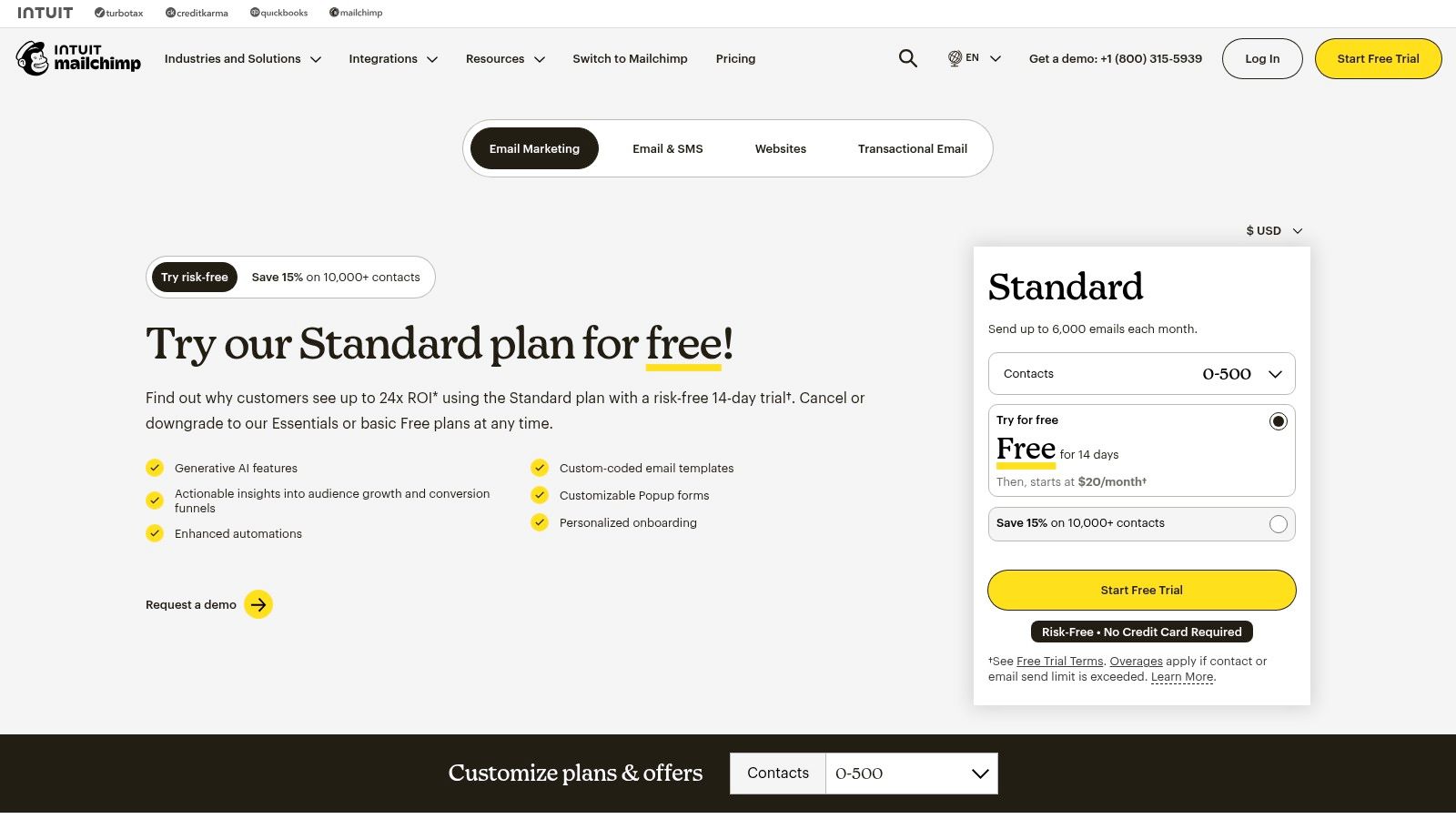
It excels as an all-in-one solution, particularly for e-commerce stores using Shopify or WooCommerce, thanks to its 300+ integrations. You can set up automated welcome series, abandoned cart reminders, and other customer journeys that drive sales. For those looking to implement automated sequences, exploring some effective email drip campaign examples can provide valuable inspiration for your strategy.
Key Details:
- Best For: Beginners, e-commerce stores, and businesses wanting a straightforward, all-around tool.
- Pros: Very easy to learn, strong deliverability, and a massive ecosystem of tutorials and integrations.
- Cons: Pricing is contact-based and can become expensive as your list grows. Advanced automation features are often reserved for higher-priced plans. For those considering alternatives or seeking a detailed comparison, a Mailchimp vs Convertkit feature comparison offers valuable insights into their respective strengths.
- Website: https://mailchimp.com/pricing/marketing/
2. Klaviyo
For e-commerce businesses, Klaviyo stands as a powerhouse, operating less like a simple email sender and more like a customer data platform. It thrives on deep integration with platforms like Shopify and WooCommerce, pulling in real-time event data such as products viewed, items added to cart, and purchase history. This allows for incredibly granular segmentation and personalization, making it one of the best email marketing platforms for small business owners focused on maximizing customer lifetime value.
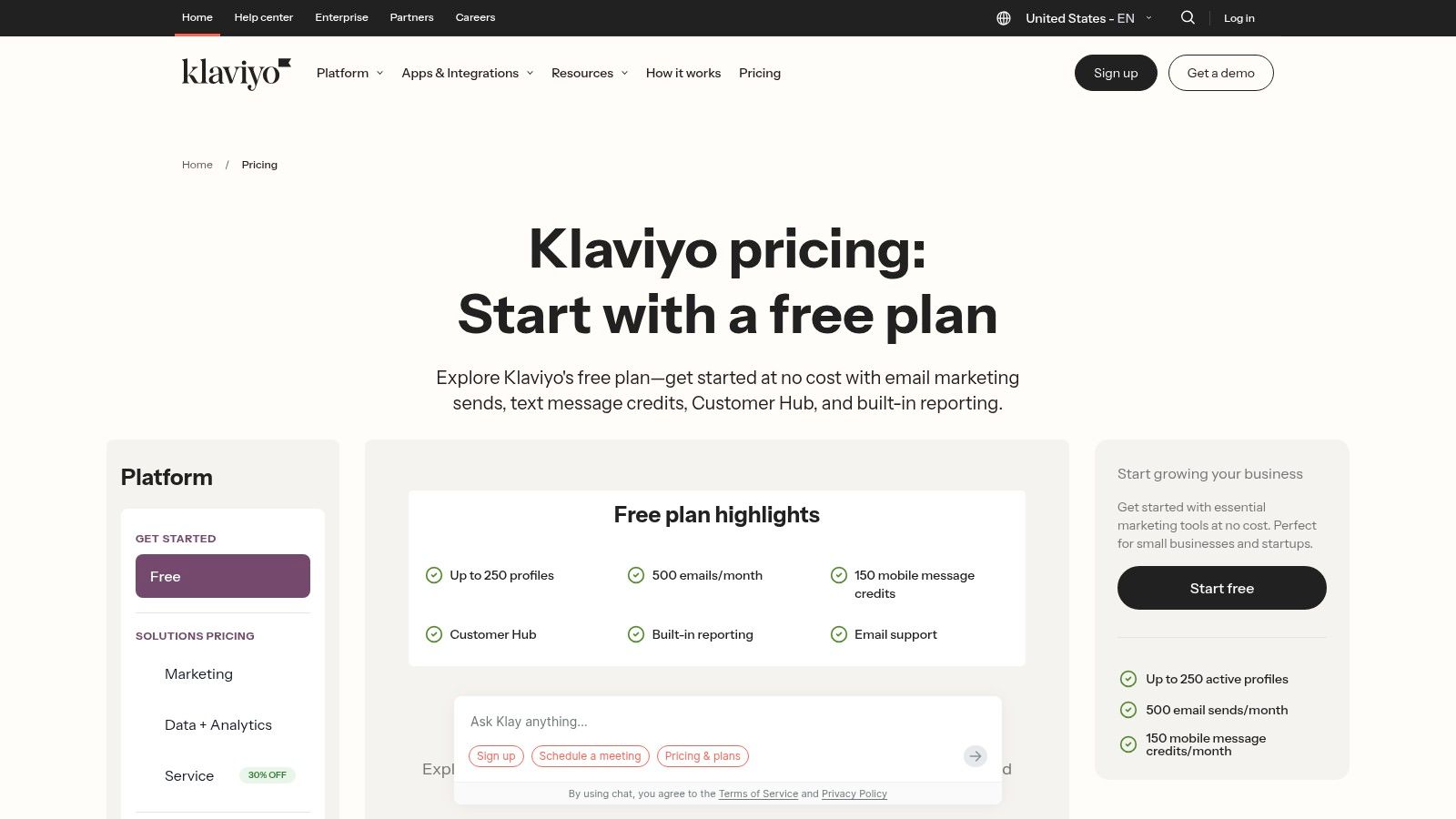
Its strength lies in pre-built, revenue-driving automation flows. You can immediately launch sophisticated campaigns like abandoned cart reminders, browse abandonment follow-ups, and customer win-back series. The platform’s robust reporting directly attributes revenue to specific emails and flows, providing clear ROI. Building a strong foundation from the start is crucial, and reviewing different strategies on how to build an email list can make these powerful tools even more effective.
Key Details:
- Best For: E-commerce stores (especially Shopify/WooCommerce), data-driven marketers, and businesses focused on lifecycle automation.
- Pros: Best-in-class e-commerce workflows out of the box, very granular targeting and personalization, and strong revenue attribution reporting.
- Cons: Pricing can become a significant investment as your contact list and sending volume increase. The feature set is often overkill for businesses with simple newsletter needs.
- Website: https://www.klaviyo.com/pricing/
3. Brevo (formerly Sendinblue)
Brevo positions itself as an excellent budget-friendly option, especially for businesses with large contact lists but a more moderate sending frequency. Its pricing model, based on the number of emails sent rather than the number of contacts stored, is a significant differentiator. This approach allows small businesses to grow their audience without facing immediate, steep cost increases, making it a sustainable choice for long-term list building.
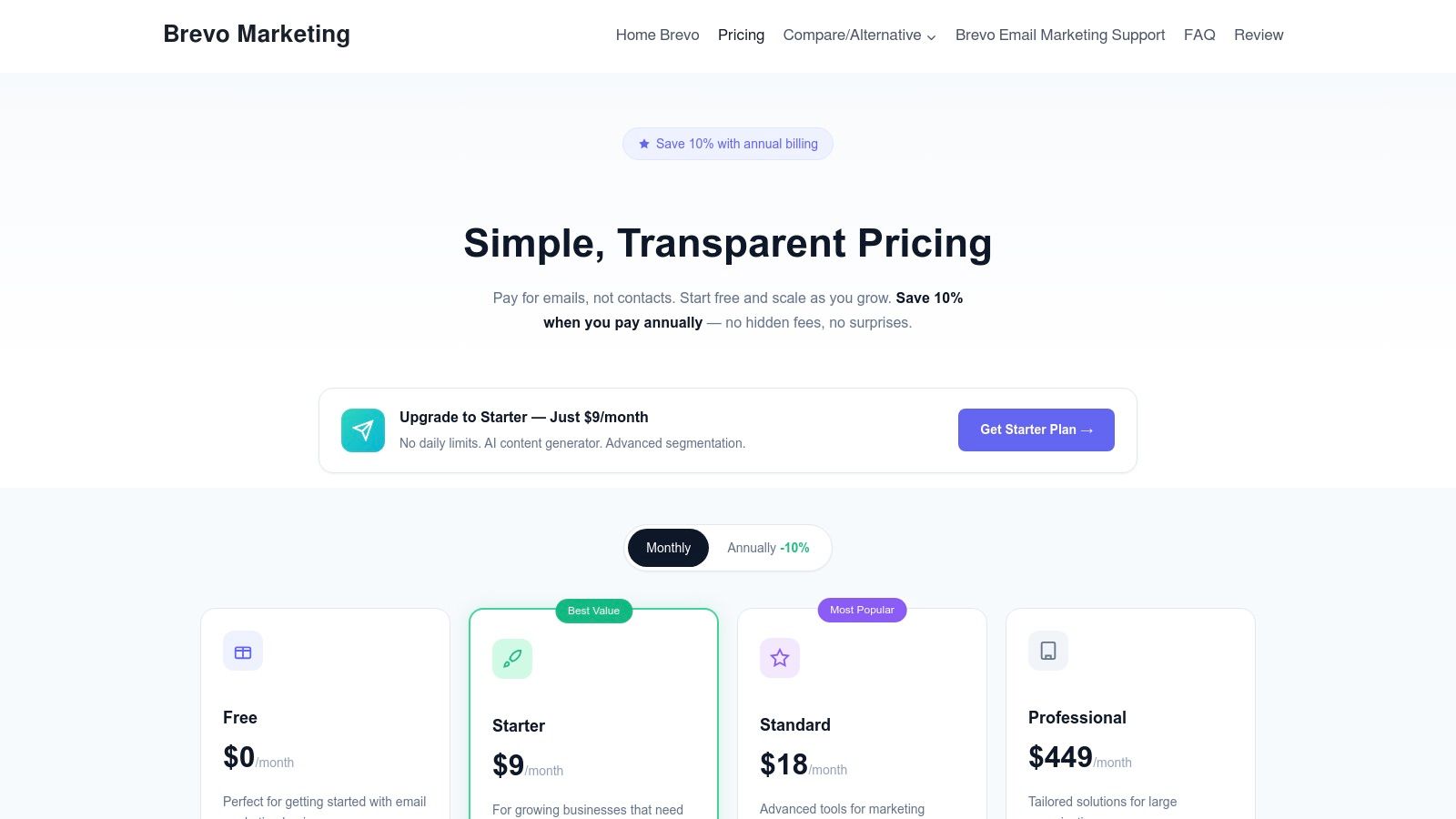
The platform goes beyond standard email, offering an impressive suite of tools including SMS, WhatsApp campaigns, a basic CRM, and a visual automation builder even on its free and lower-tier plans. This multichannel capability helps create more integrated customer communication. To get the most out of these features, adhering to email marketing campaign best practices is crucial for maintaining engagement and deliverability across all channels.
Key Details:
- Best For: Businesses with large but less-frequently-contacted lists, and those seeking an affordable all-in-one marketing suite.
- Pros: Cost-effective pay-for-sends model supports list growth, and strong multichannel options (SMS, WhatsApp) are included at a low price point.
- Cons: The user interface can feel less polished compared to top-tier competitors. Access to more landing pages and multi-user support requires upgrading to higher-priced plans.
- Website: https://www.brevomarketing.com/pricing/
4. Constant Contact
Constant Contact has been a reliable choice for small businesses for decades, building a reputation on exceptional customer support and a straightforward user experience. It’s an excellent platform for local service businesses and nonprofits who need more than just email, offering integrated tools for social media posting, event management, and even SMS marketing. The platform guides users through campaign creation, making it one of the best email marketing platforms for small business owners who value hands-on support.
Its drag-and-drop editor is simple, and features like polls and surveys help increase audience engagement. While it may lack some of the advanced e-commerce automation of other platforms, its core functionality is solid and dependable for sending newsletters and promotional campaigns. To ensure those campaigns get opened, reviewing some email subject line best practices can significantly improve your results. The platform also includes a new AI content generator to help overcome writer’s block.
Key Details:
- Best For: Local service businesses, nonprofits, and beginners who want strong live support.
- Pros: Award-winning live phone and chat support, guided onboarding, and a simple, easy-to-learn interface.
- Cons: No perpetual free plan is available (only a trial period). Pricing increases as your list grows, and it has fewer cutting-edge features for complex e-commerce automation.
- Website: https://www.constantcontact.com/pricing
5. MailerLite
MailerLite stands out with a clean, modern interface and a generous feature set, positioning it as one of the best email marketing platforms for small business owners on a budget. It strikes an excellent balance between simplicity and capability, offering powerful tools like landing pages, websites, and automations without overwhelming new users. This approach makes it a strong contender for creators, bloggers, and service businesses who need more than just email without a steep price tag.
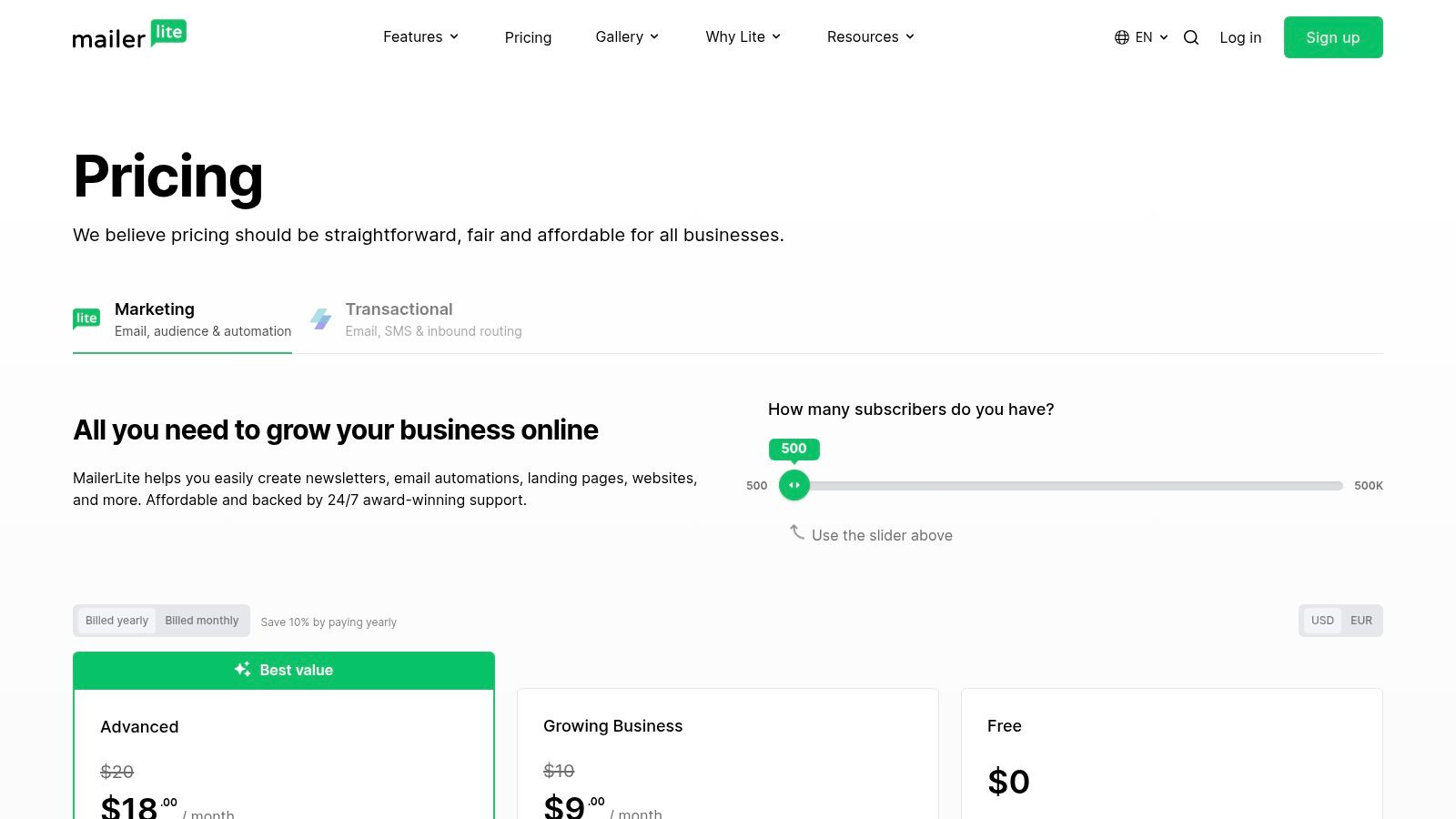
The platform’s drag-and-drop editor is intuitive, but it also includes advanced functions like A/B split testing and auto-resend to unopened subscribers, helping you optimize campaign performance. Beyond email, the built-in website and landing page builders are surprisingly robust, allowing you to create a cohesive online presence from a single dashboard. For entrepreneurs selling digital products, the integrated e-commerce features provide a direct way to monetize their audience.
Key Details:
- Best For: Budget-conscious businesses, creators, and freelancers needing an all-in-one marketing hub.
- Pros: Excellent value for the price, approachable user interface, and useful site and landing page tools included in plans.
- Cons: Some advanced automation features are reserved for the highest-tier plan. Its third-party integration library is not as extensive as competitors like Mailchimp or HubSpot.
- Website: https://www.mailerlite.com/pricing
6. ActiveCampaign
ActiveCampaign positions itself as a customer experience automation platform, going far beyond standard email newsletters. It’s built for small businesses that need to create sophisticated, behavior-driven communication based on how users interact with their website, emails, and products. The visual automation builder is a standout feature, allowing you to map out complex customer journeys with conditional logic, making it one of the best email marketing platforms for small business owners focused on lead nurturing.
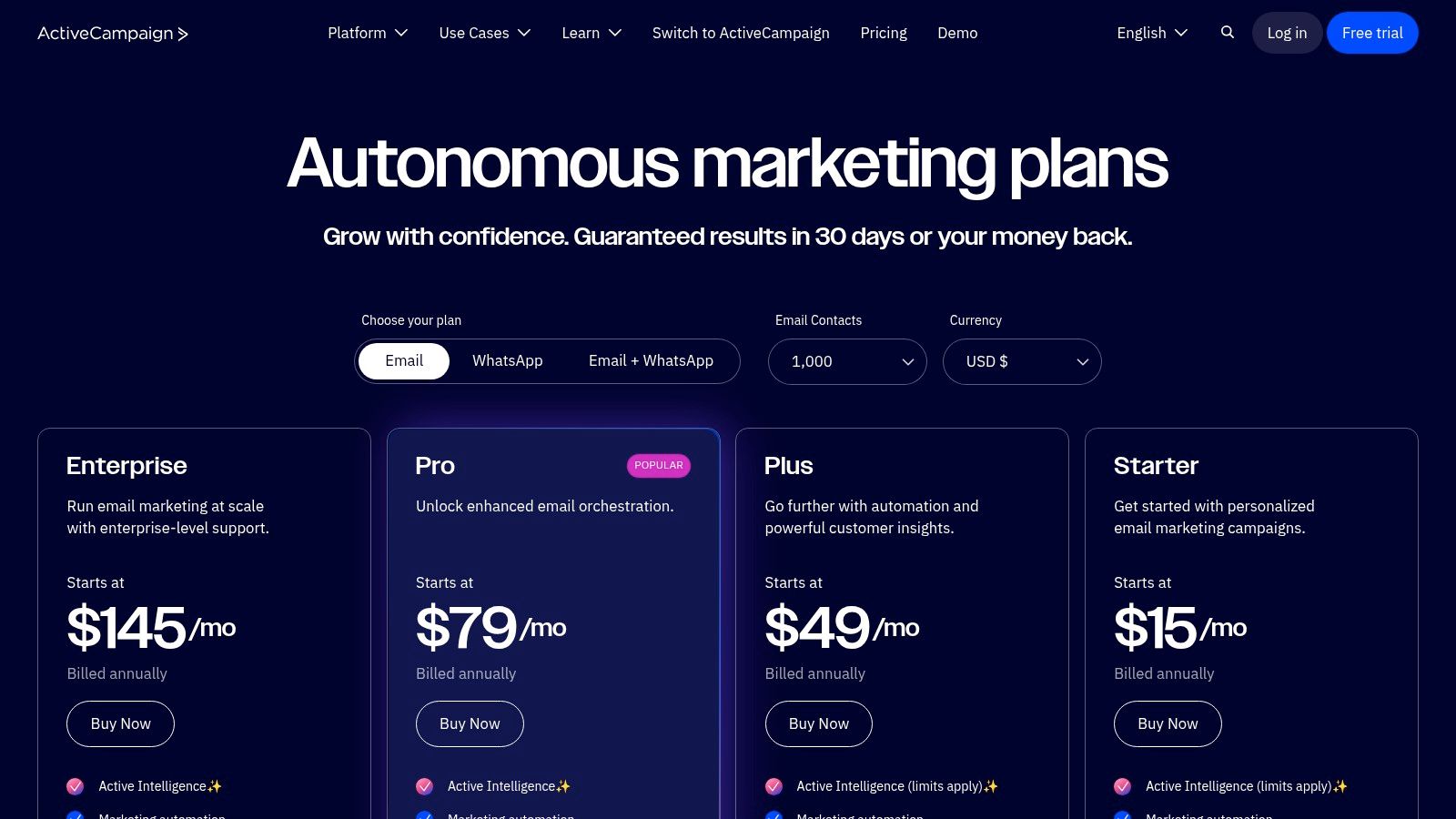
Its combination of email, automation, and a native CRM makes it ideal for managing the entire customer lifecycle from a single dashboard. You can track site events, segment audiences with precision, and use conditional content to personalize messages at scale. For businesses ready to move beyond basic email blasts, exploring marketing automation for small business can highlight how these advanced tools drive growth and efficiency.
Key Details:
- Best For: Service-based businesses, B2B companies, and any small business needing advanced automation and CRM features.
- Pros: Among the strongest SMB automation engines, a large integration marketplace, and a 30-day money-back guarantee.
- Cons: The complexity can require a setup period, and pricing scales with both contacts and plan level. Key features are often split across different tiers.
- Website: https://www.activecampaign.com/pricing
7. HubSpot Marketing Hub
HubSpot Marketing Hub moves beyond simple email campaigns into a full-fledged marketing ecosystem. It’s an ideal choice for businesses planning to scale, as its true strength lies in the deep integration between its marketing tools and a powerful, free CRM. This connection allows you to build highly personalized email campaigns based on real customer data, such as their lifecycle stage, past purchases, or website interactions, making it one of the best email marketing platforms for small business growth.
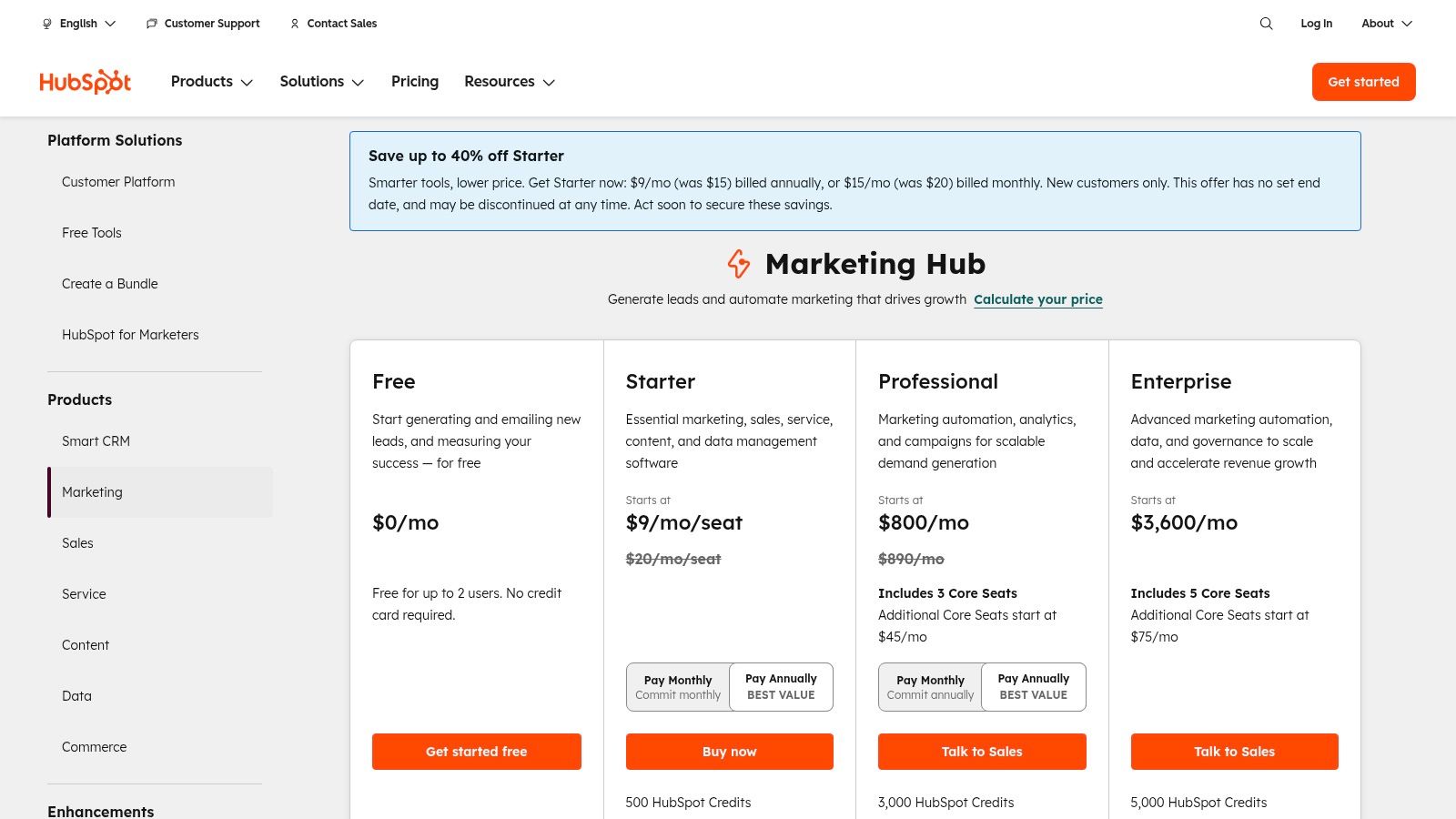
This CRM-powered approach means you can manage email, create landing pages, run ad campaigns, and track customer journeys all from a single dashboard. The platform allows you to create sophisticated automation workflows that go beyond email, triggering tasks for your sales team or updating contact records automatically. For businesses that need their marketing and sales data to work together seamlessly, HubSpot provides a unified view of the entire customer lifecycle.
Key Details:
- Best For: Service-based businesses and B2B companies that need tight integration between sales and marketing activities.
- Pros: The tight connection between the CRM and marketing tools provides unified customer data. It scales easily into other Hubs (Sales, Service, CMS) as your business grows.
- Cons: The Professional and Enterprise tiers are expensive and may have onboarding fees. It can be overkill if you only need to send simple broadcast newsletters.
- Website: https://www.hubspot.com/pricing/marketing
8. ConvertKit (Kit)
ConvertKit is built specifically for creators, making it a powerful choice for consultants, coaches, authors, and other expertise-driven small businesses. Its strength lies in treating your audience not just as a list, but as individuals. The platform uses a subscriber-centric model where you manage one list and use tags and segments to send highly targeted broadcasts and automated sequences. This makes it one of the best email marketing platforms for small business owners who prioritize direct audience connection.
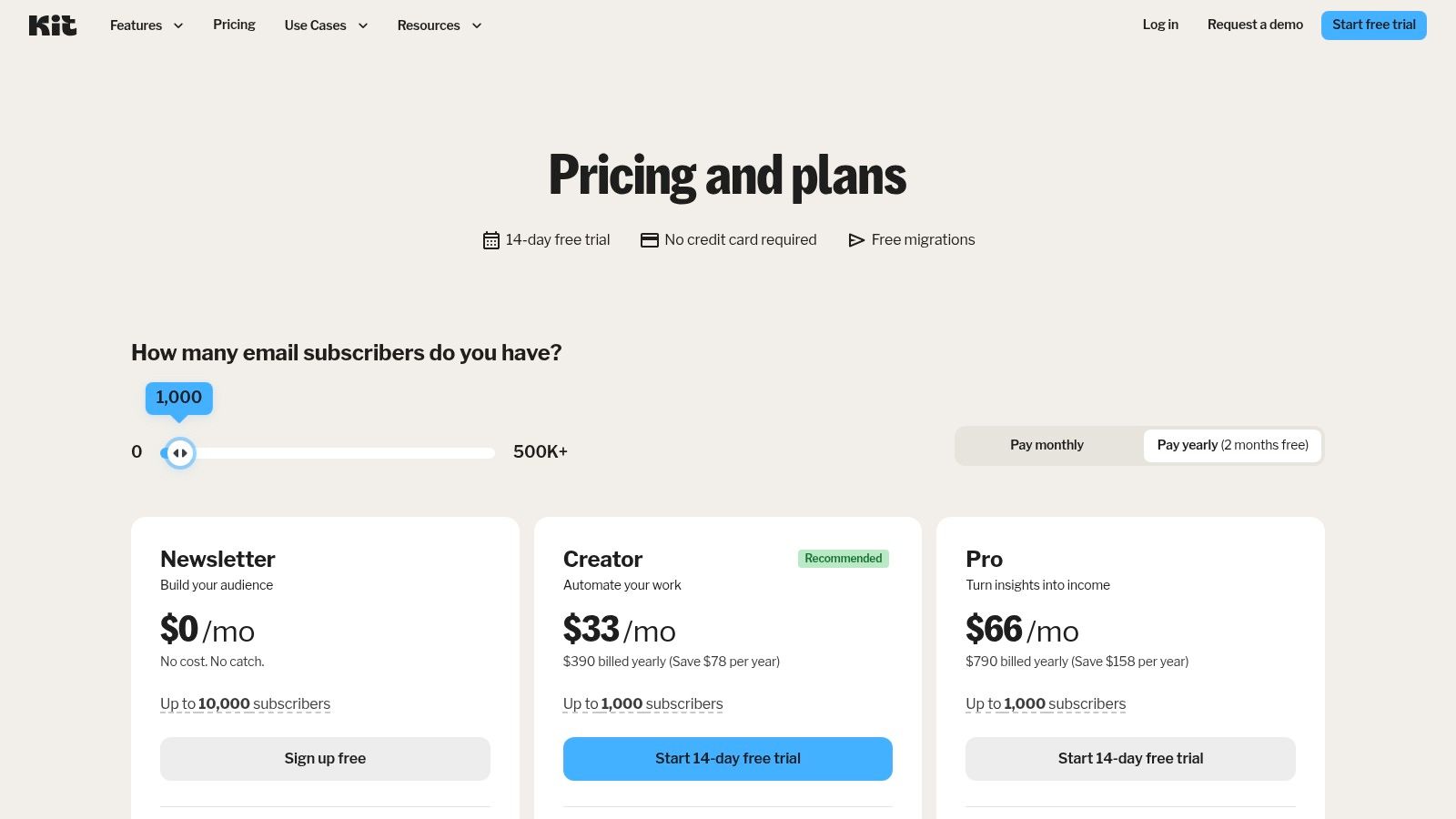
The visual automation builder is intuitive, allowing you to map out customer journeys with simple if-then logic. ConvertKit also includes built-in commerce tools, enabling you to sell digital products, paid newsletters, or coaching sessions directly from the platform. This integration of email and sales simplifies the tech stack for solo entrepreneurs and small teams focused on selling their knowledge.
Key Details:
- Best For: Creators, bloggers, coaches, and consultants who sell digital products or services.
- Pros: Subscriber-centric tagging system is excellent for segmentation. Commerce and email are combined in one platform. Very simple and fast to launch for creator-focused businesses.
- Cons: Fewer native e-commerce retail automations compared to platforms like Klaviyo. Design flexibility is more minimalist by default, focusing on text-based emails.
- Website: https://kit.com/pricing
9. Omnisend
Omnisend is built from the ground up for e-commerce, making it one of the best email marketing platforms for small business owners in the direct-to-consumer space. It combines email, SMS, and web push notifications into a single, cohesive workflow, allowing you to reach customers wherever they are. The platform shines with its pre-built automation sequences designed specifically for online stores, such as welcome series, cart abandonment, and cross-sell campaigns.
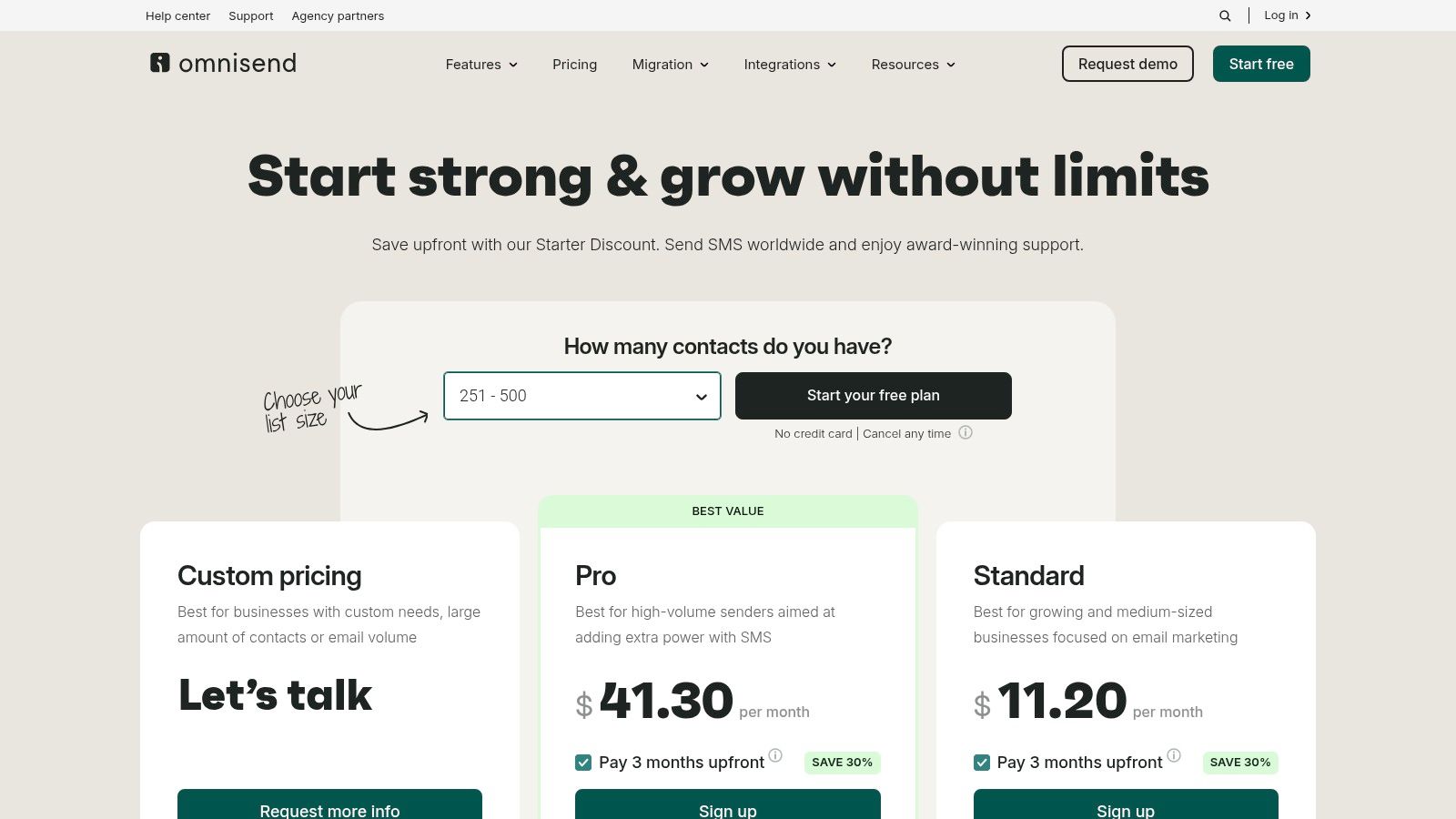
This focus on sales makes it a powerful tool for Shopify, BigCommerce, and WooCommerce users who want to drive revenue directly from their marketing efforts. Omnisend’s detailed reporting tracks sales attribution, so you know exactly which campaigns are performing. Its generous free plan and 24/7 support on all paid plans provide a strong foundation for growing stores looking to implement more advanced, multi-channel marketing strategies.
Key Details:
- Best For: E-commerce brands, particularly those on Shopify or WooCommerce, that want an integrated email and SMS solution.
- Pros: Solid e-commerce automations and analytics at a fair entry price, a functional free plan, and supportive omnichannel features.
- Cons: The most valuable features are reserved for the Pro plan, and the user interface can take some time to learn.
- Website: https://www.omnisend.com/pricing/
10. GetResponse
GetResponse positions itself as more than just an email tool; it’s an all-in-one marketing platform designed for businesses focused on lead generation and conversion. It combines email marketing with landing pages, sales funnels, and even webinar hosting, making it a powerful option for service-based businesses or creators who use educational content to attract customers. This integration means you can manage a complete marketing funnel without juggling multiple subscriptions.
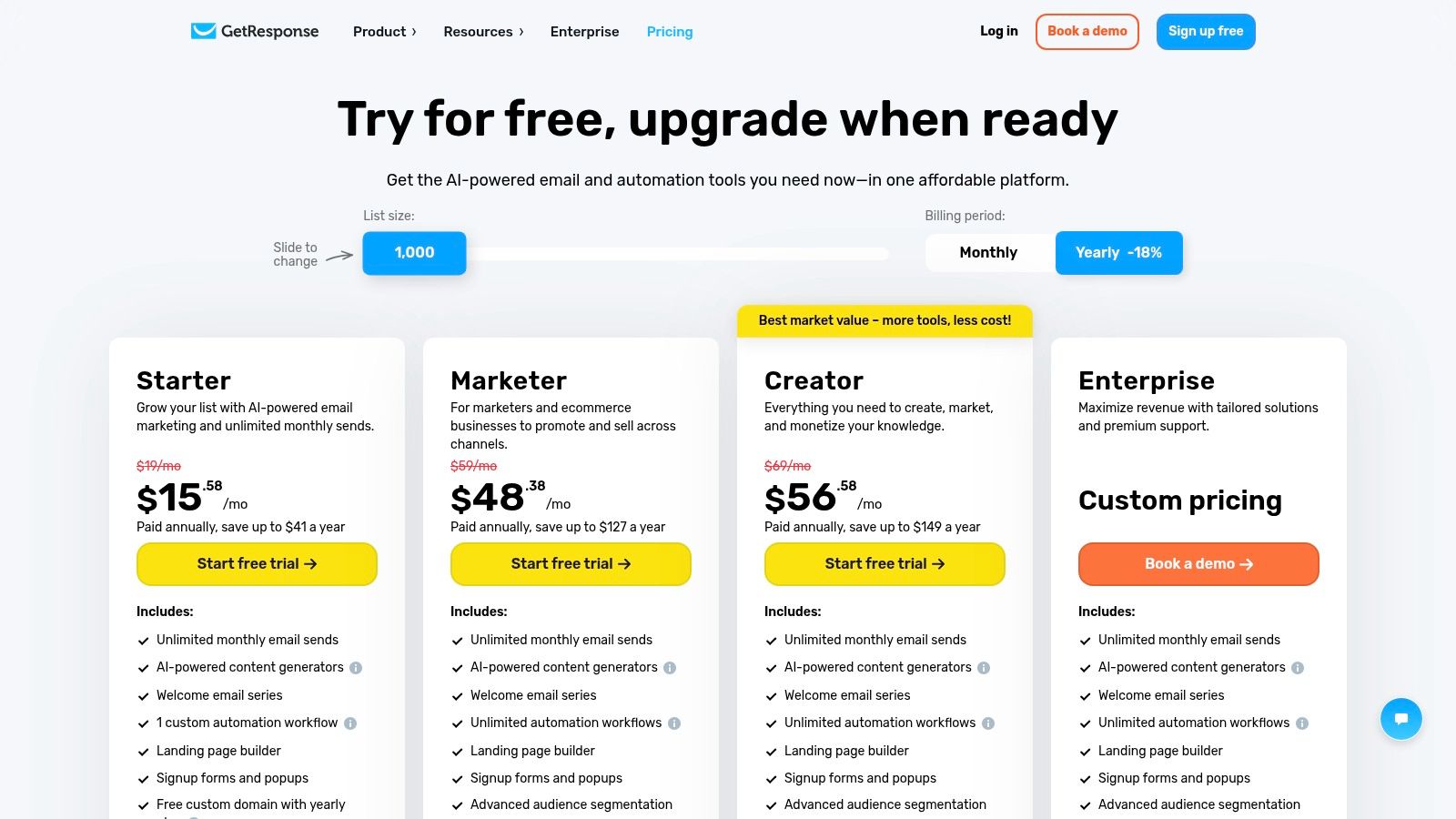
The platform is especially useful for small businesses that run webinars to generate leads or educate their audience. Features like built-in forms, popups, and AI-powered tools help capture contacts, while the sales funnel builder guides them from awareness to purchase. For those needing a consolidated marketing suite on a budget, GetResponse is one of the best email marketing platforms for small business teams looking to expand their marketing activities beyond just email.
Key Details:
- Best For: Service-based businesses, coaches, and consultants who use webinars and sales funnels.
- Pros: Broad toolset for the price, especially for webinar-centric marketing. Frequent promotions and nonprofit discounts are available.
- Cons: The wide array of features can be overwhelming for beginners. Webinar attendee limits exist on lower plans, and advanced analytics are reserved for upper-tier subscriptions.
- Website: https://www.getresponse.com/pricing
11. Campaign Monitor
Campaign Monitor positions itself for brands that prioritize design fidelity and a polished aesthetic in their communications. Its strength lies in a refined email builder and a library of high-quality templates that allow businesses to maintain strong brand control and create visually impressive newsletters with minimal effort. This makes it one of the best email marketing platforms for small business teams, especially agencies, that manage multiple clients and need to deliver consistent, on-brand creative.
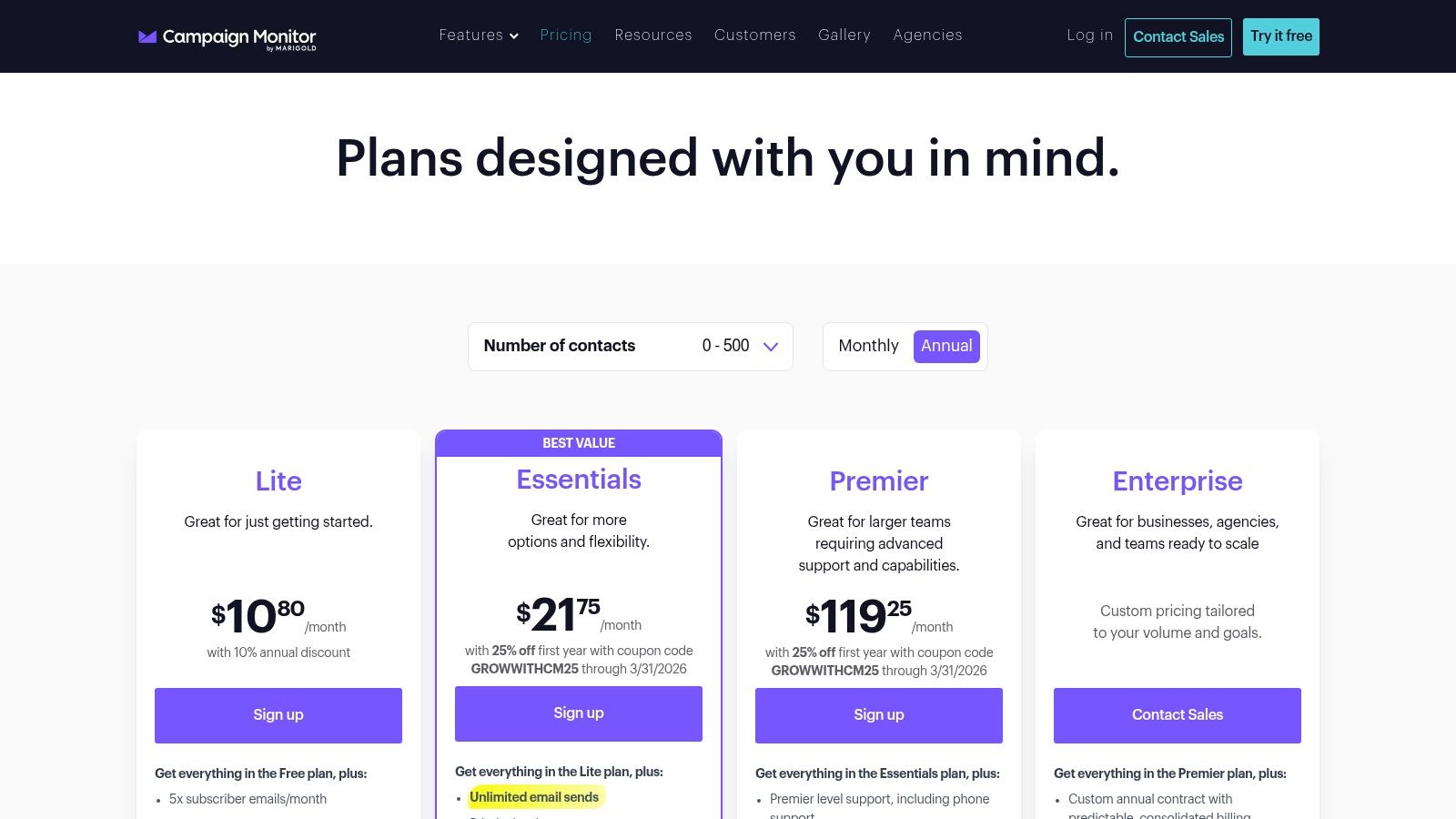
Beyond design, the platform offers a straightforward automation builder called “Journeys” for setting up welcome sequences and other triggered campaigns. With over 250 integrations, it connects smoothly with popular tools like Salesforce, Shopify, and WordPress. Features like inbox previews and AI-assisted content tools help ensure your messages look perfect and resonate with your audience before you hit send.
Key Details:
- Best For: Agencies, design-focused brands, and businesses wanting premium-looking email templates.
- Pros: Beautiful out-of-the-box email aesthetics and a clean user interface. Flexible billing options are available, including pay-per-campaign plans.
- Cons: Pricing can be higher than some competitors, particularly as your contact list grows. Many advanced features are reserved for the upper-tier plans.
- Website: https://www.campaignmonitor.com/pricing/
12. Drip
Drip is an e-commerce powerhouse built specifically for direct-to-consumer (DTC) brands that want to drive revenue through sophisticated automation. Unlike generalist platforms, its entire feature set is tuned for online stores, focusing on deep segmentation based on customer behavior like purchase history, browsing activity, and lifetime value. This makes it one of the best email marketing platforms for small business owners in the e-commerce space.
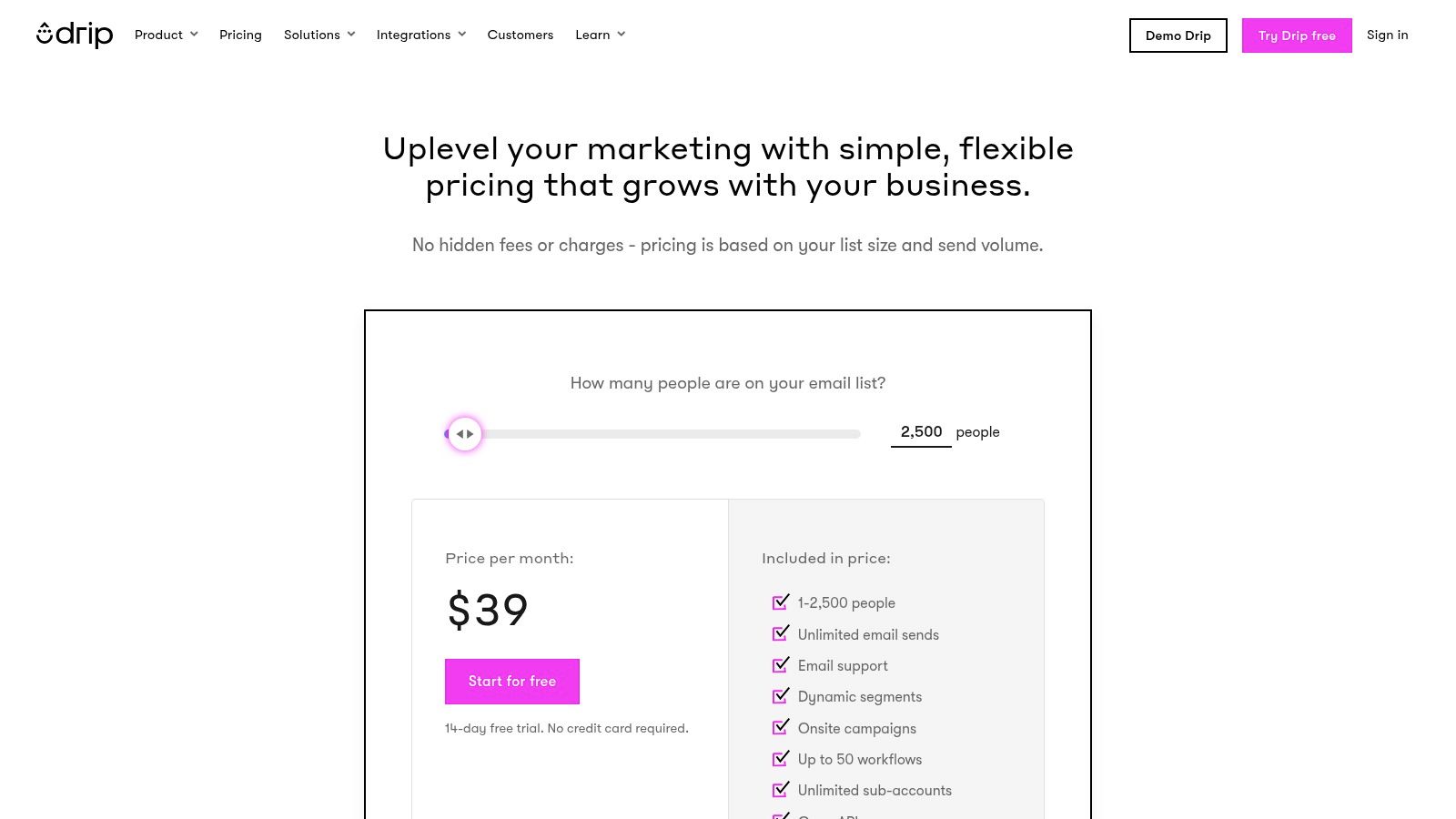
The platform provides over 50 pre-built automation workflows and playbooks designed to engage customers at every stage of their journey, from welcome series to win-back campaigns. Its tight integration with Shopify and Shopify Plus allows for powerful onsite popups and forms that capture leads effectively. For brands prioritizing lifecycle marketing and turning email into a primary sales channel, Drip provides the specialized tools to get it done without the complexity of an enterprise solution.
Key Details:
- Best For: E-commerce and direct-to-consumer (DTC) brands, especially those using Shopify.
- Pros: Strong e-commerce focus, transparent list-based pricing with unlimited sends, and useful pre-built automation playbooks.
- Cons: Less suitable for non-ecommerce businesses. It has limited native tools for webinars or complex landing pages compared to all-in-one marketing suites.
- Website: https://www.drip.com/pricing
Top 12 Email Marketing Platforms: Small Business Comparison
Here is a summary of the top platforms to help you compare them at a glance.
1. Mailchimp
- Best for: SMBs, agencies, entry-level ecommerce.
- Key Features: Drag-and-drop editor, automations, 300+ integrations, AI tools.
- UX & Support: Beginner-friendly, strong deliverability, large ecosystem.
- Value: Contact-based billing with a free tier; can become pricey at scale.
2. Klaviyo
- Best for: Shopify/WooCommerce ecommerce brands.
- Key Features: Event-driven segmentation, lifecycle flows, revenue attribution, SMS.
- UX & Support: Very granular & analytical; steeper learning curve.
- Value: Profile-based pricing; high ROI for revenue-focused stores.
3. Brevo (formerly Sendinblue)
- Best for: SMBs with large lists but low send volume.
- Key Features: Email, SMS, WhatsApp, transactional email, visual automations.
- UX & Support: Budget-friendly with a basic CRM; UI is less polished.
- Value: Pay-per-send model with unlimited contacts provides cost control for large lists.
4. Constant Contact
- Best for: Local services, nonprofits, event-driven SMBs.
- Key Features: Email builder, event tools, polls/surveys, list growth tools.
- UX & Support: Guided onboarding, live phone/chat support, easy to learn.
- Value: No perpetual free plan (trial only); contact-based pricing.
5. MailerLite
- Best for: Budget-conscious SMBs and creators.
- Key Features: Email builder, automations, landing pages, websites, blogging.
- UX & Support: Clean, modern UX with excellent value for features included.
- Value: Generous free/affordable plans; advanced features reserved for higher tiers.
6. ActiveCampaign
- Best for: SMBs needing advanced automation & CRM.
- Key Features: Visual automations, advanced segmentation, site tracking, native CRM.
- UX & Support: Extremely powerful automation; has a setup and learning curve.
- Value: Contact-based pricing that scales with contacts and plan level.
7. HubSpot Marketing Hub
- Best for: SMBs wanting an all-in-one CRM-backed stack.
- Key Features: Email, landing pages, ads, CRM-powered personalization, analytics.
- UX & Support: Enterprise-grade polish and robust support; onboarding fees possible.
- Value: Free core tools are available, but Professional/Enterprise tiers are expensive.
8. ConvertKit (Kit)
- Best for: Creators, coaches, and consultants selling digital goods.
- Key Features: Visual automations, tagging, sequences, built-in commerce.
- UX & Support: Simple, fast to launch; minimalist design for creators.
- Value: Creator-focused pricing that scales with subscribers.
9. Omnisend
- Best for: Ecommerce DTC brands seeking an omnichannel solution.
- Key Features: Prebuilt ecommerce flows, SMS, web push, revenue tracking.
- UX & Support: Solid omnichannel features; has a moderate learning curve.
- Value: Free plan available; Pro plan unlocks the best ecommerce features.
10. GetResponse
- Best for: Lead-gen and webinar-focused SMBs.
- Key Features: Email automation, landing pages, funnels, webinar hosting.
- UX & Support: Broad toolset can be overwhelming; good value for bundled features.
- Value: Tiered pricing with frequent promos; webinar limits on lower plans.
11. Campaign Monitor
- Best for: Agencies & brand-focused SMBs valuing design.
- Key Features: High-quality templates, refined builder, journeys, dynamic content.
- UX & Support: Excellent design control and deliverability focus.
- Value: Contact-based pricing; can be pricier for large lists.
12. Drip
- Best for: DTC ecommerce & Shopify-focused brands.
- Key Features: Advanced segmentation, 50+ workflows, onsite popups, APIs.
- UX & Support: Ecommerce-first UX; transparent list pricing; quick revenue focus.
- Value: List-based pricing with unlimited sends; optimized for ecommerce.
From Platform to Profit: Making Your Final Choice
Selecting the right tool from this extensive list of the best email marketing platforms for small business can feel like the final exam after a long course. We’ve examined a dozen powerful options, from the user-friendly interface of Mailchimp to the revenue-driven automation of Klaviyo, and the all-in-one capabilities of HubSpot. Each platform offers a unique set of features tailored to different business models and stages of growth. The key takeaway is that there is no single “best” platform; there is only the best platform for your specific needs.
Your decision should be a direct reflection of your business goals. An e-commerce store in Tampa focused on driving repeat purchases has vastly different requirements than a St. Petersburg law firm aiming to nurture long-term client relationships. The former might thrive with Omnisend’s deep Shopify integration, while the latter could find Constant Contact’s straightforward lead nurturing tools more than sufficient. Don’t be swayed by a long list of features you’ll never use. Instead, focus on the core functionality that will move the needle for your business today and support your growth tomorrow.
A Practical Framework for Your Decision
Before you commit, map your choice back to your core business needs. A clear-eyed assessment will prevent you from overspending on a complex system or outgrowing a simpler tool too quickly.
Consider these final checkpoints:
- For E-commerce: If your primary goal is to increase customer lifetime value and automate sales sequences based on purchase behavior, look closely at Klaviyo, Drip, and Omnisend. Their direct integrations with platforms like Shopify and BigCommerce are built for product-based businesses.
- For Service-Based Businesses: If your focus is on lead generation, appointment booking, and building authority, platforms like ActiveCampaign, Constant Contact, or Brevo offer strong CRM features and landing page builders that support your sales cycle.
- For Creators and Solopreneurs: If you’re building an audience and monetizing through content, ConvertKit and MailerLite are designed with you in mind. Their focus on clean list management, segmentation, and simple automations makes them ideal for creators.
- For the Budget-Conscious: If you’re starting out and need a robust free plan to get going, MailerLite and Brevo provide the most generous offerings without skimping on essential features like automation.
Ultimately, choosing an email marketing platform is a strategic business decision, not just a software purchase. The right tool will become the engine of your customer communication, driving engagement, nurturing leads, and generating predictable revenue. Take the time to sign up for free trials, test the user interface, and see which one feels like a natural extension of your brand. Your future profits will thank you for the diligence you invest now.
Feeling overwhelmed by the options or unsure how to integrate your chosen platform into a broader growth strategy? The team at Netco Design LLC specializes in building cohesive digital marketing systems that turn technology investments into real-world revenue. We help small businesses in Tampa Bay and beyond select and implement the right tools to achieve their goals. Contact Netco Design LLC today to ensure your email marketing efforts are built for success from day one.

