

table of contents
In today’s competitive landscape, having a great product or service isn’t enough. Effective digital marketing is the engine that drives visibility, attracts qualified customers, and fuels sustainable growth. But for small business owners, the sheer number of available channels can feel overwhelming. Where do you invest your limited time and budget for the highest return? This guide cuts through the noise.
We’ve compiled 10 high-impact, actionable digital marketing strategies for small business owners ready to move beyond theory and start generating real-world results. Each strategy is broken down into a practical framework, complete with expert tips, real-world examples, and clear guidance on the required effort, cost, and key performance indicators (KPIs) for measurement. Whether you’re a local service provider in Tampa Bay looking to dominate local search or an e-commerce startup aiming for national reach, these proven tactics will help you build a powerful, revenue-focused marketing machine.
From mastering Local SEO and building a content engine to launching targeted paid advertising campaigns, this comprehensive roundup provides the clarity you need to make informed decisions. For business owners looking to leverage paid advertising effectively, our Ultimate Google Ads Guide for Small Businesses offers practical, cost-efficient tactics to get started. The following strategies are designed to be implemented methodically, allowing you to build a cohesive marketing system that delivers consistent leads, sales, and long-term brand loyalty. Let’s dive into the tactics that will supercharge your growth.
1. Dominate Local Search with Hyper-Focused SEO
Search Engine Optimization (SEO) is the art of making your website appear higher in organic search results on platforms like Google. For a small business, this isn’t about competing with national giants; it’s about winning the local battle. When a potential customer in your area searches for your service, SEO ensures you’re the first name they see. It’s a long-term investment that builds digital real estate, driving a continuous flow of high-intent, pre-qualified traffic to your website without paying for every click. Unlike paid ads, the trust and authority built through SEO work for you 24/7.
How to Implement Hyper-Focused Local SEO
The goal is to signal to Google that you are the most relevant, authoritative answer for a specific service in a specific geographic area.
- Google Business Profile (GBP) Optimization: Your GBP is your digital storefront. Fully complete your profile with accurate hours, services, photos, and consistently gather positive reviews. Use the Q&A feature to address common customer questions proactively.
- Location-Specific Keywords: Instead of targeting “plumber,” target “emergency plumber in South Tampa” or “commercial plumbing St. Petersburg.” Weave these terms naturally into your website’s page titles, headings, and body content.
- On-Page SEO Signals: Create dedicated service pages for each core offering and optimize them for local search terms. Ensure your business name, address, and phone number (NAP) are consistent across your entire website, especially in the footer.
- Technical Health: A technically sound website is crucial for rankings. Ensuring your site is mobile-friendly, loads quickly, and is free from critical errors is foundational. Following the 10 essential technical SEO best practices can significantly improve your site’s health and performance in search results.
This approach is one of the most powerful digital marketing strategies for small business owners because it captures users at the exact moment they need your services. For a deeper dive into building a winning plan, learn more about crafting an effective SEO strategy for your small business.
2. Build Authority and Trust with Content Marketing
Content marketing is the strategic practice of creating and distributing valuable, relevant, and consistent content to attract and retain a clearly defined audience. Instead of directly pitching your products or services, you provide genuinely useful information that educates, entertains, or solves problems for potential customers. For a small business, this levels the playing field, allowing you to build brand loyalty and establish expertise without a massive advertising budget. It’s a powerful engine for attracting qualified leads by becoming a trusted resource, not just another vendor.
How to Implement a Content Marketing Strategy
The objective is to become the go-to source of information in your niche, building an audience that trusts you and eventually becomes customers.
- Solve Customer Pain Points: Your content should directly address the questions, challenges, and needs of your ideal customer. Create blog posts, guides, or videos that answer the “how-to,” “what-is,” and “best way to” questions they are already searching for online.
- Establish Pillar Topics: Instead of writing random articles, build your content around core “pillar” topics central to your business. Create comprehensive guides on these pillars and then produce smaller, related “cluster” content (like blog posts or social media updates) that all link back to the main pillar page.
- Repurpose Content for Maximum Reach: A single piece of research can be repurposed into multiple formats. A detailed blog post can become an infographic, a short video for social media, a series of email tips, or a segment in a podcast. This maximizes your effort and reaches different audience segments.
- Maintain a Consistent Schedule: Consistency is key to building an audience. Whether you publish weekly or bi-weekly, a predictable schedule keeps your audience engaged and signals to search engines that your site is a fresh, active source of information.
This approach is one of the most effective digital marketing strategies for small business owners because it nurtures leads over time and builds a lasting brand asset. To develop a comprehensive plan, you can learn more about creating an effective content marketing strategy for your small business.
3. Social Media Marketing
Social media marketing leverages platforms like Facebook, Instagram, and LinkedIn to build a community, engage directly with customers, and drive business growth. For a small business, it’s about creating a direct line of communication with your audience, humanizing your brand, and building loyalty. It combines organic content that provides value with paid advertising that targets specific demographics, turning followers into customers. More than just a sales channel, social media is a powerful tool for brand storytelling and market research.

How to Implement Social Media Marketing
The goal is to be present where your customers spend their time, building relationships through consistent and authentic engagement.
- Platform Selection: Don’t try to be everywhere. Focus on the one or two platforms where your target audience is most active. A local St. Pete cafe will thrive on a visual platform like Instagram, while a B2B consulting firm should focus on building authority on LinkedIn.
- Consistent, Valuable Content: Create a content calendar and post consistently (3-5 times per week). Share a mix of promotional content, behind-the-scenes looks, educational tips, and user-generated content to keep your audience engaged.
- Authentic Engagement: Social media is a two-way conversation. Respond to comments and messages promptly, ask questions in your posts, and actively participate in relevant conversations to show you’re more than just a brand.
- Targeted Advertising: Use the powerful ad-targeting features to reach your ideal customer personas. Run campaigns to boost brand awareness, drive website traffic, or generate leads with specific, measurable goals.
This strategy is one of the most effective digital marketing strategies for small business because it fosters community and builds lasting customer relationships. For more actionable guidance, check out these essential social media marketing tips for your small business.
4. Nurture Leads and Drive Repeat Sales with Email Marketing
Email marketing is the practice of sending targeted commercial messages directly to a list of subscribers who have opted in to receive them. It remains one of the highest-return-on-investment digital marketing strategies for small business owners, giving you a direct line of communication to your audience. Unlike social media, where algorithms control reach, your email list is an asset you own. It’s a powerful tool for nurturing leads, building customer loyalty, promoting special offers, and driving consistent, predictable revenue.
How to Implement a High-Impact Email Marketing Program
The objective is to deliver the right message to the right person at the right time, turning subscribers into loyal customers and brand advocates.
- Build Your List Organically: Never buy an email list. Instead, offer a valuable incentive, like a discount, a free guide, or exclusive content, in exchange for an email address. Place sign-up forms prominently on your website and at your physical location.
- Segment and Personalize: Group your subscribers based on their behavior, demographics, or purchase history. A roofing company in Clearwater, for example, could segment by “new homeowners” versus “past repair clients” to send more relevant content.
- Automate Key Touchpoints: Set up automated “drip” campaigns. A welcome series can onboard new subscribers, while an abandoned cart sequence can recover potentially lost sales for e-commerce businesses. This automation works for you around the clock.
- Focus on Value and a Clear CTA: Every email should provide value before it asks for a sale. Share helpful tips, industry news, or success stories. Conclude with a single, clear call-to-action (CTA) like “Shop Now,” “Book a Consultation,” or “Read the Full Story.”
This approach transforms your email list from a simple contact database into an active, revenue-generating machine. For a comprehensive guide to maximizing your efforts, review these email marketing campaign best practices.
5. Pay-Per-Click Advertising (PPC)
Pay-Per-Click (PPC) advertising is the strategy of paying for prime placement on search engines like Google or social media platforms. You only pay when a user actually clicks on your ad, making it a highly controllable and measurable way to drive immediate traffic. While SEO builds long-term organic authority, PPC allows a small business to instantly appear at the top of search results for its most valuable keywords, capturing high-intent customers from day one. It’s a powerful lever for generating leads, promoting special offers, and testing market demand quickly.
How to Implement Effective PPC Campaigns
The goal is to maximize your return on ad spend (ROAS) by putting the most relevant ads in front of the right audience at the moment they are ready to act.
- Start with High-Intent Keywords: Begin with a small, focused set of “exact match” and “phrase match” keywords that signal a strong desire to buy, such as “24-hour AC repair Tampa” or “buy women’s running shoes online.” This minimizes wasted spend on broad, irrelevant searches.
- Optimize Your Landing Pages: Sending paid traffic to a generic homepage is a recipe for failure. Create dedicated landing pages that directly match the promise of your ad, with a clear call-to-action (CTA) and minimal distractions to guide users toward conversion.
- Leverage Ad Extensions: Enhance your ads with extensions to provide more information and take up more valuable space on the results page. Sitelink extensions, location extensions, and call extensions can significantly boost your click-through rate (CTR) without additional cost per click.
- Implement Conversion Tracking: You cannot optimize what you don’t measure. Set up conversion tracking from the very beginning to understand which keywords, ads, and campaigns are driving actual results, whether that’s a form submission, a phone call, or a product purchase.
This approach is one of the most direct digital marketing strategies for small business owners seeking immediate results and scalable growth. To ensure your budget is used effectively, explore the nuances of PPC management for small business to build and refine winning campaigns.
6. Tap into Niche Audiences with Micro-Influencer Marketing
Influencer marketing involves collaborating with individuals who have a dedicated social following to promote your brand. For small businesses, this doesn’t mean chasing celebrities with millions of followers. Instead, the focus is on micro-influencers (typically 10,000 to 100,000 followers) who command high levels of trust within a specific niche. Their recommendations feel like authentic advice from a knowledgeable friend, not a paid advertisement. This strategy allows you to bypass ad fatigue and connect directly with a highly relevant, pre-vetted audience that is primed to listen.
How to Implement Micro-Influencer Marketing
The objective is to find authentic partners whose audience perfectly matches your ideal customer profile, creating a powerful and genuine endorsement.
- Identify Niche-Specific Influencers: Look for creators who specialize in your industry or local area. A St. Pete-based food blogger reviewing your new restaurant or a Tampa fitness influencer wearing your activewear will have a much greater impact than a generic lifestyle account.
- Vet for Authentic Engagement: Don’t just look at follower counts. Analyze the comments and conversations happening on their posts. Are their followers genuinely engaged and responsive? High engagement rates on a smaller audience are far more valuable than passive likes on a massive one.
- Structure a Win-Win Partnership: You don’t always need a large upfront budget. Start by offering free products, services, or an affiliate partnership where the influencer earns a commission on sales they drive. This lowers your risk and incentivizes performance.
- Grant Creative Freedom and Track ROI: Provide guidelines, but allow the influencer to create content in their own unique voice for maximum authenticity. To measure success, provide them with a unique discount code or a trackable link. This makes it easy to see exactly how many sales or leads their campaign generated.
This approach is one of the most effective digital marketing strategies for small business owners looking to build brand trust and reach targeted communities quickly. For more on building these relationships, HubSpot offers excellent guidance on how to create a successful influencer marketing strategy.
7. Engage and Convert with Video Marketing
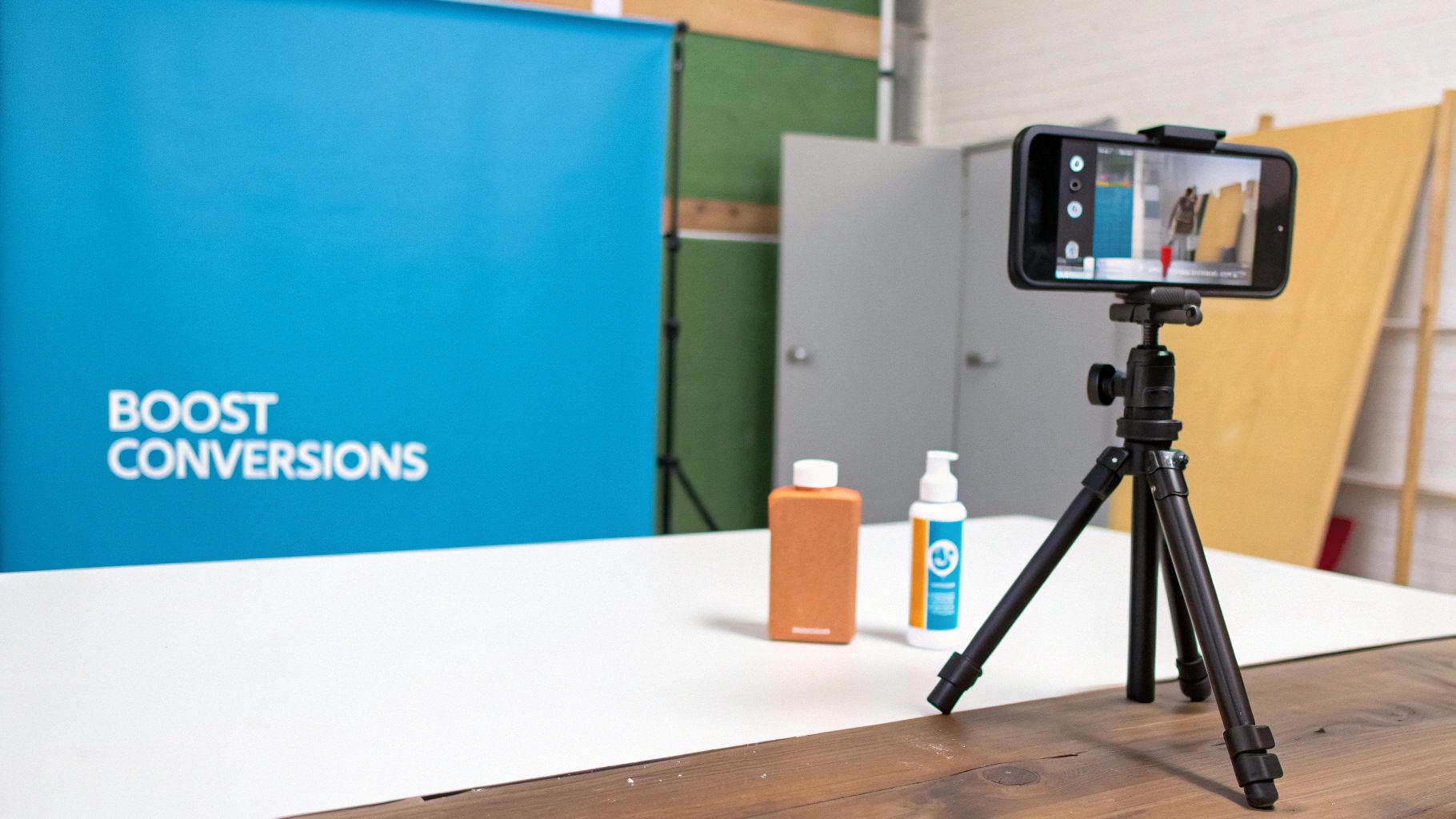
Video marketing involves using video content to promote your brand, educate your audience, and drive engagement across digital platforms. From short, snappy clips on TikTok and Instagram Reels to in-depth tutorials on YouTube, video captures attention in a way static content simply can’t. For a small business, it’s a powerful tool to humanize your brand, showcase products in action, and build a stronger connection with potential customers, often leading to significantly higher engagement and conversion rates.
How to Implement Video Marketing Effectively
The key is to create content that provides value, whether it’s through entertainment, education, or demonstrating a solution to a customer’s problem. You don’t need a Hollywood budget; a smartphone and good lighting are often enough to get started.
- Start with Simple, High-Impact Content: You don’t need a full production crew. Use your smartphone to film customer testimonials, behind-the-scenes looks at your business, or quick product demonstrations. Utilize free editing tools like CapCut or Canva to add captions and branding.
- Hook Viewers Immediately: The first three seconds are critical. Start with a compelling question, a bold statement, or visually interesting movement to stop viewers from scrolling past your content.
- Optimize for Each Platform: Keep videos under 60 seconds for platforms like Instagram Reels and TikTok. For YouTube, you can create longer, more detailed content like tutorials or in-depth product reviews. Always add captions, as many users watch videos with the sound off.
- Repurpose Strategically: One long-form video, such as a webinar or detailed tutorial, can be clipped into dozens of short-form videos for social media. This maximizes your effort and creates a consistent stream of content from a single recording session.
This approach is one of the most effective digital marketing strategies for small business owners looking to build brand personality and trust. It allows you to show, not just tell, what makes your business unique. For inspiration on creating compelling brand stories through video, check out these insights on leveraging video marketing for your business.
8. Build a Sales Army with Affiliate Marketing
Affiliate marketing is a performance-based strategy where you partner with individuals or companies (affiliates) to promote your products or services. Instead of paying for ad impressions or clicks, you pay a commission only when an affiliate’s promotional efforts result in a sale or lead. It’s like having a dedicated, commission-only sales team that leverages their own audience and credibility to drive business your way. This approach is exceptionally cost-effective and low-risk, making it a powerful tool for scaling growth without massive upfront marketing spend.
How to Implement a Small Business Affiliate Program
The goal is to create a mutually beneficial partnership that incentivizes affiliates to actively and authentically promote your brand to their established audiences.
- Recruit from Your Customer Base: Your most passionate customers are your best potential advocates. Invite them to join your program first; they already know and love your product, making their endorsements genuine and highly effective.
- Offer Competitive Commissions: Research what similar businesses in your industry offer. A competitive commission rate is crucial for attracting and retaining high-quality affiliates who will prioritize promoting your products over others.
- Provide High-Quality Assets: Make it easy for affiliates to succeed by providing them with professional banners, product images, pre-written copy, and unique tracking links. The more support you provide, the better they can represent your brand.
- Use Management Software: Platforms like LeadDyno or ShareASale are essential for managing an affiliate program. They handle link tracking, commission payments, and performance analytics, which saves you significant administrative time and ensures accuracy.
- Establish Clear Terms: Create a clear agreement that outlines commission structures, payment schedules, and brand guidelines for promotion. This prevents misunderstandings and protects your brand integrity.
This is one of the most scalable digital marketing strategies for small business because it directly ties marketing costs to revenue. To see how these platforms facilitate partnerships, explore how a network like CJ Affiliate connects merchants with a vast pool of potential promoters.
9. Automate and Scale with Marketing Automation
Marketing automation uses software to streamline and manage repetitive marketing tasks, from email follow-ups to social media posting. For a small business, it’s like hiring a digital assistant who works around the clock to nurture leads, engage customers, and deliver personalized experiences at scale. This allows your team to shift focus from tedious, manual processes to high-level strategy and customer relationships. By automating workflows, you ensure timely, relevant communication that moves prospects through the sales funnel efficiently, improving conversion rates and maximizing your marketing ROI.
How to Implement Marketing Automation
The core goal is to create automated systems, or “workflows,” that trigger actions based on user behavior, saving time and increasing message relevance.
- Map the Customer Journey: Before building any workflow, outline the typical path a customer takes from awareness to purchase. Identify key touchpoints where automated communication can nurture the relationship, such as a welcome email after a signup or a follow-up after a cart is abandoned.
- Start with Email Sequences: Email is the easiest entry point into automation. Create a simple welcome series for new subscribers or a lead nurturing sequence for users who download a guide. Use platforms like ActiveCampaign or HubSpot to build these flows.
- Utilize Behavioral Triggers: Make your automation smart. Set up triggers based on user actions, such as sending a targeted offer to a customer who repeatedly visits a specific product page or enrolling a lead into a new sequence after they click a link in an email.
- Segment Your Audience: Don’t send the same message to everyone. Use tags and lists to segment your audience based on their interests, purchase history, or engagement level. This allows for highly personalized and effective automated campaigns.
Implementing marketing automation is one of the most impactful digital marketing strategies for small business owners looking to scale their efforts without a proportional increase in manual work. For a practical guide on setting up your first workflows, explore HubSpot’s detailed instructions on how to create automated email workflows.
10. Local SEO and Google My Business Optimization
Local Search Engine Optimization (SEO) is the practice of increasing the online visibility of a brick-and-mortar business within a specific geographic area. It’s designed to capture customers who are actively searching for products or services “near me.” For a small business, mastering local search means being the first and best answer for nearby customers, driving direct foot traffic and phone calls. Your Google Business Profile (GBP) is the cornerstone of this strategy, acting as a mini-website directly on Google’s search and map results.
How to Implement Local SEO & GBP Optimization
The primary objective is to make it incredibly easy for Google and potential customers to find, trust, and choose your business over local competitors. This is achieved by providing strong, consistent signals about who you are, where you are, and what you do.
- Complete Your Google Business Profile: This is non-negotiable. Fill out every single section of your GBP, including services, products, operating hours, photos, and attributes. An incomplete profile is a missed opportunity.
- Build Local Citations: Ensure your business’s Name, Address, and Phone number (NAP) are listed accurately and consistently across major online directories like Yelp, Apple Maps, and industry-specific sites.
- Generate and Respond to Reviews: Actively encourage satisfied customers to leave reviews on Google. Respond professionally to all feedback, both positive and negative, to show you are an engaged and customer-focused business.
- Use Location-Specific Keywords: Optimize your website’s content and your GBP’s descriptions with keywords that include your city or neighborhood. For instance, a Tampa bakery should target “best cupcakes in South Tampa” rather than just “best cupcakes.”
- Publish Regular GBP Posts: Use the Google Posts feature to share updates, promotions, and news. This keeps your profile fresh and signals to Google that your business is active.
This approach is one of the most cost-effective digital marketing strategies for small business owners because it targets customers with immediate purchase intent. For a comprehensive guide on maximizing your local presence, review BrightLocal’s expert advice on how to use Google Business Profile to get more customers.
Top 10 Small-Business Digital Marketing Comparison
Here’s a quick-glance comparison of the ten strategies to help you prioritize.
- Search Engine Optimization (SEO): High implementation complexity requiring technical skills, content, and time. Ideal for long-term organic growth, it delivers cost-effective traffic and high-intent leads over 3-6+ months.
- Content Marketing: Medium complexity involving planning and production. Perfect for building thought leadership, it builds trust and supports SEO efforts.
- Social Media Marketing: Medium complexity focused on consistent content and community management. Best for B2C and local brands seeking brand awareness and direct engagement.
- Email Marketing: Low to medium complexity. A must for e-commerce and repeat-purchase businesses, it offers very high ROI through direct, personalized communication.
- Pay-Per-Click Advertising (PPC): Medium to high complexity due to campaign setup and optimization. Use for immediate traffic, product launches, and time-sensitive offers for fast, scalable results.
- Influencer Marketing: Medium complexity, requiring outreach and relationship management. Great for consumer brands in niche categories to gain authentic endorsements and social proof.
- Video Marketing: Medium to high complexity in production and editing. Ideal for product demos and storytelling, it creates a strong emotional connection and high engagement.
- Affiliate Marketing: Low to medium complexity. A fantastic low-risk, pay-for-performance model for e-commerce and digital products to achieve scalable sales growth.
- Marketing Automation: High complexity, needing careful workflow design. Essential for businesses needing to scale lead nurturing and personalization, saving time and improving efficiency.
- Local SEO & Google My Business: Low to medium complexity. A critical strategy for all local service businesses, it provides free, prominent local visibility and captures high-intent customers quickly.
Turning Strategy into Action: Your Next Steps to Digital Growth
We’ve explored a comprehensive landscape of powerful digital marketing strategies for small business, from the foundational necessity of Local SEO to the engaging power of video and the precision of PPC advertising. The sheer volume of options can feel overwhelming, but the path to digital success isn’t about doing everything at once. It’s about doing the right things, consistently and intelligently.
The journey begins not with a sprint across all ten channels, but with a focused, strategic first step. The most effective approach is to build a strong, sustainable engine for growth rather than chasing fleeting trends. For a St. Petersburg-based home services company, that engine might be a hyper-focused Local SEO campaign combined with a robust reputation management system to build trust. For a Tampa e-commerce boutique, the initial thrust might come from visually compelling social media ads on Instagram paired with a retargeting PPC campaign on Google Shopping.
The key is to move from passive learning to active implementation. Don’t let this comprehensive guide become just another bookmarked article. Instead, view it as a blueprint for action. The real value lies in translating these concepts into tangible results that impact your bottom line.
Your Immediate Action Plan: From Insight to Impact
To transform these ideas into measurable growth, resist the temptation to launch ten campaigns simultaneously. Instead, channel your energy into a focused, phased approach that builds momentum over time.
- Conduct a Self-Audit: Before you spend a dollar, assess where you are right now. Which of these strategies aligns most directly with your primary business objective? If your goal is immediate lead generation, PPC might be your focus. If it’s long-term brand authority, content marketing is your foundation.
- Select Your “Power Duo”: Choose one or two core strategies to master first. This is crucial for avoiding resource drain and burnout. A powerful starting combination for many local businesses is Local SEO + Email Marketing. This duo works to attract new local customers and then nurtures those relationships for repeat business, creating a sustainable growth loop.
- Define Your Metrics of Success: For each chosen strategy, define what success looks like. Don’t rely on vague vanity metrics. For SEO, track keyword rankings for your top five commercial terms and the number of qualified leads from organic search. For social media, measure engagement rate and, more importantly, click-throughs to your website that result in a conversion.
- Commit to Consistency: Digital marketing is a marathon, not a sprint. A single blog post or a one-week ad campaign will not transform your business. The compounding power of these digital marketing strategies for small business is only unlocked through persistent, consistent effort over weeks and months.
Ultimately, the goal is to create an integrated system where each marketing channel supports and amplifies the others. Your compelling content can fuel your email newsletters, your social media success can provide social proof for your PPC ads, and your strong local SEO presence can drive foot traffic that converts into five-star reviews.
This interconnected approach transforms disparate tactics into a cohesive, revenue-generating machine. By starting small, measuring your results, and systematically layering in new efforts, you can build a formidable digital presence that not only competes but wins in your market. The journey from strategy to sustained growth is an iterative process of testing, learning, and optimizing. The most important step is the first one.
Ready to turn this blueprint into a customized, high-performance marketing engine for your business? The team at Netco Design LLC specializes in implementing these exact digital marketing strategies for small business, transforming them into tangible, compounding results. Let us help you build a strategic, revenue-focused plan that drives growth for your business in Tampa Bay and beyond.

