

table of contents
In a crowded market, simply having a great product or service is no longer enough. To thrive, small businesses require a robust and intelligent digital presence. The right digital marketing strategies for small businesses are not just about being online; they are about connecting with the right customers, driving targeted traffic, and converting interest into measurable revenue. This is especially true in competitive local markets, from Tampa Bay to St. Petersburg, where visibility determines growth.
This guide provides a comprehensive blueprint, cutting through the clutter of generic advice to deliver actionable tactics you can implement immediately. We have compiled a prioritized roundup of 10 essential strategies designed to help you dominate your local niche and achieve sustainable success. Forget abstract theories and vague recommendations. Instead, we will break down each strategy into clear, manageable steps.
You will learn how to master everything from local SEO and content strategy to conversion-focused web design and pay-per-click (PPC) advertising. Each section includes specific implementation details, realistic timelines for execution, and the key performance indicators (KPIs) needed to track your return on investment. Whether you’re a local service provider, a growing e-commerce brand, or a startup ready to launch, this playbook will equip you with the tools to build a powerful growth engine, optimize your marketing budget, and turn your digital efforts into your most valuable asset. Let’s begin.
1. Local SEO Optimization
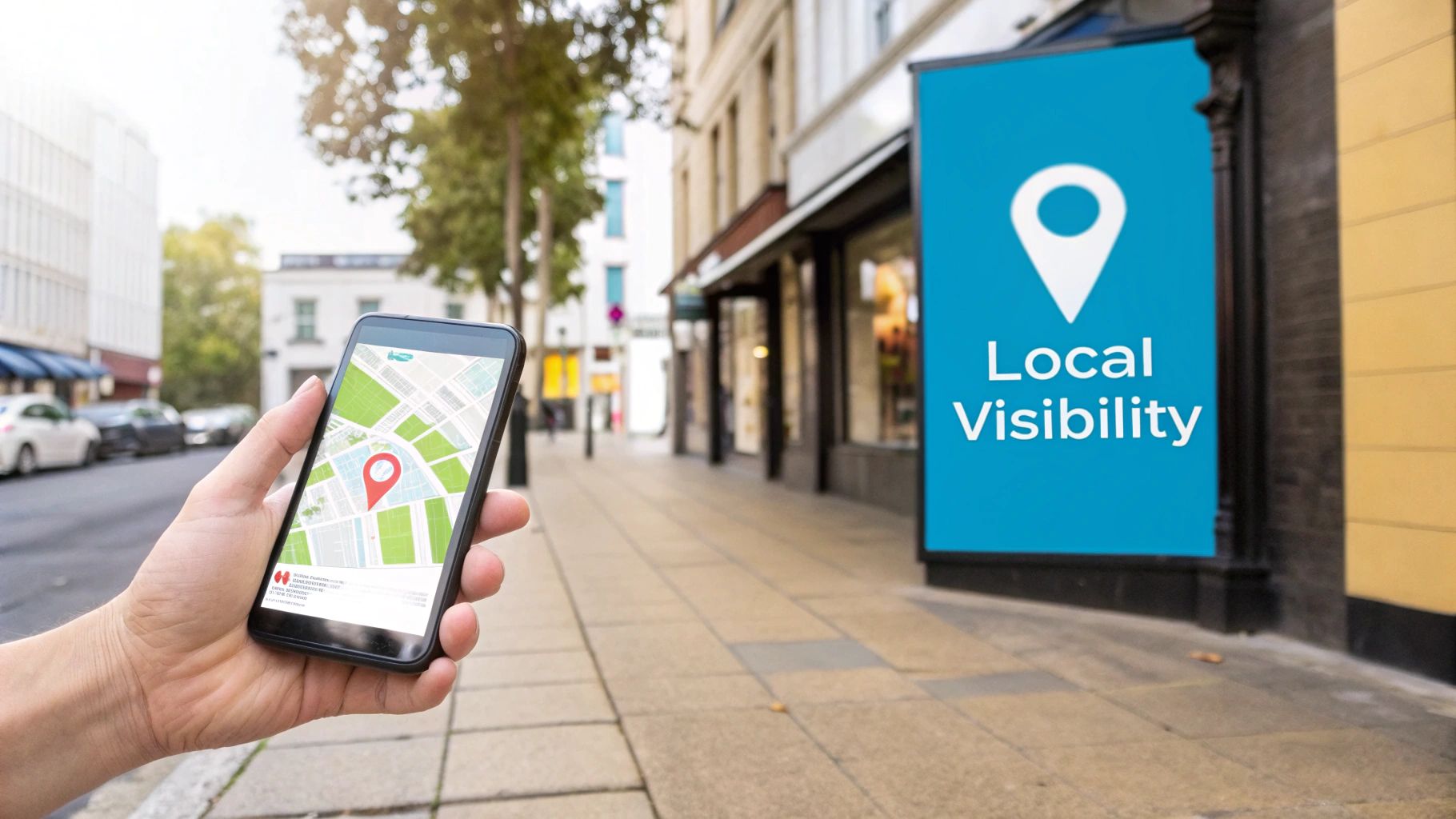
Local Search Engine Optimization (SEO) is one of the most powerful digital marketing strategies for small businesses that serve a specific geographic area. It involves optimizing your online presence to attract customers who are searching for your products or services nearby. This is critical for appearing in Google’s Local Pack, the boxed map results at the top of the search page, which captures a significant portion of user clicks.
For a Tampa Bay dental practice, this means showing up when someone searches “dentist near me” in St. Petersburg. For a home services company, it means appearing in the local map results for “landscaping in Clearwater.”
Why It’s a Top Strategy
Local SEO directly connects your business with high-intent customers at the exact moment they are looking for a local solution. These are not passive browsers; they are active buyers looking to make a purchase or book an appointment. A strong local presence builds trust and visibility within your community, making it the foundational digital marketing strategy for any brick-and-mortar or service-area business.
How to Implement Local SEO
Getting started with local SEO requires a focused, multi-faceted approach. Your Google Business Profile (GBP) is the cornerstone of this effort. It acts as a digital storefront and is often the first interaction a potential customer has with your business online.
- Claim and Optimize Your Google Business Profile: This is your most crucial local SEO asset. Fill out every section completely, including services, products, business hours, and photos. To learn how to fully leverage this free tool, you can get more details about how to optimize your Google Business Profile.
- Ensure NAP Consistency: Your Name, Address, and Phone number (NAP) must be identical across all online directories, your website, and your GBP listing. Inconsistencies can confuse search engines and harm your rankings.
- Generate Positive Reviews: Actively encourage satisfied customers to leave reviews on Google. Positive reviews are a major ranking factor and build social proof that attracts new clients.
- Build Local Citations: Get your business listed in reputable online directories like Yelp, Angi, and industry-specific sites. These listings, known as citations, verify your business information for search engines.
- Create Location-Specific Content: Develop content that targets your service areas. This could include blog posts like “The Best Hurricane Shutters for Tampa Bay Homes” or creating dedicated landing pages for each city you serve (e.g., “Plumbing Services in Largo, FL”).
2. Content Marketing & SEO-Optimized Blog Strategy
Content marketing is a strategic approach focused on creating and distributing valuable, relevant, and consistent content to attract and retain a specific audience. When integrated with SEO, this strategy helps small businesses establish authority, drive organic traffic by ranking for key search terms, and nurture potential customers through their buying journey. It moves beyond direct selling to provide genuine value first.
For a St. Petersburg law firm, this means publishing a detailed guide on “medical malpractice claims in Florida.” For a local HVAC company, it involves creating a seasonal blog post about “how to improve air conditioning efficiency during a Tampa summer.”

Why It’s a Top Strategy
Content marketing builds long-term assets that generate leads and traffic over time, unlike paid ads that stop working the moment you stop paying. By answering your audience’s most pressing questions, you build trust and position your brand as the go-to expert in your field. This is one of the most effective digital marketing strategies for small businesses looking to build a sustainable pipeline of qualified, inbound leads.
How to Implement a Content & SEO Strategy
A successful content strategy is built on understanding what your audience is searching for and creating content that is better than any existing alternative. It requires a systematic, research-driven approach rather than sporadic publishing.
- Conduct Keyword Research: Use tools to identify topics your target audience is searching for. Focus on long-tail keywords (e.g., “best family dentist in South Tampa”) which often have lower competition and higher purchase intent.
- Create High-Value “Pillar” Content: Develop comprehensive, in-depth articles or guides on core topics related to your business. These should aim to be the best resource on the web for that specific subject.
- Optimize Every Post: Ensure every piece of content includes your target keyword in the title, headings, and body text. Optimize images and use internal links to connect related articles on your site.
- Update and Refresh Old Content: SEO is not a “set it and forget it” task. Regularly update older blog posts with new information, statistics, and images to keep them relevant and maintain their search rankings.
- Promote Your Content: Share your new content on social media, in email newsletters, and with industry partners to drive initial traffic and signal its value to search engines. For a more in-depth look, see this complete guide to building a content marketing strategy for a small business.
3. Pay-Per-Click (PPC) Advertising
Pay-Per-Click (PPC) advertising is a model of digital marketing where businesses pay a fee each time one of their ads is clicked. It offers a way to buy visits to your site, rather than attempting to “earn” those visits organically. For small businesses, it provides immediate visibility on search engines like Google and social platforms like Facebook, allowing you to target high-intent customers with precision.
For example, a Tampa Bay law firm can run Google Ads to appear at the very top of the search results when someone searches for “car accident lawyer near me.” Similarly, an HVAC company can use geographically targeted ads to promote “air conditioning installation” to homeowners in St. Petersburg during the hot summer months.
Why It’s a Top Strategy
Unlike SEO, which takes time to deliver results, PPC can generate traffic and leads almost instantly. This makes it an invaluable strategy for businesses needing quick wins, testing new offers, or competing for high-value keywords while their organic presence grows. PPC provides a wealth of data, offering clear insights into what messages resonate with your audience and delivering a measurable return on investment.
How to Implement PPC Advertising
A successful PPC campaign requires careful planning, setup, and ongoing optimization to ensure your ad spend is effective. Launching a campaign involves more than just bidding on keywords; it’s about reaching the right person with the right message at the right time.
- Start with High-Intent Keywords: Focus your initial budget on commercial keywords that indicate a user is ready to buy, such as phrases including “buy,” “pricing,” “service,” or “near me.”
- Create Tightly Themed Ad Groups: Organize your campaigns into separate ad groups for different products or services. A plumber, for instance, should have separate ad groups for “emergency plumbing” and “water heater installation.”
- Write Compelling Ad Copy: Your ad must grab attention with a clear value proposition and a strong call-to-action (CTA). Highlight what makes your business unique, whether it’s 24/7 service, a free estimate, or a special offer.
- Implement Conversion Tracking: This is non-negotiable. Set up conversion tracking to measure which clicks lead to actual business outcomes like phone calls, form submissions, or sales. This data is essential for calculating ROI.
- Optimize Your Landing Pages: The user’s journey doesn’t end with a click. Ensure your landing page is highly relevant to the ad copy and makes it easy for visitors to convert.
- Use Negative Keywords: Actively add negative keywords to your campaigns to prevent your ads from showing for irrelevant searches. This simple step can significantly reduce wasted ad spend. For more details on building and managing an effective campaign, you can get insights on PPC management for small business.
4. Social Media Marketing & Community Building
Social media marketing is more than just posting updates; it’s about building and nurturing an engaged community around your brand on platforms like Facebook, Instagram, LinkedIn, and TikTok. For small businesses, it serves as a powerful tool to build brand awareness, drive website traffic, generate leads, and foster direct relationships with customers. The strategy hinges on consistent, valuable content and genuine community engagement.
For a St. Petersburg restaurant, this means creating a vibrant Facebook community with daily specials and customer photos. For a B2B consulting firm in Tampa, it involves sharing industry insights on LinkedIn to establish thought leadership and connect with potential clients.

Why It’s a Top Strategy
Social media provides a direct line of communication to your target audience, allowing you to humanize your brand and build lasting loyalty. Unlike one-way advertising, it facilitates a two-way conversation that builds trust and provides invaluable customer feedback. This community-centric approach turns passive followers into active brand advocates, making it one of the most cost-effective digital marketing strategies for small businesses.
How to Implement Social Media Marketing
A successful social media strategy requires focus, consistency, and a deep understanding of your audience. Rather than trying to be everywhere, concentrate your efforts on the platforms where your customers spend their time.
- Choose the Right Platforms: Don’t spread yourself too thin. Select 2-3 key platforms where your target audience is most active. A home services company might thrive on Facebook, while a local boutique could excel on Instagram and TikTok.
- Post Consistently: Aim for a regular posting schedule, such as 3-5 times per week, to keep your audience engaged and your brand top-of-mind. Use scheduling tools like Buffer or Later to maintain consistency.
- Focus on Engagement: Prioritize metrics that show real interaction, like comments, shares, and messages, over simple likes. Respond to all comments and direct messages promptly to show you value your community.
- Create Platform-Specific Content: Tailor your content for each platform. High-engagement video content like Instagram Reels and TikToks often outperforms static image posts.
- Showcase Your Brand’s Personality: Share behind-the-scenes content, employee spotlights, and user-generated content (UGC) from happy customers. This authentic approach builds a stronger connection than purely promotional posts. For more actionable advice, explore these social media marketing tips for small business.
5. Email Marketing & Newsletter Strategy
Email marketing is the practice of sending targeted commercial messages to a list of subscribers who have opted in to receive communication from your business. It is a direct line to your most engaged audience, allowing you to nurture leads, promote services, and drive repeat business away from the noise of social media algorithms.
For a St. Petersburg e-commerce store, this means sending abandoned cart reminders to recover lost sales. For a Tampa law firm, it involves sending a monthly newsletter with legal updates to stay top-of-mind with past and potential clients.
Why It’s a Top Strategy
Email marketing consistently delivers one of the highest returns on investment (ROI) of all digital marketing strategies for small businesses. Unlike social media, you own your email list. This direct channel allows you to build genuine relationships, segment your audience for personalized messaging, and guide subscribers through the customer journey at a low cost.
How to Implement Email Marketing
A successful email strategy focuses on providing value first and selling second. Building and nurturing your subscriber list is the key to long-term success.
- Build Your List with a Lead Magnet: Offer something valuable in exchange for an email address, such as a free guide, a discount code, or a helpful checklist. This is the foundation of growing your audience. Get more details about how to build a powerful email list from scratch.
- Segment and Personalize: Group your subscribers based on their interests, purchase history, or how they joined your list. Send personalized content that speaks directly to their needs, which dramatically increases engagement.
- Automate Key Campaigns: Set up automated “drip” campaigns like a welcome series for new subscribers, birthday offers, or appointment reminders. This saves time and ensures consistent communication. For a deep dive into email marketing specifically tailored for Shopify stores, consult The Ultimate Guide To Shopify Email Marketing.
- Write Compelling Subject Lines: Your subject line is the most important part of the email. Keep it short, intriguing, and clearly state the value inside to encourage opens.
- Focus on a Single, Clear CTA: Each email should have one primary goal and a clear call-to-action (CTA) button, such as “Book a Consultation,” “Shop the Sale,” or “Read the Blog Post.”
6. Conversion Rate Optimization (CRO)
Conversion Rate Optimization (CRO) is a systematic process of increasing the percentage of website visitors who take a desired action. Instead of focusing on attracting more traffic, CRO maximizes the value of the traffic you already have. This is a crucial digital marketing strategy for small businesses looking to improve their return on investment.
For a St. Petersburg e-commerce store, this could mean simplifying the checkout process to reduce abandoned carts. For a Tampa-based B2B service provider, it might involve testing different headlines on a landing page to generate more qualified leads from the same number of visitors.
Why It’s a Top Strategy
CRO directly impacts your bottom line by converting more browsers into buyers, leads, or subscribers. It’s one of the most cost-effective digital marketing strategies for small businesses because it enhances the performance of all other marketing efforts. A 1% improvement in your conversion rate can often be more valuable than a 10% increase in website traffic, making every marketing dollar work harder.
How to Implement CRO
Implementing CRO starts with understanding how users currently interact with your website and identifying potential barriers to conversion. From there, you can develop hypotheses and test changes to improve user experience and guide visitors toward your goals.
- Analyze User Behavior: Use tools like Google Analytics to find high-traffic pages with low conversion rates. Heat mapping tools can show where users click and scroll, revealing points of friction.
- Identify and Test High-Impact Elements: Start by testing elements that have the biggest potential impact, such as your main headline, call-to-action (CTA) button copy and color, and the number of fields in your contact form.
- Add Trust Signals: Build credibility and reduce visitor anxiety by prominently displaying customer testimonials, industry certifications, security badges (for e-commerce), and guarantees.
- Improve Page Speed: Slow-loading pages are a major cause of high bounce rates. Optimizing images and code to ensure your site loads in under three seconds is critical, especially for mobile users.
- Simplify the Path to Conversion: Make it as easy as possible for users to complete the desired action. Reduce unnecessary steps, clarify your value proposition “above the fold,” and ensure your CTA is impossible to miss.
7. Reputation Management & Online Reviews
Reputation management is the practice of monitoring and influencing your business’s public perception across digital platforms. This encompasses everything from Google and Yelp reviews to social media comments and search engine results. For a small business, your online reputation is a direct driver of revenue, as the vast majority of consumers trust online reviews as much as personal recommendations.
For a St. Petersburg medical practice, this means actively collecting positive Google reviews to build a 4.8-star rating that attracts new patients. For a Tampa-based e-commerce store, it means using Trustpilot reviews on product pages to increase conversion rates by showcasing social proof.
Why It’s a Top Strategy
This is one of the most critical digital marketing strategies for small businesses because trust is your most valuable currency. A strong, positive reputation directly impacts purchasing decisions, improves local SEO rankings, and provides a powerful defense against negative feedback. It turns happy customers into a volunteer marketing force and provides invaluable insights into how you can improve your operations.
How to Implement Reputation Management
A proactive reputation management plan involves both encouraging positive feedback and handling negative comments gracefully. The goal is to build a transparent and trustworthy brand image that resonates with potential customers.
- Systematize Review Requests: Don’t just hope for good reviews; ask for them. Implement a process to automatically request feedback from satisfied customers via email or text shortly after a purchase or service.
- Make It Effortless for Customers: Provide direct links to your review profiles in your communications. Use QR codes on receipts or in-store signage to make the process as simple as possible.
- Respond to All Reviews: Acknowledge every review, both positive and negative, within 24-48 hours. Thank positive reviewers and address negative feedback professionally and empathetically, offering a solution to take the conversation offline.
- Leverage Positive Testimonials: Showcase your best reviews and testimonials on your website, social media channels, and in your marketing materials. This social proof builds credibility and helps convert prospects.
- Monitor Your Brand Mentions: Set up Google Alerts for your business name and use tools to monitor platforms like Yelp, Facebook, and industry-specific sites. This allows you to catch and address reputation issues before they escalate.
8. Video Marketing & YouTube Strategy
Video marketing is the practice of creating, publishing, and distributing video content to engage and attract a target audience. As the most engaging content format available, video helps small businesses build powerful emotional connections, demonstrate expertise, and explain complex products or services in a way that text and images simply cannot match. It’s a versatile tool that enhances SEO, boosts social media engagement, and drives conversions.
For a St. Petersburg law firm, this could mean creating short, informative videos explaining the personal injury claim process. For a local e-commerce brand, it might involve producing product demonstration and unboxing videos to showcase their items in action.
Why It’s a Top Strategy
Video content captures attention faster and holds it longer than any other medium. It allows you to showcase your brand’s personality, build trust through transparency, and educate your audience effectively. Platforms like YouTube act as the world’s second-largest search engine, offering a massive opportunity for discovery. Integrating video is one of the most effective digital marketing strategies for small businesses looking to stand out in a crowded market.
How to Implement a Video Marketing Strategy
A successful video strategy starts with a well-optimized YouTube channel and a consistent content plan. Your goal is to create valuable content that answers your audience’s questions and solves their problems.
- Optimize Your YouTube Channel: Start with the basics. Ensure your channel has a clear, professional banner, a keyword-rich description, and a memorable name. This is your brand’s home base on the platform.
- Create High-Value Content: Focus on quality over quantity. A home services company could create compelling before-and-after renovation videos, while a dental practice might publish client testimonials or explain procedures like teeth whitening.
- Focus on the First 5 Seconds: Capture viewer attention immediately with a strong hook. Clearly state what the video is about and what value the viewer will receive to reduce early drop-off rates.
- Optimize Each Video: Write compelling, keyword-focused titles and detailed descriptions. Use relevant tags, create custom thumbnails with bold text, and add subtitles for accessibility and SEO benefits.
- Promote and Engage: Share your videos across your social media channels and in your email newsletters. Respond to comments promptly to foster a sense of community around your brand. To maximize your impact, consider exploring comprehensive strategies to grow your YouTube channel fast, encompassing content, SEO, and promotion.
9. Strategic Partnerships & Referral Programs
Strategic partnerships and referral programs are powerful digital marketing strategies for small businesses that leverage relationships to drive growth. Instead of relying solely on your own marketing efforts, you can tap into the audiences of complementary businesses and the goodwill of satisfied customers to generate high-quality leads and sales through word-of-mouth.
For a St. Petersburg law firm, this means establishing referral relationships with local CPAs and financial advisors. For a B2B SaaS company, it involves creating an affiliate program where partners earn a commission for every new customer they refer.
Why It’s a Top Strategy
This strategy builds a powerful, cost-effective marketing channel based on trust. A referral from a trusted source is far more persuasive than a traditional advertisement, leading to higher conversion rates and lower customer acquisition costs. It allows you to reach a warm, pre-qualified audience that might otherwise be difficult or expensive to access, creating a sustainable ecosystem of mutual growth.
How to Implement Partnerships & Referrals
Building a successful program requires a structured approach that makes it easy and rewarding for others to promote your business. The key is to remove friction and provide clear, compelling incentives that motivate action.
- Identify Complementary Partners: Look for non-competing businesses that serve the same target customer. An HVAC company could partner with home inspectors, a web designer with a copywriter, or a real estate agent with a mortgage broker.
- Create an Attractive Incentive: Your offer must be compelling. This could be a commission on sales, a discount on your services, a flat referral fee, or reciprocal referrals. Make the reward structure clear and valuable.
- Systemize the Referral Process: Make it incredibly simple for people to refer you. Provide partners with unique tracking links, referral codes, or a simple online form. The easier it is, the more referrals you will get.
- Equip Your Partners for Success: Give your partners the tools they need, such as co-branded marketing materials, email templates, or key talking points about your services. This ensures their messaging is consistent and effective.
- Track and Acknowledge Everything: Use a system to track where every referral comes from. This ensures you can properly attribute and reward your partners, and it helps you identify who your most valuable advocates are. Promptly thank every person who sends a referral your way.
10. Marketing Automation & CRM Integration
Marketing automation involves using software to handle repetitive marketing tasks like email follow-ups, social media posting, and lead nurturing. When integrated with a Customer Relationship Management (CRM) system, it becomes a powerhouse, allowing you to systematically manage customer relationships, track their entire journey with your business, and align your sales and marketing efforts. This is one of the most scalable digital marketing strategies for small businesses looking to grow efficiently.
For a St. Petersburg e-commerce store, this means automatically sending a personalized discount to a customer who abandons their shopping cart. For a B2B firm in Tampa, it means scoring new leads based on their website activity and automatically assigning the most promising ones to the sales team for a follow-up call.
Why It’s a Top Strategy
This strategy bridges the gap between marketing efforts and sales results. It allows a small business to deliver personalized, timely communication at a scale that would otherwise require a large team. By automating the right tasks, you free up valuable time to focus on high-level strategy and building genuine customer relationships, all while ensuring no lead falls through the cracks. It improves consistency, boosts efficiency, and provides invaluable data on customer behavior.
How to Implement Marketing Automation & CRM Integration
Getting started requires a clear plan for how you want to engage with your customers. The goal is not just to automate, but to create a better, more responsive experience for your audience.
- Choose the Right Tools: Select a CRM and marketing automation platform that fit your business size and goals. Popular options for small businesses include HubSpot, Mailchimp, and ActiveCampaign.
- Map the Customer Journey: Before building any workflows, outline the typical path a customer takes from initial awareness to a final purchase and beyond. Identify key touchpoints where automation can be most effective.
- Start with High-Impact Automations: Don’t try to automate everything at once. Begin with simple but powerful workflows like a welcome email series for new subscribers, abandoned cart reminders, or a basic lead nurturing sequence for new contacts.
- Segment Your Audience: Use the data in your CRM to group contacts based on their interests, purchase history, or engagement level. This allows you to send highly relevant, personalized messages instead of generic blasts.
- Use Behavioral Triggers: Set up automations that react to a user’s actions. For example, send a follow-up email with related resources after someone downloads a guide from your website. This makes your communication timely and relevant.
- Maintain the Human Touch: Automation is a tool, not a replacement for human interaction. Ensure your workflows have points where a real person can step in, especially for high-value leads or customer service issues.
Small Business Digital Marketing: 10-Strategy Comparison
1. Local SEO Optimization
- Complexity: Low–Medium
- Resources: Time for GBP, citations, reviews
- Outcomes: Improved local visibility, map-pack leads
- Best For: Service businesses, retail, restaurants
- Advantage: Cost-effective, high-intent local targeting
2. Content Marketing & SEO
- Complexity: High
- Resources: Skilled writers, SEO tools, time
- Outcomes: Long-term organic traffic, authority
- Best For: B2B, professional services, SaaS
- Advantage: Compounding traffic, thought leadership
3. Pay-Per-Click (PPC) Advertising
- Complexity: Medium–High
- Resources: Ongoing ad budget, campaign management
- Outcomes: Immediate visibility, fast conversions
- Best For: Promotions, competitive keywords
- Advantage: Fast results, precise targeting, scalable
4. Social Media Marketing
- Complexity: Medium
- Resources: Content creation, community management
- Outcomes: Brand awareness, engagement, customer relationships
- Best For: B2C brands, local businesses, retail
- Advantage: Builds loyalty, authentic social proof
5. Email Marketing
- Complexity: Low–Medium
- Resources: Email platform, list-building assets
- Outcomes: High ROI, repeat purchases, lead nurturing
- Best For: E-commerce, SaaS, service businesses
- Advantage: Direct communication, strong ROI, automation
6. Conversion Rate Optimization (CRO)
- Complexity: Medium–High
- Resources: Analytics, A/B testing tools, UX expertise
- Outcomes: Higher conversion rates from existing traffic
- Best For: E-commerce, landing pages
- Advantage: Maximizes traffic value, cost-effective revenue lift
7. Reputation Management
- Complexity: Low–Medium
- Resources: Monitoring tools, staff time for responses
- Outcomes: Improved trust, higher conversions, better local SEO
- Best For: Medical, legal, home services
- Advantage: Builds credibility, influences purchase decisions
8. Video Marketing
- Complexity: High
- Resources: Equipment, production time, editing skills
- Outcomes: High engagement, stronger conversions
- Best For: Product demos, tutorials, service explainers
- Advantage: Most engaging format, builds trust quickly
9. Strategic Partnerships
- Complexity: Medium
- Resources: Outreach time, incentives, tracking systems
- Outcomes: Warm, high-quality leads, lower acquisition costs
- Best For: B2B, local services, real estate
- Advantage: Leverages trust, scalable warm referrals
10. Marketing Automation & CRM
- Complexity: High
- Resources: Platform, CRM setup, integration, training
- Outcomes: Scalable lead nurturing, better sales alignment
- Best For: Growing businesses, B2B sales cycles, e-commerce
- Advantage: Saves time, personalizes at scale
Putting Your Plan into Action: Next Steps for Growth
We’ve explored a comprehensive toolkit of ten powerful digital marketing strategies for small businesses, from dominating local search results with Local SEO to building lasting customer relationships through email and social media. The journey from awareness to action can seem daunting, but it’s a path paved with incredible opportunities for growth, especially in dynamic markets like Tampa Bay. You now have a strategic blueprint covering everything from immediate lead generation with PPC to long-term brand authority through content marketing and reputation management.
The core lesson is this: success isn’t about doing everything at once. It’s about strategic implementation. The most effective approach is to build a strong foundation and then layer on complementary tactics. A high-converting website paired with a robust local SEO strategy creates a powerful magnet for qualified leads. Once that engine is running, you can add fuel with targeted PPC campaigns and nurture those leads into loyal customers with smart email marketing and community-building on social platforms.
Synthesizing Your Strategy: The Path Forward
Think of these strategies not as a checklist to be completed, but as interconnected gears in a larger growth machine. Your content marketing efforts directly support your SEO goals. Your social media engagement strengthens your brand reputation. Your CRM integration makes your email marketing more personal and effective. The key is to create a symbiotic system where each component amplifies the others.
To truly master these concepts, you must adopt a mindset of continuous improvement. The digital landscape is always evolving, and the most successful businesses are those that are agile and data-driven. Regularly analyze your performance, A/B test your campaigns, and don’t be afraid to pivot your approach based on what the analytics tell you. This iterative process of testing, learning, and optimizing is the secret to sustainable, long-term success.
Your 90-Day Action Plan
To avoid overwhelm, let’s distill this into actionable next steps. Over the next quarter, commit to mastering one or two key areas.
- Start with Your Foundation (Month 1):
- Audit Your Website: Is it truly designed for conversion? Use the principles from our CRO section to identify and fix critical issues.
- Solidify Local SEO: Ensure your Google Business Profile is fully optimized and your on-page SEO basics are covered. This is non-negotiable for local visibility.
- Activate Lead Generation (Month 2):
- Launch a Pilot PPC Campaign: Target one core service or product with a modest budget. Focus on learning the platform and gathering initial performance data.
- Publish Foundational Content: Write and publish two to three SEO-optimized blog posts that answer your target audience’s most pressing questions.
- Build and Nurture (Month 3):
- Implement an Email Welcome Series: Capture leads from your website and automatically nurture them with a simple, value-driven email sequence.
- Engage on One Social Platform: Choose the platform where your customers are most active and commit to a consistent posting and engagement schedule.
By following this phased approach, you transform a long list of digital marketing strategies for small businesses into a manageable, step-by-step plan. Each small win builds momentum, creating a compounding effect that will drive significant growth over time. The power to transform your business is now in your hands.
Ready to implement these strategies but need an expert partner to accelerate your growth? Netco Design LLC specializes in creating and executing tailored digital marketing plans for businesses just like yours, from conversion-focused web design to comprehensive SEO and PPC management. Let us handle the digital heavy lifting so you can focus on what you do best. Visit Netco Design LLC to schedule your free strategy session today.

