

table of contents
In the crowded digital marketplace, visibility is everything. A powerful SEO strategy isn’t just a recommendation; it’s the foundation for sustainable growth for your online store. While paid ads can drive immediate traffic, a well-executed organic search strategy builds long-term authority, credibility, and a consistent stream of qualified customers without the recurring ad spend. This is where mastering ecommerce SEO best practices becomes a critical competitive advantage.
This guide cuts through the noise to deliver 10 essential, actionable strategies designed specifically for small and mid-sized e-commerce businesses. We will move beyond generic advice to provide a prioritized roadmap that directly impacts your bottom line. You will learn how to master everything from the technical foundations of your site to the art of product page optimization, advanced content strategies, and strategic internal linking.
We’ll cover how to:
- Optimize product and category pages for maximum search visibility.
- Implement critical technical SEO for speed and mobile performance.
- Develop a content strategy that attracts and converts shoppers.
- Build a high-quality backlink profile that boosts your domain authority.
Each point is designed to be a practical step you can implement to attract more qualified traffic and turn those clicks into loyal patrons. To truly understand the impact of these changes, a robust analytics setup is non-negotiable. For a holistic approach to understanding your store’s performance and continuously refining your strategy, consider deeper insights into e-commerce tracking and optimization with GA4. Let’s dive into the blueprint for turning your online store into a search engine powerhouse.
1. Optimize Product Pages with Targeted Keywords and Structured Data
Your product pages are the digital storefronts where conversions happen. Optimizing them is a fundamental e-commerce SEO best practice, directly linking what users search for with what you sell. This process involves two key components: integrating high-intent keywords and implementing structured data (Schema markup) to enhance how your products appear in search results.
This dual approach ensures both search engines and potential customers clearly understand your product’s value. Keywords signal relevance, while structured data provides context, enabling search engines to display rich snippets with pricing, availability, and ratings directly in the search results. This enhanced visibility often leads to a higher click-through rate (CTR) and more qualified traffic.
How to Implement This Strategy
Effective product page optimization requires a systematic approach. Instead of simply listing features, you create a comprehensive resource that answers user questions and guides them toward a purchase.
- Keyword Research: Use tools like Ahrefs or Semrush to identify “buyer intent” keywords. Think beyond generic terms and focus on long-tail keywords that include model numbers, colors, or specific uses (e.g., “waterproof trail running shoes for men” instead of just “men’s shoes”). Place these keywords naturally in your product titles, H1 tags, meta descriptions, and image alt text.
- Unique Descriptions: Avoid using generic manufacturer descriptions. Write unique, compelling copy (aim for 300+ words) that highlights benefits, addresses potential pain points, and tells a story about the product.
- Structured Data Implementation: Use Schema.org vocabulary for
Product,Offer(for price and availability), andAggregateRating. Tools like Google’s Structured Data Markup Helper can assist in generating the code. If you want to dive deeper into this powerful technique, you can discover more about what Schema markup is and how to apply it effectively on your site. - Add an FAQ Section: Incorporate an FAQ section on product pages and use
FAQPageschema. This helps capture long-tail search queries and can earn you more real estate in the search engine results pages (SERPs).
2. Implement Technical SEO for Fast Page Speed and Mobile Optimization
Technical SEO forms the bedrock of a high-performing e-commerce site, ensuring search engines can efficiently crawl, index, and understand your content. This practice focuses on optimizing your website’s infrastructure, particularly page speed and mobile-friendliness, which directly impact user experience, conversion rates, and search rankings. With over 60% of e-commerce traffic originating from mobile devices, a technically sound, fast-loading site is no longer a luxury but a foundational necessity.

Meeting Google’s Core Web Vitals (LCP, FID, CLS) and ensuring a fully responsive design are critical components of this strategy. A slow or poorly optimized site frustrates users, leading to high bounce rates and lost sales. In contrast, a technically flawless website provides a seamless experience that encourages longer visits and more conversions, signaling to search engines that your store is a high-quality, authoritative destination.
How to Implement This Strategy
A strong technical foundation prevents common issues that can undermine all other SEO efforts. This requires a proactive approach to monitoring and improving your site’s performance, from image compression to server response times.
- Audit Your Site Speed: Regularly test your key pages using tools like Google PageSpeed Insights and GTmetrix. These tools provide actionable recommendations to improve loading times and address Core Web Vitals issues identified in Google Search Console.
- Optimize Images: Compress all product and marketing images without sacrificing quality. Use modern formats like WebP, which offers superior compression compared to JPEG and PNG. Implement responsive images that serve different sizes based on the user’s device.
- Leverage Caching and a CDN: Use a Content Delivery Network (CDN) like Cloudflare or AWS CloudFront to store copies of your site’s assets on servers closer to your users, drastically reducing load times. Enable browser caching and GZIP compression to further speed up repeat visits.
- Prioritize Mobile-First Design: Ensure your website’s theme is fully responsive and provides an excellent user experience on all screen sizes. Regularly test the mobile usability and checkout process to remove any friction for mobile shoppers. For a deeper dive, performing a complete technical SEO audit can uncover hidden opportunities for improvement.
3. Build Strategic Internal Linking Architecture
A strategic internal linking structure acts as the connective tissue for your e-commerce site, guiding both users and search engine crawlers through your product catalog. This practice involves creating a deliberate network of links that connects your homepage, category pages, product pages, and blog content, distributing page authority and establishing a clear information hierarchy. For large e-commerce stores, this is a non-negotiable part of a successful SEO strategy.
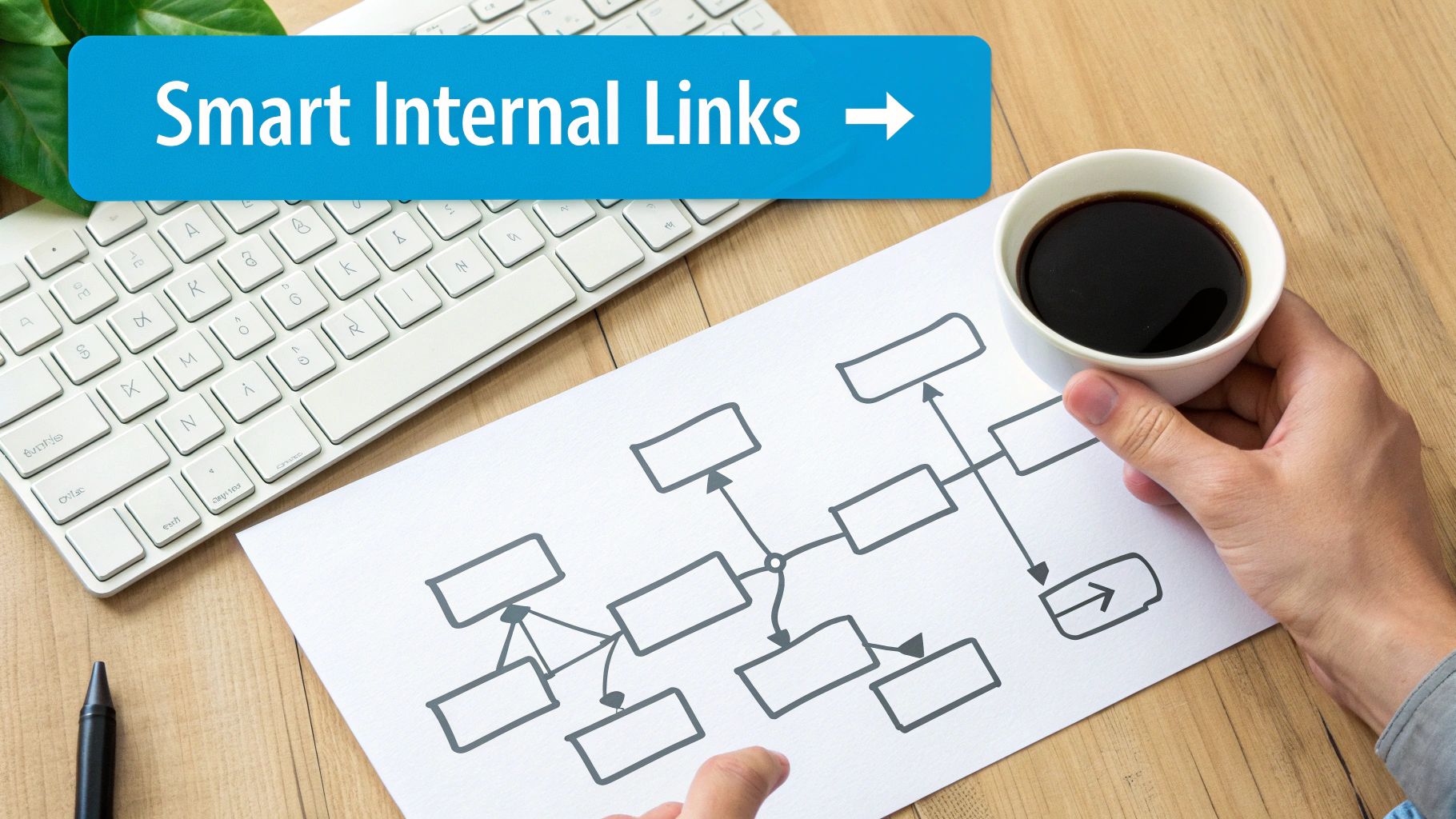
Effective internal linking helps search engines understand the relationships between your pages, which strengthens the topical relevance of your key categories. It also keeps users engaged by presenting them with relevant alternatives and complementary items, like Amazon’s famous “Customers who bought this also bought” sections, which reduces bounce rates and increases average session duration. This entire framework is a core component of a well-planned SEO site architecture.
How to Implement This Strategy
Building an effective internal linking architecture requires more than just adding random links; it’s about creating a logical flow that enhances user experience and SEO value. A well-organized site is easier to crawl, index, and rank.
- Use Descriptive Anchor Text: Avoid generic phrases like “click here.” Instead, use keyword-rich anchor text that accurately describes the destination page, such as “shop our men’s leather wallets” instead of just “wallets.” This provides crucial context for both users and search engines.
- Link from High-Authority Pages: Identify your most powerful pages (often the homepage or top-ranking blog posts) and link from them to your high-priority category or product pages. This funnels “link equity” to the pages you want to rank most.
- Implement Breadcrumb Navigation: Breadcrumbs are a series of links that show users where they are on your site and how they got there (e.g., Home > Men’s Apparel > Shirts). They are an excellent, user-friendly way to reinforce your site structure.
- Create Contextual ‘Related Products’ Sections: Go beyond generic product carousels. Use internal links to feature products that are genuinely related or complementary. For instance, a page for a camera should link to compatible lenses, memory cards, and camera bags.
4. Develop Comprehensive Category and Hub Pages
While product pages target specific, long-tail keywords, your category pages are powerhouses for capturing broader, high-volume search terms. They act as central hubs that organize products, establish topical authority, and guide users through the buyer’s journey. Optimizing these pages is one of the most impactful ecommerce seo best practices for funneling traffic from general interest to specific purchase intent.

A well-structured category page does more than just list products; it provides context and value that satisfies user intent. By adding helpful content, intuitive navigation, and clear pathways to subcategories or products, you create an authoritative resource that search engines reward. This approach helps you rank for terms like “women’s running shoes” while seamlessly directing visitors to the specific pair they want to buy.
How to Implement This Strategy
Transform your category pages from simple product grids into strategic content hubs. This involves blending commercial intent with informational content to serve users at different stages of their search.
- Write Unique Category Content: Add a 200-300 word introductory text at the top of the page. This content should target your main category keyword (e.g., “outdoor patio furniture”) and explain what users will find, highlighting key benefits or collections within the category.
- Implement Faceted Navigation: Allow users to filter and sort products by attributes like price, brand, color, size, and ratings. This improves user experience and helps search engines understand the relationships between your products. Ensure you handle the resulting URLs correctly to avoid creating duplicate content issues.
- Incorporate Buyer’s Guides: Embed or link to relevant “how-to-choose” guides or buying tips directly on the category page. For a “Digital Cameras” category, a guide on choosing between DSLR and mirrorless cameras adds immense value and targets informational keywords.
- Feature Key Subcategories and Products: Don’t rely solely on a standard grid. Create visually distinct sections to feature best-sellers, new arrivals, or important subcategories. This helps both users and search crawlers quickly identify the most important content on the page.
5. Optimize for Local SEO and Geographic Keywords (Multi-Location Focus)
For e-commerce businesses that also have physical storefronts or serve specific geographic areas, local SEO is a powerful and necessary layer. This strategy connects your online presence with real-world locations, capturing high-intent customers searching for products and services “near me.” It’s a critical component of e-commerce SEO best practices for businesses with a hybrid online and offline model.
This approach ensures you appear in Google’s “Local Pack” and on Google Maps, driving both foot traffic and local online orders. For example, a regional furniture store can rank for “sofas in Tampa” while a multi-location home service company can dominate searches in several specific neighborhoods. It bridges the gap between digital discovery and local purchasing, giving you a competitive edge over purely online retailers.
How to Implement This Strategy
Effective local SEO requires a targeted approach for each location you serve. It’s about building authority and relevance not just nationally, but at a hyperlocal level.
- Create Optimized Google Business Profiles: Set up a distinct Google Business Profile (GBP) for each physical location. Ensure every profile is complete with accurate names, addresses, phone numbers (NAP), hours, and photos. You can learn more about how to optimize a Google Business Profile effectively to maximize visibility.
- Build Location-Specific Landing Pages: Develop unique pages on your website for each service area or storefront. These pages should feature local keywords (e.g., “St. Petersburg bicycle repair”), local content like community involvement, and an embedded Google Map.
- Encourage Location-Specific Reviews: Customer reviews are a major local ranking factor. Actively encourage customers to leave reviews on your GBP and other platforms like Yelp, mentioning the specific location they visited.
- Acquire Local Citations and Backlinks: Ensure your business’s NAP information is consistent across all major local directories like Yelp, the BBB, and Yellow Pages. Build backlinks from local community organizations, event sponsorships, and local news outlets to strengthen your geographic authority.
6. Create High-Quality, Conversion-Focused Content Strategy
An effective content strategy does more than just attract traffic; it aligns SEO with your core business goals. By creating valuable blog posts, buying guides, and other resources, you can attract your target audience at various stages of their journey, establish your brand as an authority, and seamlessly guide users toward a purchase. This approach is a cornerstone of modern ecommerce SEO best practices, bridging the gap between attracting users and converting them into customers.
This strategy serves multiple crucial functions: it helps you rank for high-funnel informational keywords, builds trust with potential customers, reduces buyer friction by answering questions upfront, and creates powerful internal linking opportunities to your product and category pages. Content becomes the engine that drives both brand awareness and sales, turning your website into a comprehensive resource, not just a catalog.
How to Implement This Strategy
A successful e-commerce content strategy requires mapping content directly to the customer journey. Instead of random blog posts, you create a structured ecosystem of information that nurtures leads from awareness to decision.
- Map Content to the Customer Journey: Create content for each stage: awareness (e.g., “how to choose a running shoe”), consideration (e.g., “Brand X vs. Brand Y running shoes”), and decision (e.g., case studies or detailed product guides). This ensures you capture traffic with varying levels of purchase intent.
- Target Informational Keywords: Use SEO tools to find questions and problems your audience is searching for related to your products. Build “pillar” content (1,500+ words) around broad topics and shorter “cluster” posts for more specific long-tail queries.
- Optimize for Featured Snippets: Structure your content with clear headings, bulleted lists, and concise definitions to increase your chances of being featured in Google’s answer boxes. This can significantly boost visibility and CTR for top-of-funnel queries.
- Integrate Strategic CTAs: Every piece of content should have a purpose. Include contextually relevant calls-to-action (CTAs) that guide the reader to the next logical step, whether it’s subscribing to a newsletter, viewing a product category, or exploring a specific landing page. For inspiration, you can find excellent ecommerce landing page examples that demonstrate how to drive action effectively.
- Repurpose and Refresh: Extend the life of your best content by repurposing it into different formats like videos, infographics, or email newsletters. Additionally, schedule quarterly reviews to update evergreen content with new information, data, and internal links to keep it fresh and ranking high.
7. Build High-Quality Backlink Profile Through Strategic Link Building
Backlinks, or links from other websites to yours, remain one of Google’s most significant ranking factors. For e-commerce stores, strategic link building involves earning these endorsements from authoritative, relevant websites. This signals to search engines that your brand is a trusted resource, directly impacting your domain authority and search rankings.
Unlike passive SEO tactics, link building is a proactive effort that builds your store’s digital reputation. A strong backlink from a popular industry blog or a product review site acts as a powerful vote of confidence, driving referral traffic and improving organic visibility for your product and category pages. Quality always trumps quantity; one link from a high-authority site is more valuable than dozens from low-quality ones.
How to Implement This Strategy
A successful e-commerce link-building campaign focuses on creating genuine relationships and providing value. It’s about earning links, not just asking for them, which is a core component of any robust list of e-commerce SEO best practices.
- Create Link-Worthy Assets: Develop content that others naturally want to link to. This includes original research (e.g., a “State of the [Your Niche] Industry” report), comprehensive buying guides, or free tools like calculators relevant to your products.
- Analyze Competitor Backlinks: Use tools like Ahrefs or Semrush to see who is linking to your top competitors. This provides a ready-made list of high-value link prospects to target with your own outreach campaigns.
- Pursue Digital PR and Product Reviews: Send your products to influential bloggers, YouTubers, and journalists in your niche. Positive reviews often result in high-quality backlinks and valuable social proof that can drive sales.
- Engage in Strategic Outreach: To effectively build a robust backlink profile, explore various proven effective SEO link building strategies that yield tangible results. This could include guest posting on relevant blogs, securing placements on resource pages, and turning unlinked brand mentions into active links.
8. Implement User Experience and Core Web Vitals Monitoring
User experience (UX) has moved from a design preference to a direct ranking factor through Google’s Page Experience update. This means monitoring Core Web Vitals and overall site usability is a critical e-commerce SEO best practice. These signals measure how users perceive the experience of interacting with your web page, directly impacting both your rankings and your conversion rates.
A positive user experience reduces friction, builds trust, and encourages repeat business. For an e-commerce site, this translates to faster load times, intuitive navigation, and a stable, non-frustrating interface. By focusing on these elements, you not only satisfy search engine algorithms but also create a more effective sales funnel, turning visitors into loyal customers.
How to Implement This Strategy
Integrating UX and Core Web Vitals into your SEO workflow requires a commitment to continuous monitoring and improvement. It’s about understanding how real users interact with your site and identifying technical or design-related barriers to their success.
- Monitor Core Web Vitals: Use Google Search Console to track your site’s performance on Largest Contentful Paint (LCP), First Input Delay (FID), and Cumulative Layout Shift (CLS). Aim for a “Good” score across all metrics and address any URLs flagged as needing improvement.
- Use Heat Mapping Tools: Implement tools like Hotjar or Crazy Egg to visualize user behavior. Heat maps show where users click, scroll, and get stuck, providing invaluable insights into friction points in your navigation or checkout process.
- Conduct User Testing: Regularly perform user testing sessions with participants from your target audience. Observing even five users navigate your site can reveal significant usability issues that analytics alone cannot.
- Ensure Mobile Usability: Your mobile navigation should be simple, fast, and intuitive. Test the entire customer journey, from product discovery to checkout, on various mobile devices to ensure a seamless experience. Prioritizing this is essential for both rankings and sales.
9. Optimize for Voice Search and Featured Snippets
The way users search is evolving, with voice-activated assistants like Alexa and Google Assistant becoming primary tools for finding information. Optimizing for voice search and the coveted “position zero” of featured snippets is a critical e-commerce SEO best practice that can dramatically increase your visibility. These optimizations capture users seeking immediate, direct answers to their questions.
By structuring your content to directly answer common questions, you position your e-commerce site as the go-to authority. Search engines reward this clarity by pulling your content into featured snippets or using it as a spoken answer for a voice query. This not only drives highly qualified traffic but also builds brand trust and authority without the user even clicking on a link.
How to Implement This Strategy
Optimizing for voice and snippets requires a shift from targeting just keywords to targeting specific questions. The goal is to provide concise, structured answers that search engines can easily parse and present.
- Target Question-Based Keywords: Use tools like AnswerThePublic or Semrush’s Keyword Magic Tool to find questions related to your products (e.g., “how to clean suede boots,” “what is the best protein powder for beginners?”). These are the queries that trigger voice search results and featured snippets.
- Provide Direct, Concise Answers: Structure your content with the answer first. Begin a paragraph with a direct answer to the question, ideally between 40-60 words. You can then elaborate further in the subsequent text. This “inverted pyramid” style is perfect for snippet optimization.
- Use Natural, Conversational Language: Write content as if you were speaking to a customer. Voice searches are typically phrased in a more natural, conversational tone than typed queries, so your content should mirror this style.
- Leverage FAQ Pages and Schema: Create dedicated FAQ pages or add FAQ sections to your product and category pages. Implement
FAQPageschema markup to help search engines understand the question-and-answer format, significantly increasing your chances of appearing in rich results.
10. Conduct Regular SEO Audits and Continuous Optimization
Search engine optimization is not a set-it-and-forget-it task; it’s an ongoing process of refinement and adaptation. Regular SEO audits are the bedrock of this continuous improvement cycle, allowing you to systematically identify technical issues, discover content gaps, and react to shifts in the competitive landscape. This proactive approach ensures your e-commerce SEO best practices remain effective over time.
Treating SEO as a continuous loop of auditing, implementing, and monitoring prevents performance decay and unlocks new growth opportunities. By regularly reviewing your site’s health against search engine guidelines and competitor activities, you can make informed decisions that sustain visibility, drive qualified traffic, and align your SEO strategy directly with your business goals.
How to Implement This Strategy
A consistent audit schedule turns reactive problem-solving into a proactive strategy for growth. This involves using specialized tools to crawl your site, analyze data, and create a prioritized list of actions to improve performance.
- Schedule Regular Audits: Use comprehensive tools like Semrush Site Audit or Ahrefs’ Site Audit to run a full technical and on-page crawl at least quarterly. For a more granular technical analysis, Screaming Frog SEO Spider remains an industry standard. These tools will flag issues like broken links, redirect chains, and missing meta tags.
- Monitor Search Console Weekly: Google Search Console is your direct line of communication with Google. Review it weekly for manual actions, crawl errors, security issues, and Core Web Vitals performance. The “Performance” report is invaluable for identifying underperforming keywords and pages.
- Establish a Reporting Cadence: Create a monthly SEO dashboard to track key performance indicators (KPIs). Monitor organic traffic, keyword rankings for target terms, conversion rates from organic search, and backlink acquisition. This helps you demonstrate ROI and spot trends early.
- Analyze Competitors: At least quarterly, analyze your top competitors. Look at what keywords they are ranking for, what types of content they are creating, and where they are getting backlinks. This analysis can reveal gaps in your own strategy and inspire new tactics.
A Summary of Key Ecommerce SEO Strategies
Here’s a breakdown of the 10 best practices, focusing on their complexity, resource needs, and primary benefits.
- Product Page Optimization: A medium-complexity task requiring SEO copywriting and schema implementation. It leads to improved click-through rates and better rankings for high-intent keywords, making it essential for all product-based stores.
- Technical SEO & Speed: This is a high-complexity, developer-heavy strategy. The result is faster load times and better Core Web Vitals scores, which improves both user experience and rankings.
- Internal Linking: A medium-complexity effort that involves strategic planning. It improves site crawlability and distributes authority, offering significant SEO gains at a low cost, especially for larger sites.
- Category & Hub Pages: This medium-complexity task blends content creation with UX design. It helps you rank for broad keywords and effectively funnels users to specific products.
- Local SEO: A low-to-medium complexity task focused on Google Business Profile and location-specific content. It’s crucial for businesses with physical stores, as it dominates local search results and drives foot traffic.
- Content Strategy: An ongoing, medium-complexity effort requiring writers and SEO strategists. It builds brand authority, captures long-tail traffic, and supports the entire conversion funnel.
- Link Building: A high-complexity strategy that depends on outreach and relationship building. It increases domain authority and provides strong ranking signals, ideal for established brands looking to solidify their market position.
- User Experience (UX) & Core Web Vitals: A high-complexity, continuous effort involving designers and developers. It directly improves conversion rates and aligns with Google’s Page Experience ranking factors.
- Voice Search & Snippet Optimization: This low-to-medium complexity task focuses on content structure and schema. It can secure “position zero” visibility and capture traffic from conversational queries.
- Regular SEO Audits: A medium-complexity, recurring process requiring SEO tools and analysts. It ensures sustained growth by preventing performance decay and identifying new opportunities.
From Best Practices to Best-in-Class Performance
Navigating the landscape of ecommerce SEO can feel like assembling a complex puzzle. You have all the pieces: product page optimization, technical SEO, internal linking, content strategy, and backlink building. The true challenge, however, lies in fitting them together to create a cohesive, high-performing picture that attracts, engages, and converts your ideal customers. The journey from a basic online store to a dominant digital marketplace is built on the consistent application of these fundamental principles.
We have explored the critical pillars that support a robust search presence, from the granular details of structured data on your product pages to the high-level architecture of your category and hub pages. We covered the non-negotiable need for blazing-fast page speed and a flawless mobile experience, a cornerstone of modern user expectations and Google’s Core Web Vitals. Implementing these ecommerce SEO best practices is not about a one-time fix; it is about creating a living, breathing ecosystem that adapts to algorithm changes and evolving consumer behavior.
Synthesizing Strategy into Action
The key takeaway is that each element works in synergy. A technically sound website amplifies the reach of your high-quality content. A strategic internal linking structure guides both users and search engine crawlers to your most important pages, enhancing their authority. A thoughtful backlink profile serves as a powerful vote of confidence, signaling your credibility to Google.
To move from theory to tangible results, your next steps should be clear and prioritized:
- Conduct a Comprehensive Audit: Start by assessing where you currently stand. Use the ten key areas we discussed as your audit checklist. Identify your most significant weaknesses, whether it’s slow page load times, thin content on category pages, or a lack of structured data. This audit will be your roadmap.
- Prioritize High-Impact Tasks: You cannot tackle everything at once. Focus on the low-hanging fruit and high-impact initiatives first. For many e-commerce sites, this means optimizing top-selling product pages, fixing critical technical errors identified in your audit, and ensuring your site is fully mobile-responsive.
- Establish a Continuous Optimization Loop: SEO is not a “set it and forget it” discipline. Schedule regular reviews of your analytics, keyword rankings, and Core Web Vitals. Monitor your competitors, stay informed about algorithm updates, and be prepared to adapt your strategy. Continuous improvement is the engine of sustained growth.
The Real Value of Mastering Ecommerce SEO
Ultimately, mastering these ecommerce SEO best practices does more than just improve your rankings on a search results page. It directly impacts your bottom line by driving qualified, high-intent traffic to your digital storefront. It enhances user experience, building trust and encouraging repeat business. It fortifies your brand’s authority in your niche, making you the go-to source for the products you sell. By investing in a holistic SEO strategy, you are not just chasing keywords; you are building a more resilient, profitable, and customer-centric business. This commitment is what separates fleeting success from long-term, best-in-class performance in the competitive world of e-commerce.
Ready to turn these best practices into measurable revenue growth for your business? The expert team at Netco Design LLC specializes in creating data-driven SEO strategies that elevate e-commerce brands, helping you navigate technical complexities and implement a roadmap for sustained success. Visit Netco Design LLC to schedule a consultation and see how we can transform your online store into a powerful sales engine.

