

table of contents
In the crowded digital marketplace, simply sending an email is not a strategy. It’s a gamble. To capture attention, drive meaningful engagement, and generate revenue, your approach must be precise, your content hyper-relevant, and your execution flawless. The critical difference between an email that lands in the trash folder and one that drives a conversion lies in the details-the often-overlooked best practices that separate amateur efforts from professional, results-driven campaigns.
This guide moves beyond generic advice to provide a comprehensive roundup of the most critical email marketing campaign best practices for today’s landscape. We’ve distilled complex strategies into a clear, actionable framework designed specifically for small to mid-sized businesses, e-commerce brands, and professional service providers. You will learn not just what to do, but how and why each practice works, with specific implementation details and practical examples.
Forget surface-level tips. Here, we’ll cover everything from sophisticated list segmentation and advanced personalization to mobile-first design, deliverability, and A/B testing methodologies that yield real insights. Whether you’re aiming to nurture leads, boost sales, or build lasting customer loyalty, mastering these 10 principles will transform your email program from a simple communication channel into a powerful engine for business growth. Let’s dive into the foundational practices that define every successful email marketing campaign and unlock the true potential sitting in your contact list.
1. Segment Your Email List
Sending the same generic message to every subscriber is one of the fastest ways to land in the spam folder. The most effective email marketing campaign best practices begin with segmentation, which is the strategic division of your audience into smaller, more focused groups based on shared characteristics. This approach allows you to move beyond one-size-fits-all emails and deliver highly relevant, personalized content that resonates with each subscriber’s unique needs and interests.
The core benefit is a significant increase in engagement. When subscribers receive content tailored to them, they are far more likely to open, click, and convert. For example, an e-commerce store might send a 20% discount code to a segment of subscribers who abandoned their shopping carts, while sending new product announcements to a segment of repeat, high-value customers. This targeted messaging directly addresses subscriber behavior and intent.
How to Implement Segmentation
Start by defining a few key groups. You don’t need dozens of complex segments from the outset. Instead, focus on creating meaningful divisions that align with your business goals.
- Demographic Segmentation: Group subscribers by age, gender, location, or job title. A local Tampa Bay retailer could use this to send in-store event invitations only to subscribers in the area.
- Behavioral Segmentation: This is where the real power lies. Segment based on user actions like website pages visited, past purchases, email open rates, or specific links clicked.
- Purchase History: Create segments for first-time buyers, loyal customers, or those who purchase specific product categories. This allows for targeted cross-sells and upsells.
- Engagement Level: Separate your most active subscribers from those who haven’t opened an email in months. You can run re-engagement campaigns for the inactive segment to win them back.
To learn more about tailoring your messages to different audience groups, explore a detailed guide on how to effectively segment your email list. Building detailed buyer personas is a foundational step in this process, as it helps you understand the motivations and pain points of each segment. Learn more about creating buyer personas on netcodesign.com.
2. Craft Compelling Subject Lines
Your subject line is the gatekeeper to your email’s content; if it doesn’t capture attention, the rest of your message will go unread. Among the most critical email marketing campaign best practices is mastering the art of the subject line. This brief snippet of text is your single best chance to make a strong first impression in a crowded inbox and directly influences whether a subscriber opens your email or sends it straight to the trash.
An effective subject line is concise, creates curiosity, and clearly communicates value without being deceptive. For instance, Netflix’s “Here’s your Top 10 list for this week” offers personalized value, while Grammarly’s “You’ve been making this grammar mistake (and we can help)” sparks curiosity and offers a solution. The goal is to entice the reader to learn more, significantly boosting your open rates and overall campaign performance.

How to Implement Compelling Subject Lines
Start by brainstorming several subject line variations for every email you send. Focus on clarity and intrigue over clickbait, which can damage your sender’s reputation. A consistent, strategic approach will yield the best results.
- Keep It Brief and Mobile-Friendly: Aim for under 50 characters to ensure your full message is visible on mobile devices, where a majority of emails are opened.
- Use Personalization and Data: Incorporate a subscriber’s name or reference their recent activity. Subject lines with numbers or data, like “4 people looked at this property in the last 24 hours,” add credibility and urgency.
- A/B Test Different Styles: Continuously test different approaches to see what resonates with your audience. Pit questions against statements, try using emojis, or compare short vs. longer subject lines to optimize performance.
- Avoid Spam Triggers: Steer clear of using all caps, excessive exclamation marks, and spammy words like “free” or “act now,” which can land your email in the spam folder.
To further enhance your email’s appeal and ensure higher open rates, explore our in-depth guide on 10 Email Subject Line Best Practices. The skill of writing concise, impactful copy is similar to crafting effective web content. Find out more about writing compelling meta descriptions on netcodesign.com.
3. Personalization Beyond Names
While addressing subscribers by their first name is a good start, true personalization goes much deeper. Advanced email marketing campaign best practices involve leveraging dynamic content, behavioral triggers, and purchase history to create truly individualized experiences. This strategy moves beyond simple mail-merge tags to deliver content that reflects each subscriber’s unique journey, interests, and interactions with your brand.
The primary advantage of this deep personalization is a dramatic improvement in relevance, which directly boosts engagement and conversion rates. When an email feels like it was crafted specifically for the recipient, it cuts through inbox clutter and builds a stronger customer relationship. For instance, an online retailer like H&M can display product recommendations based on a user’s previously purchased sizes and style preferences, making the content feel less like a mass advertisement and more like a personal shopping service.

How to Implement Advanced Personalization
Begin by connecting your data sources, such as your e-commerce platform and website analytics, to your email service provider. This integration is the foundation for creating highly contextual and timely messages.
- Use Dynamic Content: Create emails with content blocks that change based on subscriber data. A travel site like Airbnb can show different destination images and offers to a user in Tampa Bay versus one in Vancouver.
- Leverage Purchase History: Send targeted emails with complementary product recommendations or replenishment reminders. Sephora excels at this by sending beauty tips and product suggestions that match a customer’s previously purchased skin type or foundation shade.
- Set Up Behavioral Triggers: Automate campaigns based on user actions. Common triggers include abandoned carts, browsing a specific product category, or reaching a new loyalty tier.
- Collect Preference Data: Implement a preference center where subscribers can explicitly tell you what they want to receive, from content topics to email frequency. This direct feedback is invaluable for tailoring your communications.
To better understand how to leverage customer data for creating these experiences, consider exploring guides on customer data platforms (CDPs). Similarly, learning about behavioral marketing automation can provide a framework for setting up effective, trigger-based campaigns.
4. Optimize for Mobile Devices
Ignoring mobile users is like closing your store for more than half the day. With a majority of emails now opened on smartphones, responsive design is no longer a “nice-to-have” but an absolute necessity. Mobile optimization is one of the most critical email marketing campaign best practices because it ensures your message is readable, engaging, and functional, regardless of the screen size it’s viewed on.
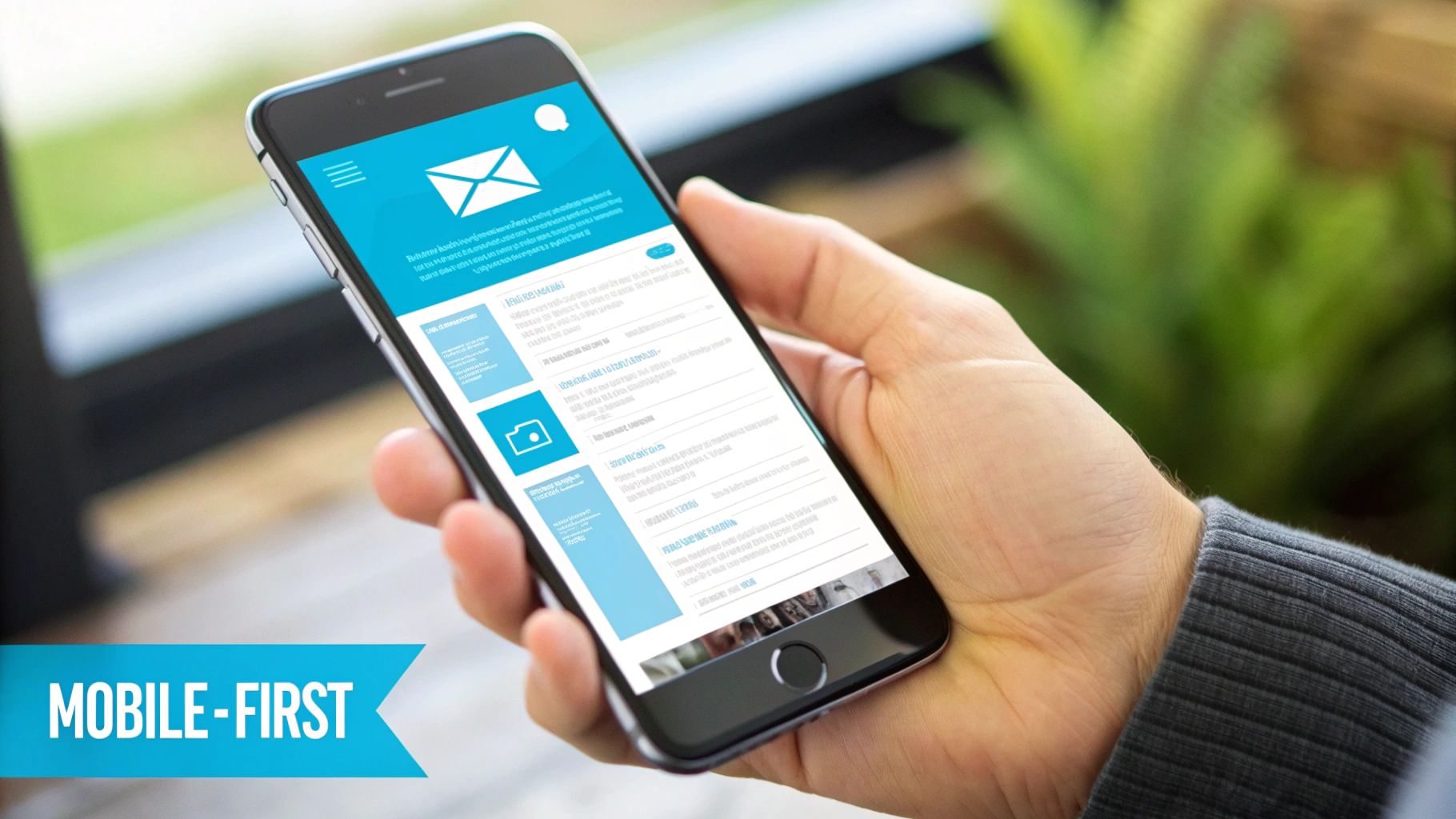
The primary benefit of a mobile-first approach is an improved user experience, which directly impacts your campaign’s success. When an email is difficult to read or interact with on a phone, subscribers are quick to delete it or even unsubscribe. Companies like Apple and Uber excel at this, using clean, single-column layouts and large, thumb-friendly call-to-action buttons that make mobile interaction seamless and intuitive. This focus on mobile usability leads to higher open rates, better click-through rates, and ultimately, more conversions.
How to Implement Mobile Optimization
Adopting a “mobile-first” mindset means you design the email experience for the smallest screen and then adapt it for larger ones. This ensures the core message and functionality work perfectly where most users will see it first.
- Use Single-Column Layouts: This is the cornerstone of mobile-friendly design. A single column ensures content stacks vertically, making it easy for users to scroll through your message without horizontal pinching or zooming.
- Make CTAs Thumb-Friendly: Ensure your call-to-action buttons are large enough to be easily tapped with a thumb. A minimum size of 44×44 pixels is a widely accepted standard.
- Keep Text Legible: Use a clear, simple font at a size that is readable on small screens (at least 14px for body text is a good starting point). Keep subject lines and preview text short and impactful, as mobile devices often truncate them.
- Compress Images: Large image files can drastically slow down load times on mobile connections, leading to subscriber frustration. Compress all images to ensure your email loads quickly without sacrificing too much quality.
- Test on Actual Devices: Before sending, use testing tools like those offered by Litmus or Email on Acid to preview how your email will look on various mobile devices and email clients. This helps you catch rendering issues before your audience does.
5. Implement Strategic Send Times
Crafting the perfect email is only half the battle; sending it at the wrong time can bury it in a crowded inbox, rendering your efforts useless. One of the most critical email marketing campaign best practices is to implement strategic send times. This means analyzing when your specific audience is most likely to be checking their email and sending your campaigns during those peak engagement windows to maximize visibility and interaction.
The core benefit is a direct and often immediate lift in open and click-through rates. An email that arrives at the top of an inbox when a subscriber is actively engaged has a much higher chance of being read and acted upon. For example, B2B software companies often find success sending educational content on Tuesday or Wednesday mornings when professionals are planning their work week. In contrast, retail brands might send promotional emails on Thursday evenings or Friday afternoons to influence weekend shopping decisions.
How to Implement Strategic Send Times
Finding your brand’s unique sweet spot requires a data-driven approach. Instead of guessing, use your own analytics to pinpoint the optimal moments to connect with your audience.
- Analyze Historical Data: Dive into your email marketing platform’s analytics. Look for patterns in open rates by both the day of the week and the hour of the day. This is the most reliable source of truth for your specific audience.
- Leverage A/B Testing: Don’t just rely on past performance. Actively test different send times. Send the same email to two different segments at different times (e.g., 9 AM vs. 2 PM on a Tuesday) and compare the results to see which performs better.
- Consider Time Zones: If your subscriber base is geographically dispersed, a single send time won’t work. Use your platform’s features to send emails based on the recipient’s local time zone, ensuring your message arrives at an appropriate hour for everyone.
- Account for Industry Benchmarks: While your own data is best, industry benchmarks can provide a great starting point for testing. For most industries, the Tuesday through Thursday morning window (9 AM – 11 AM) is considered a high-engagement period.
Many of these processes, especially time-zone-based sending, can be automated to ensure consistency and efficiency. To discover how to set this up effectively, learn more about implementing marketing automation on netcodesign.com. Regularly review your performance data to refine your send-time strategy as your audience’s habits evolve.
6. Clear Call-to-Action (CTA) Design
Every email you send should have a purpose, and a clear call-to-action (CTA) is the element that guides your subscriber toward that goal. Effective email marketing campaign best practices hinge on designing CTAs that are compelling, visually distinct, and impossible to ignore. A well-crafted CTA acts as a signpost, telling subscribers exactly what to do next, whether it’s making a purchase, reading a blog post, or signing up for a webinar.
The primary benefit of a strong CTA is an immediate lift in click-through and conversion rates. It removes ambiguity and friction, making it easy for interested subscribers to take the desired action. For example, Amazon’s iconic “Shop Now” button uses a bright, contrasting color to stand out, while Slack’s “Get Started” CTA uses vibrant purple to draw the eye. These designs are intentional choices made to maximize engagement and drive results.
How to Implement Strong CTA Design
You don’t need to be a graphic designer to create effective CTAs. The key is to focus on clarity, contrast, and compelling language that motivates action.
- Use Action-Oriented Verbs: Start your CTA copy with strong, first-person verbs. Instead of “Learn More,” try “Get My Guide.” Phrases like “Shop the Collection,” “Start Your Free Trial,” or “Download Now” are direct and tell the user what will happen when they click.
- Create Visual Contrast: Your CTA button should stand out from the rest of the email’s content. Use a bold, contrasting color that aligns with your brand but is distinct from the background. Ensure there is plenty of white space around the button to make it pop.
- Optimize for Mobile: A significant portion of emails are opened on mobile devices. Make your CTA buttons at least 44×44 pixels to be easily tappable. A button that’s too small can frustrate users and lead to lost conversions.
- Strategic Placement and Priority: Place your most important CTA “above the fold” so subscribers see it without scrolling. Limit yourself to one primary CTA to avoid decision fatigue, but feel free to include secondary, text-based links for other actions.
Optimizing your CTAs is a critical step in turning email engagement into measurable business outcomes. For a deeper dive into how small design changes can lead to big results, explore these tips on how to improve website conversion rates on netcodesign.com.
7. Maintain List Hygiene and Quality
A large email list is only valuable if it’s healthy. Sending campaigns to a list filled with invalid addresses and unengaged subscribers can severely damage your sender reputation, leading to poor deliverability and landing your messages in the spam folder. One of the most critical email marketing campaign best practices is maintaining list hygiene, which is the process of regularly cleaning and managing your subscriber data to ensure it remains high-quality and engaged.
The core benefit of good list hygiene is improved deliverability and a higher return on investment. Internet Service Providers (ISPs) like Gmail track how subscribers interact with your emails. High bounce rates, low open rates, and spam complaints are red flags that signal low-quality content or a poorly managed list. By proactively removing inactive and invalid contacts, you send positive signals to ISPs, ensuring your emails reach the inboxes of your most interested subscribers. This leads to better engagement metrics, more accurate campaign data, and ultimately, a better ROI.
How to Implement List Hygiene
Start by setting up a routine for cleaning your list, rather than treating it as a one-time task. Consistency is key to preventing deliverability issues before they start. Integrate these practices into your regular email marketing workflow.
- Remove Hard Bounces Immediately: A hard bounce is a permanent delivery failure, often due to an invalid or nonexistent email address. Most email service providers, like Mailchimp or Constant Contact, handle this automatically, but it’s crucial to confirm they are suppressed from all future sends.
- Monitor Soft Bounces: A soft bounce is a temporary issue, such as a full inbox. However, if an address consistently soft bounces (e.g., 5-10 times), it should be treated as a hard bounce and removed.
- Run Re-engagement Campaigns: For subscribers who haven’t opened an email in over six months, launch a “win-back” campaign. Offer a special discount or ask if they still want to hear from you. If they don’t respond, it’s best to remove them.
- Use Double Opt-In: Require new subscribers to confirm their email address after signing up. This practice, popularized by email experts at Validity and Return Path, ensures you are adding real, engaged users to your list and prevents typos and spam traps.
- Audit List Sources: Regularly review where your subscribers are coming from. If a specific lead source consistently brings in low-quality or unengaged contacts, it may be time to reassess that channel.
8. Test and Iterate (A/B Testing)
Making assumptions about what your audience wants is a critical mistake in email marketing. The most effective email marketing campaign best practices involve replacing guesswork with data-driven decisions through systematic A/B testing. This process, also known as split testing, involves sending two variations of a single email element to different subsets of your audience to see which one performs better. This continuous optimization is the key to unlocking higher open rates, click-through rates, and conversions over time.
The core benefit is a clear, quantifiable path to improvement. Instead of wondering why a campaign underperformed, you can pinpoint exactly which elements resonate most with your subscribers. For example, Buffer famously tested different subject line styles and increased their open rates by over 20%. Similarly, HubSpot discovered that a simple change in CTA button color from red to blue significantly boosted engagement. These small, tested changes accumulate into major performance gains.
How to Implement A/B Testing
Effective A/B testing is about discipline and focus. To get started, identify a high-impact element you want to improve and create a clear hypothesis.
- Test One Variable at a Time: To get clean, reliable data, only change one element per test. This could be the subject line, CTA copy, hero image, or send time. Testing multiple variables at once makes it impossible to know which change caused the result.
- Prioritize High-Impact Elements: Begin by testing elements that have the largest potential impact on your goals. Subject lines and CTAs are excellent starting points, as they directly influence open and click rates. Save minor tests, like footer design, for later.
- Ensure Statistical Significance: Don’t end a test prematurely. Send your variations to a large enough segment of your list to ensure the results are not due to random chance. Many email service providers have built-in calculators to help with this.
- Document Everything: Keep a log of every test you run, including your hypothesis, the variations, the results, and your key takeaways. This creates an internal knowledge base that informs future campaigns and prevents you from repeating tests.
To learn more about the technical aspects and strategies behind split testing, explore detailed guides from pioneers in the space like Optimizely on A/B testing and VWO’s comprehensive resources.
9. Provide Clear Unsubscribe and Preference Options
While it may seem counterintuitive to make it easy for people to leave your list, this practice is a cornerstone of sustainable and effective email marketing. Providing clear unsubscribe links and preference centers is not just about legal compliance; it’s about respecting your subscribers’ inboxes and maintaining a high-quality, engaged audience. This approach reduces spam complaints, which are incredibly damaging to your sender reputation and email deliverability.
The core benefit is a healthier, more responsive email list. When subscribers who are no longer interested can easily opt out, your engagement metrics like open and click-through rates naturally improve. Furthermore, offering a preference center allows subscribers to adjust the frequency or type of content they receive instead of unsubscribing entirely. For example, a user who finds daily emails overwhelming might happily switch to a weekly digest, keeping them on your list as an engaged reader. This is a crucial strategy among email marketing campaign best practices for long-term list health.
How to Implement Subscriber-Friendly Options
Start by viewing unsubscribes not as a failure, but as a necessary list-cleaning function. Then, give subscribers control over their experience to minimize complete opt-outs.
- Make Unsubscribing Simple: Place a clear, one-click unsubscribe link in the footer of every email. This is required by laws like the CAN-SPAM Act and GDPR. Avoid forcing users to log in or navigate multiple pages to opt out.
- Implement a Preference Center: Before a user confirms their unsubscribe, offer them the option to manage their preferences instead. This is your best chance to retain them. For instance, Slack allows users to fine-tune notification categories rather than cutting off all communication.
- Offer Frequency Choices: Allow subscribers to choose how often they hear from you. Common options include daily, weekly, or monthly updates. This simple choice can dramatically reduce unsubscribe rates.
- Allow Content-Type Selection: Let users opt into the topics that interest them most. A brand like HubSpot does this well, allowing subscribers to select content streams like marketing, sales, or service, ensuring every email is relevant.
To learn more about the legal requirements and benefits of a clear opt-out process, you can review the FTC’s official CAN-SPAM Act Compliance Guide. For a deeper dive into creating user-centric preference centers, explore best practices detailed by Litmus on their blog.
10. Create Value-Driven Content Strategy
Constant sales pitches are a surefire way to drive subscribers away. One of the most critical email marketing campaign best practices is shifting from a promotion-first mindset to a value-driven content strategy. This approach focuses on building long-term relationships by consistently providing content that educates, entertains, or empowers your audience, rather than just selling to them.
The primary benefit of this strategy is building trust and authority. When subscribers know your emails contain useful insights, exclusive tips, or inspiring stories, they are more likely to open them eagerly, even when you do present an offer. For example, a SaaS company like Basecamp might send productivity tips that help users improve their workflow, making their eventual product pitch more relevant and welcomed. This establishes the brand as a helpful expert, not just a vendor.
How to Implement a Value-Driven Strategy
Adopting a value-driven approach requires a balanced content calendar. A good rule of thumb is the 70/30 rule: 70% of your content should provide value, while only 30% is directly promotional. This ensures your subscribers stay engaged and receptive.
- Mix Content Types: Blend your content to keep it fresh and engaging. Include educational articles, customer success stories, entertaining behind-the-scenes looks, and exclusive industry insights.
- Create a Content Calendar: Plan your email topics at least one to three months in advance. This helps you maintain a consistent balance between value-based and promotional content, preventing you from defaulting to sales emails when you’re out of ideas.
- Provide Exclusive Value: Offer insights, data, or resources that subscribers cannot find on your public blog or social media. This makes being on your email list feel like a genuine privilege.
- Ask for Feedback: Use surveys or simple questions in your emails to ask subscribers what they want to learn about. Acting on their requests is a powerful way to show you are listening and providing genuine value.
Developing a content strategy that aligns with your audience’s needs is fundamental to this process. You can learn more about building an effective plan by exploring this guide on a content marketing strategy for small business on netcodesign.com.
Putting It All Together for Lasting Results
We’ve explored a comprehensive landscape of email marketing campaign best practices, moving from foundational strategies like list segmentation and hygiene to the creative nuances of subject lines and content creation. The journey doesn’t end here; in fact, this is where the real work of building a powerful, conversion-focused email program begins. True mastery isn’t about perfectly executing one of these tactics in isolation. It’s about understanding how they interconnect to create a seamless, valuable, and trustworthy experience for your audience.
Think of these practices not as a checklist to be completed once, but as a continuous cycle of improvement. Your list hygiene impacts your deliverability, which ensures your compelling subject lines get seen. Those subject lines entice opens, where your mobile-optimized design and personalized content must engage the reader. A clear call-to-action then guides them toward the desired outcome, and your commitment to A/B testing helps you refine every single one of these elements for better results next time.
From Theory to Tangible Growth
The ultimate goal of internalizing these principles is to shift your perspective. Email marketing ceases to be a simple broadcast tool for promotions and becomes your most direct and effective channel for building relationships. When you consistently provide value, respect your subscribers’ inboxes, and listen to their behavior through data, you earn their trust. This trust is the currency of the modern digital economy.
A subscriber who trusts you is more likely to open your emails, click your links, and ultimately, purchase your products or services. They become advocates for your brand because you’ve treated them as individuals, not just as entries in a database. This is the profound impact of implementing a strategy built on email marketing campaign best practices: you transform a simple contact list into a loyal community and a predictable engine for revenue.
Your Actionable Next Steps
Feeling overwhelmed is natural, but progress is made one step at a time. Don’t try to overhaul your entire program overnight. Instead, focus on a strategic, phased approach to implementation.
- Start with a Health Check: Before anything else, audit your current list. When was the last time you cleaned it? Are you segmenting effectively, or is everyone receiving the same message? Begin by implementing better list hygiene and creating 2-3 core segments based on purchase history or engagement level.
- Optimize the User Experience: Review your last five campaigns on a mobile device. Was the experience flawless? Were the CTAs easy to tap? Small user experience frictions can have a massive impact on results. Commit to mobile-first design on all future sends.
- Launch a Simple Test: Pick one critical element to test in your next campaign. A great starting point is the subject line. Run a simple A/B test with two distinct variations and let the data tell you what your audience responds to. This single action will begin building the crucial habit of testing and iteration.
By focusing on these initial, high-impact actions, you create momentum. Each small win builds confidence and provides valuable data that informs your next move, gradually elevating your entire strategy. The journey to mastering email marketing is iterative. It’s a commitment to learning, adapting, and consistently showing up for your audience in a way that serves them first. When you do that, the growth and loyalty you seek will inevitably follow.
Ready to transform your email strategy from a simple newsletter into a powerful revenue driver? The team at Netco Design LLC specializes in implementing these advanced email marketing campaign best practices for businesses in St. Petersburg and across the country. We can help you build a robust, automated system that nurtures leads, engages customers, and delivers measurable results. Visit Netco Design LLC to learn how we turn your email list into your most valuable business asset.

