

table of contents
Before you even think about hiring a marketing agency, you have to do some work upfront. The first, most critical step is figuring out what success actually looks like for your business. You need to draw the map before you can hire a navigator. This means turning broad ambitions into specific, measurable objectives.
Defining Your Goals Before You Start the Search

The single biggest mistake I see businesses make is starting their search with fuzzy, half-baked goals. Aspirations like “increase brand awareness” or “get more leads” are almost useless. They’re too broad to be actionable, and they don’t give a potential agency partner a clear target to aim for. This approach almost always leads to generic proposals and, eventually, disappointing results.
Great partnerships are built on clarity. Before you type “marketing agency near me” into Google, you need to translate your business objectives into the language of marketing—moving from abstract ideas to concrete numbers and key performance indicators (KPIs).
From Vague Ideas to Specific Metrics
Think of it like building a house. You wouldn’t just tell a contractor to “build a nice house.” You’d hand them a detailed blueprint with square footage, room counts, and specific styles. Your marketing goals are that blueprint.
Get started by asking a few foundational questions about what you really need:
- What’s the core business problem we need marketing to solve? Are you struggling with dismal website traffic, a trickle of unqualified inquiries, or customers who never seem to come back?
- What does a “high-quality lead” actually mean to us? Define the specific criteria—like company size, industry, or budget—that make a lead genuinely valuable to your sales team.
- How many of these qualified leads do we need each month to hit our revenue targets? You have to work backward from your sales goals to figure out the volume you need.
- What is our target Cost Per Acquisition (CPA)? Knowing exactly how much you can afford to spend to land a new customer is non-negotiable for setting a realistic budget.
Answering these questions completely changes your search. You stop looking for a generalist agency and start hunting for a specialist who can deliver on your very specific needs.
By setting clear, measurable goals upfront, you shift the conversation from what an agency does to what they can achieve for your business. This focus on outcomes is the key to a fruitful partnership.
Setting a Realistic Marketing Budget
Once your goals are crystal clear, the next logical step is to set a budget that can actually get you there. A lot of businesses treat marketing as just another expense, but it’s an investment designed to generate a return. A smart budget should be tied directly to your revenue ambitions.
A common starting point for small and mid-sized businesses is to allocate 7-12% of total revenue to marketing. But honestly, that’s just a guideline. A new business launching a product might need to invest much more heavily, maybe closer to 15-20%, just to get off the ground.
Your budget needs to cover more than just the agency’s retainer fee. Make sure you account for all the moving parts:
- Agency Fees: The cost for their strategy, management, and day-to-day execution.
- Ad Spend: The actual cash you’ll put behind pay-per-click (PPC) campaigns on platforms like Google or LinkedIn.
- Content & Creative Costs: The budget for creating assets like blog posts, videos, case studies, or graphics.
- Technology Stack: The cost for any necessary marketing software, like your CRM, analytics tools, or email platform.
Having a well-defined budget prevents sticker shock and lets you have a real, productive conversation with potential agencies. It shows you’re serious about growth and that you understand the investment required to make it happen.
For more on this, you can learn how to calculate marketing ROI in our detailed guide. Doing this homework ensures you approach the selection process with a precise vision, ready to find a partner who is perfectly aligned with your growth plans.
Finding and Vetting Potential Agency Partners
Alright, you’ve got your goals mapped out and a budget that feels right. Now comes the fun part: finding the agency that’s going to help you hit those targets. The go-to move for most people is a quick Google search, but honestly, the best partners usually aren’t found that way.
Your best bet is to start with your own network. Ask peers and colleagues in your industry for referrals. A recommendation from someone who’s already seen great results is worth its weight in gold. Another pro tip? Look at the businesses you admire—even your competitors—and find out who handles their marketing. You can often find a credit in their website footer.
Moving Beyond the Google Search
While search engines have their place, you need to be smart about it. Generic searches will drown you in options. Instead, get specific with long-tail keywords that match exactly what you need.
Think along these lines:
- “SEO agency for home service businesses”
- “E-commerce PPC management firm”
- “B2B content marketing specialists”
This simple trick filters out the generalists and connects you with agencies that specialize in your world. As you build a list, don’t stop at their homepage. Check them out on platforms like Clutch or G2 for verified client reviews. For more on this, a founder’s guide to choosing an outsourced marketing service offers some great additional perspectives.
How to Analyze Case Studies Effectively
Once you’ve narrowed it down to a shortlist of three to five agencies, it’s time to dig in. This is where you look past the sales pitch and find hard proof. Case studies are their résumés, and you need to review them like a hiring manager.
A flashy presentation is one thing, but results are what matter. A weak case study will be full of fluffy phrases like “increased traffic” or “boosted engagement.” A strong one tells a story backed by real numbers. You’re not just looking for any success; you’re looking for success that mirrors the challenges you’re facing right now.
A great case study doesn’t just show what an agency did; it clearly explains the business problem they were hired to solve, the strategy they implemented, and the specific, measurable impact it had on the client’s bottom line.
To cut through the marketing jargon, use this mental checklist as you review their work:
- What was the original problem? A good case study starts by clearly defining the client’s pain point. Does it sound familiar? Maybe it’s stagnant lead flow, poor search visibility, or low conversion rates.
- Are the metrics specific? Vague claims are a major red flag. You want to see hard data. Did they increase organic traffic by 45% in six months? Did they drop the cost per lead from $100 to $65? Specifics build credibility.
- How did it impact the business? This is the most critical part. That 45% traffic increase is nice, but did it lead to a 20% bump in qualified sales appointments? The best agencies connect their work directly to revenue.
- Is their experience relevant? Have they worked with businesses like yours—similar in size, industry, or audience? It’s not always a deal-breaker, but relevant experience means they’ll get up to speed faster and understand your market’s quirks. To get ready for these conversations, it helps to do your own homework first; check out our guide on how to do a market assessment.
Taking a deep dive into an agency’s past performance is the single most reliable way to predict your future success with them. It helps you find a partner who doesn’t just talk a good game but has a proven track record of delivering real results.
Understanding Agency Models for Long-Term Success
Once you have a list of agencies with solid track records, it’s time to look under the hood at how they actually operate. An agency’s business model isn’t just some internal detail—it directly shapes the relationship you’ll have, the strategic depth they can offer, and the results you can expect down the road.
Honestly, choosing the right model is just as important as choosing the right team. Not all partnerships are created equal, and the structure of your agreement dictates everything from one-off tasks to a deeply integrated strategic alliance. Understanding the difference is critical for finding a partner who can grow with you.
Retainer vs. Project-Based: Which is Right for You?
The two most common ways to work with an agency are through a retainer or on a project-by-project basis. They serve very different purposes.
- Project-Based Model: This is a purely transactional relationship. You hire an agency for a single, well-defined task with a clear start and end, like building a new website or running a three-month social media campaign. It’s great for one-off needs but almost always lacks long-term strategic vision.
- Retainer-Based Model: This is a true partnership. You pay a set monthly fee for ongoing services and strategic guidance. This model lets the agency become an extension of your team, giving them the runway to deeply understand your business, make proactive adjustments, and build compounding results over time.
While project work has its place, the data on client retention is pretty telling. Industry analysis shows that retainer-based agencies enjoy the lowest annual churn at just 18%, which translates to an average client lifespan of 56 months. That’s a stark contrast to the 42% churn for project-based agencies, where relationships last only 24 months on average.
A retainer transforms an agency from a service provider into a strategic partner invested in your long-term growth. They’re not just completing a task; they’re working toward your business goals month after month.
Identifying a Forward-Thinking Strategic Partner
Beyond the payment model, the best agencies are always looking ahead. They don’t just execute today’s tasks; they’re busy preparing you for tomorrow’s opportunities. A forward-thinking partner demonstrates their value by weaving modern tools and strategies into their core services.
Look for agencies that can clearly explain their approach to these key areas:
- Intelligent AI Integration: A modern agency should use AI to support human expertise, not replace it. Ask them how they use AI for market research, data analysis, and campaign optimization. Vague answers are a red flag. They should be able to explain how these tools make their work for you faster, smarter, and more effective.
- A Cohesive, Multi-Channel Strategy: Your marketing shouldn’t live in silos. A top-tier agency will show you how SEO, PPC, and content marketing all work together. They should be able to explain how insights from a paid search campaign can inform your SEO keyword focus, and vice-versa.
- Adaptability to Emerging Channels: The way customers find information is always changing. A proactive agency is already experimenting with and mastering new channels. They should be able to discuss how they’re preparing clients for changes in search, like the rise of voice and AI-driven answer engines.
Ultimately, the goal is to find a partner, not just a vendor. A crucial decision in this process involves understanding whether your business should hire a Fractional CMO or use an agency. This choice often depends on whether you need high-level strategy, hands-on execution, or a blend of both. You can explore a detailed comparison in this helpful resource, “Should my business hire a Fractional CMO or use an agency?.” Comparing the two can clarify which structure best fits your growth stage.
This approach ensures you select a partner who can meet your immediate needs while also having the vision and capabilities to scale with you. If you’re still weighing your options, our guide on in-house marketing vs agency can provide additional clarity on making this foundational decision.
You’ve narrowed down the list, reviewed their work, and now it’s time for the most human part of the process: the interview. This is your chance to get past the polished proposals and see how they really think.
Generic questions get you rehearsed, generic answers. If you ask, “What’s your process?” you’ll get their standard sales pitch. To find a true growth partner, you need to ask questions that force them to think on their feet and show you their business brain, not just their marketing one.
Questions That Uncover Real Expertise
Your mission here is to see if they can connect the dots between marketing tasks and actual business results. Do they think like a business owner? Their answers should be specific, confident, and grounded in real-world experience.
Here are a few questions to get the conversation rolling:
- How will you measure our campaign success in terms of revenue? This is the big one. A great agency will immediately start talking about metrics that matter to your bottom line, like Cost Per Acquisition (CPA) or Customer Lifetime Value (CLV). If they just talk about clicks and impressions, they’re missing the point.
- Walk me through a campaign that didn’t go as planned. What happened, and how did you fix it? Every agency has campaigns that stumble. You’re looking for honesty and a clear process for diagnosing a problem and pivoting. An agency that claims they’ve never failed is waving a giant red flag.
- Who will be our day-to-day contact, and what’s their experience level? The A-team you meet in the sales process isn’t always the team doing the daily work. You need to know who you’ll actually be working with and be confident they can handle your account.
These questions tell you far more than a slick capabilities deck ever will. You’ll learn how they handle pressure, what they truly value, and how they communicate when things get real.
Decoding the Proposal and Spotting Red Flags
While you’re interviewing them, you’ll also be dissecting their proposal. A strong proposal should feel like a custom roadmap for your business, not a generic menu of services. It needs to show they’ve actually listened to you.
A great proposal is the beginning of a strategic conversation, not the end of a sales pitch. It should clearly outline the ‘why’ behind the ‘what,’ connecting every single activity back to your specific business goals.
As you read through it, keep an eye out for these all-too-common red flags:
- Vague Deliverables: Phrases like “monthly social media management” are meaningless. A solid proposal will specify the number of posts, platforms, reporting frequency, and the exact metrics they’ll track.
- Unrealistic Guarantees: Any agency promising a #1 ranking on Google or a specific number of leads in the first 30 days is selling you a fantasy. Real results from things like SEO and content take time, and an honest partner will set realistic expectations.
- A Cookie-Cutter Approach: If their proposal could be for any company in your industry, run. It should be obvious they’ve researched your market, understood your audience, and tailored their strategy just for you.
- Poor Communication: Pay close attention to how they act during this vetting stage. If they’re slow to respond, miss deadlines, or give you fuzzy answers now, it’s a preview of the communication nightmare you’ll face once the contract is signed.
Asking the right questions—of the agency and of their proposal—is how you cut through the noise. For a similar checklist tailored to creative and technical partners, take a look at our guide on the essential questions to ask a web designer. A little due diligence now saves a world of headaches later and helps you find a partner who will actually move the needle for your business.
Making the Final Decision with Confidence
You’ve done the research, sat through the interviews, and reviewed the proposals. Now what? You’re probably staring at a shortlist of two or three solid contenders, and it’s time to make the final call. This is the moment you switch from gut feelings to a more objective analysis to pick the right partner with total confidence.
Relying on intuition alone is a risky move. The best way to make a decision you’ll feel good about long-term is to systematize it. A structured approach forces you to weigh every critical factor, from their technical chops to whether you’d actually enjoy working with them.
Using a Scoring System to Choose Objectively
A simple scoring matrix is your best friend here. It helps you compare your finalists side-by-side, stripping away personal bias and focusing on the criteria you defined at the start of this whole process.
Just open up a spreadsheet and score each agency on a scale of 1 to 5 across these core areas:
- Relevant Expertise & Case Studies: How well does their experience line up with your industry and goals? A 5 means they have data-backed results in your exact niche.
- Strategic Approach: Did their proposal feel like it was written just for you, or was it a cookie-cutter template? A top score here means they showed a real understanding of your business and presented a custom strategy.
- Communication & Transparency: How were they during the interview process? High marks go to agencies that are clear, proactive, and honest about what they can (and can’t) deliver.
- Cultural Fit: This one is huge. Can you genuinely see your team collaborating with theirs day in and day out? It’s all about shared values and a compatible working style.
- Pricing & Value: Does their price tag fit your budget, and does the scope of work feel like a smart investment? Remember, the best value isn’t always the cheapest option.
Once you tally up the scores, a clear winner usually emerges. This simple exercise gives you a logical, defensible reason for your choice and helps you move past any lingering indecision.
Demystifying the Agency Contract
With your top choice selected, the contract is next. Don’t just give it a quick skim—this document is the blueprint for your entire partnership. While it’s always smart to have your lawyer look it over, you need to understand the key clauses yourself.
A good agency contract should spell everything out, including:
- Scope of Work (SOW): This needs to be crystal clear. It should list every single deliverable, from the number of blog posts per month to the specific ad channels they’ll manage. No ambiguity.
- Performance Metrics (KPIs): How will you know if they’re succeeding? The contract must define the key performance indicators that matter, like lead volume, cost per acquisition, or organic traffic growth.
- Reporting Frequency: This sets the cadence for communication. It should state whether you’ll get reports weekly, bi-weekly, or monthly, and what data they’ll include. For a deeper dive, see our guide on what makes an effective SEO report.
- Termination Clause: This is your exit plan if things go south. Pay close attention to the notice period required to end the contract (usually 30, 60, or 90 days) and any fees tied to an early exit.
A clear, detailed contract protects both of you. It eliminates guesswork and sets firm, mutual expectations—the foundation of any successful business relationship.
This flowchart breaks down the essential elements to check for when you’re reviewing a final proposal and getting ready to sign on the dotted line.
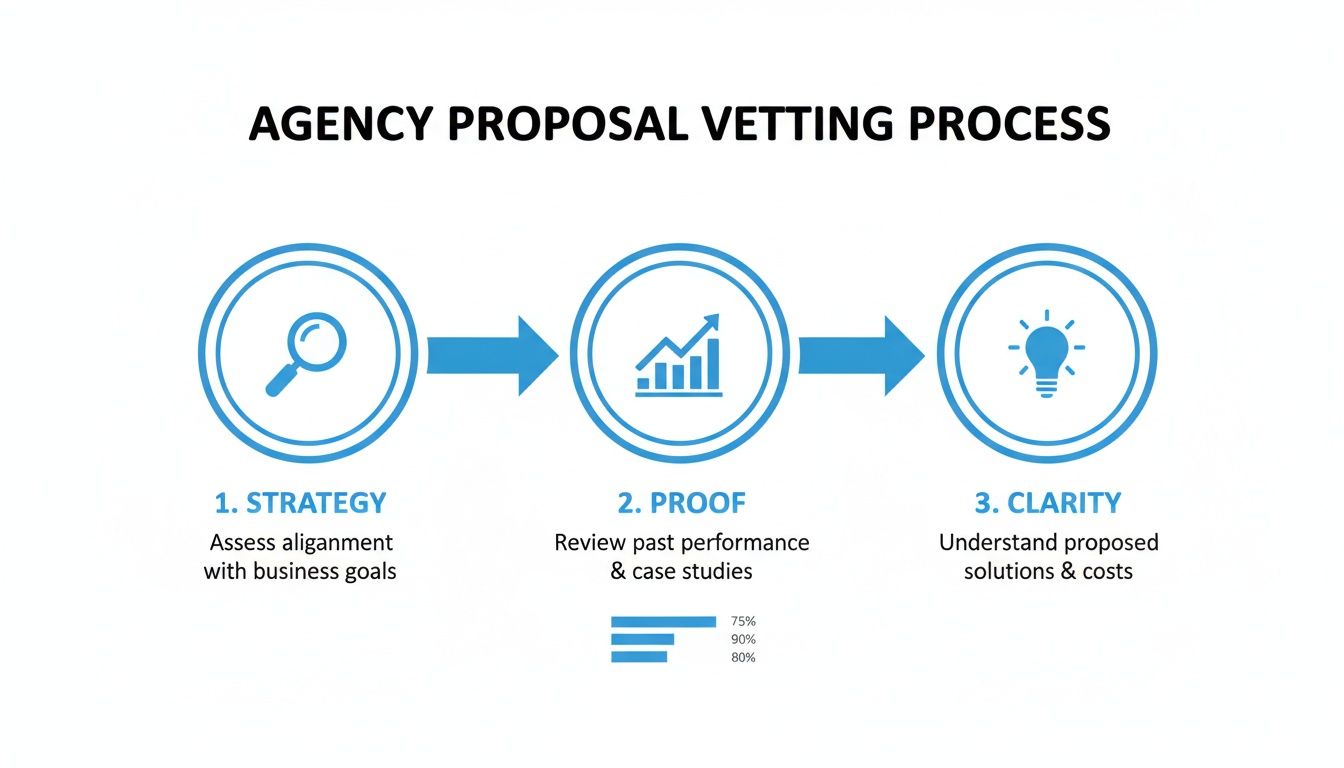
This kind of diligence ensures you’re not just buying a list of services, but investing in a well-defined plan with outcomes you can actually measure.
Your Onboarding Checklist for a Smooth Start
Signing the contract isn’t the finish line; it’s the starting gun. A smooth onboarding is absolutely critical for hitting the ground running and avoiding those early-days frustrations. A good agency will take the lead, but you should have your own checklist ready so nothing gets missed.
To set everyone up for success from day one, make sure you’ve covered these bases:
- Granting Access: Be prepared to provide logins for your website CMS, Google Analytics, Google Search Console, social media profiles, and any ad accounts. Getting this done quickly prevents delays.
- Asset Handoff: Gather all your brand assets in one shared folder. This includes logos, brand guidelines, customer personas, and any past marketing data you have.
- Kickoff Meeting: This first meeting is crucial. The goal is to introduce both teams, confirm the goals and KPIs from the contract, and establish your main points of contact and communication rhythm.
- Setting 90-Day Expectations: Work together to outline clear, achievable goals for the first 90 days. This initial phase is often about audits, research, and setting foundations, so having tangible milestones is key.
By following a structured path—from objectively scoring your finalists to nailing the onboarding—you can confidently pick the right agency and build a partnership that’s truly set up to win.
A Few Final Questions Before You Decide
Even with a solid game plan, a few questions almost always pop up right before you sign on the dotted line. It’s totally normal. Choosing a marketing partner is a big decision, and it pays to have all your bases covered. Let’s tackle the most common ones we hear.
What Is a Reasonable Marketing Budget for a Small Business?
The textbook answer is to set aside 7-12% of your total revenue for marketing. But let’s be real—that’s just a benchmark.
If you’re launching a brand-new product or trying to break into a crowded market, you might need to be more aggressive, pushing that number closer to 15-20% to make some noise and gain traction.
Ultimately, it all comes down to ROI. A good agency won’t just spend your money; they’ll show you how to invest it. They should be able to work within your budget to knock out the highest-impact activities first and give you a clear picture of the potential returns. That way, you can scale your investment as your business grows.
Should I Choose a Specialized or a Full-Service Agency?
This one really depends on what your team looks like right now.
A specialized agency—one that only does SEO or only runs PPC ads—is a great pick if you have a solid in-house marketing team that just needs to plug a specific skills gap. You’ve got the strategy covered, you just need a specialist to execute a piece of it.
But for most small and mid-sized businesses, a full-service agency usually delivers more bang for your buck.
A full-service partner makes sure everything works together—your website, your content, your SEO, and your paid ads. You get a single, cohesive strategy instead of a bunch of disconnected tactics that don’t talk to each other. That integrated approach is what really moves the needle.
What Are the Biggest Red Flags to Watch Out for?
Knowing what you want in an agency is half the battle. Knowing what to avoid is the other half. Keep your eyes peeled for these warning signs.
- Guaranteed Results: If an agency promises you things like “#1 rankings on Google,” run. Seriously. Marketing has too many variables for anyone to make those kinds of guarantees. It’s an unrealistic promise and a huge red flag.
- Lack of Transparency: Vague answers about their process, pricing, or how they report results are a major concern. You should always know exactly what they’re doing, why they’re doing it, and how they’re measuring success. If it feels like they’re hiding something, they probably are.
- A “One-Size-Fits-All” Approach: Does their proposal feel like a template they send to everyone? A great partner digs in to understand your specific goals, customers, and market. If their pitch feels generic, it means they haven’t bothered to do their homework on your business.
- Poor Communication: Pay close attention to how they communicate during the sales process. If they’re slow to respond or their answers are confusing now, imagine what it’ll be like once you’re a client. Their communication style upfront is a preview of the partnership to come.
Ready to partner with a digital marketing agency that delivers measurable results? The team at Netco Design LLC combines technical expertise with a deep understanding of business growth to create strategies that attract qualified customers and drive revenue. Get in touch with us today to discuss your goals.

