

table of contents
Choosing the right web design agency is a big decision. To get it right, you’ll need to define your goals, lock down your budget, vet their past work, and ask some tough questions. This initial legwork is what turns a fuzzy idea into a concrete plan, making sure you find a true partner who gets what your business is trying to achieve.
Laying the Groundwork for Your Web Design Project

Before you even think about searching for an agency, the most critical work happens right inside your own business. Seriously. This planning phase isn’t just a box to check; it’s the foundation for the entire project. If you skip it, you’re setting yourself up for missed deadlines, budget blowouts, and a final product that just doesn’t hit the mark.
Taking the time to figure out exactly what you need puts you in a position of strength when you start talking to potential partners. You’ll be clear, confident, and ready to find the right fit. If you’re looking for a good starting point, exploring different strategies for finding the right design agency can offer some valuable direction.
Define Your Website’s Primary Purpose
First things first: what is this website’s job? A website can’t be all things to all people. You have to pinpoint its core function to create a focused, effective design. Is it built to generate leads, sell products, or tell your brand’s story?
- Lead Generation: The main goal here is capturing visitor information. Success is all about how many qualified leads you get from contact forms, quote requests, or newsletter signups.
- E-commerce Sales: For an online store, it’s simple: drive sales. Every design decision should make it easier for customers to buy and trust you.
- Brand Authority: If your site is meant to educate or establish you as a thought leader, its job is to deliver value through amazing content, building trust and recognition over time.
Getting crystal clear on this will shape every single decision that follows, from the page layout and user journey to the calls-to-action on every page.
A website without a clear purpose is like a ship without a rudder. It might look impressive, but it won’t get you where you need to go. Defining its core function from the outset is the most critical strategic decision you’ll make.
Set Specific and Measurable Goals
Once you know your site’s purpose, you need to attach real numbers to it. Vague goals like “increase sales” don’t help anyone. You need SMART goals—specific, measurable, achievable, relevant, and time-bound—that will act as your Key Performance Indicators (KPIs).
For an e-commerce brand, a great goal might be to “reduce cart abandonment by 15% within six months.” A B2B company might aim to “increase qualified leads by 25% in the next quarter.” These concrete metrics give both you and your agency a shared definition of what success actually looks like.
Understand Your Ideal Customer
You can’t build an effective website for an audience you don’t understand. It’s that simple. Knowing who your ideal customer is—beyond just their age and location—is absolutely essential for creating a user experience that connects and converts. What are their pain points? What motivates them? How do they behave online?
Developing detailed customer profiles helps an agency design a site that speaks their language. If you’re new to this, our guide on how to create buyer personas breaks it down step-by-step.
Establish a Realistic Budget
Finally, let’s talk money. You need a realistic budget. A common pitfall is only planning for the initial design and development cost. A smart web design budget accounts for all the ongoing expenses that keep a site healthy and performing well long after launch.
Be sure to factor in these costs:
- Initial Design & Development: The one-time cost to build and launch the site.
- Hosting & Domain: Annual fees to keep your site live on the internet.
- Ongoing Maintenance & Support: For regular updates, security monitoring, and tech support.
- Third-Party Licenses: Annual costs for premium plugins, fonts, or special software.
- Content Creation & SEO: The budget for your ongoing marketing efforts.
Having a clear, comprehensive budget from day one helps you filter agencies efficiently. More importantly, it keeps conversations grounded in reality, preventing scope creep and those dreaded surprise invoices down the road.
How to Evaluate an Agency Portfolio

An agency’s portfolio is your single best window into what they can actually do. It’s more than a gallery of nice-looking websites; it’s hard proof of their design philosophy, technical chops, and—most importantly—their ability to deliver business results.
When you start reviewing an agency’s portfolio, your goal is to look past the surface-level polish. You need to figure out if they can build a website that functions as a powerful tool for your business, not just a digital brochure.
Look Beyond Just the Visuals
It’s easy to get wowed by a flashy design or a slick animation. But a beautiful website that doesn’t convert is a waste of money. The best portfolios don’t just show what they built; they explain the why behind it and the results it achieved.
Keep an eye out for case studies that give you the full story. A great portfolio piece should answer these questions:
- What problem was the client trying to solve?
- How did the agency’s design and strategy tackle that challenge?
- What were the measurable outcomes? (e.g., “Increased lead form submissions by 45%” or “Boosted e-commerce conversion rates by 22%.”)
Numbers and context are everything. They transform a simple project showcase into a powerful success story. If a portfolio is all pretty pictures with zero mention of performance, it’s a sign they might prioritize form over function.
An agency portfolio without case studies or performance data is a red flag. It suggests they either don’t track the results of their work or the results weren’t impressive enough to share.
Assess Industry Relevance and Project Scale
Has the agency worked in your industry before? While a top-tier agency can usually adapt to any niche, proven experience in your field is a huge plus. They’ll already get your target audience, your competitors, and the unique challenges you’re up against.
For example, an e-commerce brand’s needs are worlds apart from a local law firm’s. An agency that’s built successful online stores will already be fluent in payment gateways, product page optimization, and checkout flows. Those are nuances an agency focused on B2B lead gen might not have mastered.
Just as important is the scale of their past projects. If you need a massive, multi-language e-commerce site with thousands of products, you want to see that they’ve handled that level of complexity before. Don’t be afraid to ask them about the technical hurdles they had to overcome.
Test Their Live Work
The portfolio is the highlight reel; the live sites are the reality. Never take a screenshot at face value. Click through to the actual websites they’ve built and see how they perform in the wild.
As you poke around their live projects, pay close attention to a few key things:
- Mobile Responsiveness: Pull up the site on your phone. Does it load fast? Does it look and feel great on a small screen? With over 60% of website traffic now coming from mobile, a flawless mobile experience is non-negotiable.
- User Experience (UX): Is the site easy to get around? Can you find what you’re looking for—like contact info or pricing—in just a few clicks? A confusing site is a direct reflection of the agency’s strategic thinking, or lack thereof.
- Performance and Speed: How fast does the site load? Don’t just guess; run it through a tool like Google’s PageSpeed Insights for an objective score. Slow websites kill conversions.
- Conversion Elements: Look at how they guide users to take action. Are the calls-to-action (CTAs) clear and compelling? This is critical if your website’s job is to generate leads or sales. Getting familiar with landing page design best practices can give you a better eye for what makes a CTA effective.
By going this extra mile, you shift from being a passive observer to an active evaluator. You’ll get a much clearer picture of what an agency is truly capable of delivering.
Vetting an Agency’s Technical and Strategic Skills
A stunning website is only half the story. If it doesn’t drive traffic, capture leads, and make sales, it’s just a pretty digital brochure. To get results, your site needs a rock-solid foundation of technical and strategic expertise.
This is where you separate the artists from the architects—the agencies that can build a high-performance engine, not just paint a pretty car. You’re looking for a partner who is just as obsessed with clean code and conversion metrics as they are with color palettes and typography.
SEO From the Ground Up
Search Engine Optimization isn’t something you can just bolt on after a website is finished. It has to be baked in from the very first line of code. An agency that treats SEO as an afterthought is setting you up for a costly and frustrating game of catch-up down the road.
You need a team that lives and breathes the connection between development and search visibility. That means they should be fluent in:
- On-Page SEO: The fundamentals, like proper header tags, optimized meta descriptions, and clean URL structures that tell search engines exactly what your content is about.
- Technical SEO: This is the stuff happening behind the curtain. Think logical sitemaps, lightning-fast page speeds, and schema markup that helps your site stand out in search results.
- Site Architecture: A well-planned site structure is a roadmap for both users and search engines. A strong site architecture for SEO can make a massive difference in your rankings and user experience.
When you talk to an agency, ask them how SEO fits into their design process. Their answer will tell you everything you need to know about whether it’s a core competency or just a buzzword on their services page.
Focus on Conversion and User Experience
At the end of the day, a website’s job is to get visitors to do something—make a purchase, fill out a form, or pick up the phone. This is where Conversion Rate Optimization (CRO) and User Experience (UX) design become critical.
A top agency doesn’t just design pages; they design pathways.
A great user experience is invisible. Your customers won’t notice the seamless navigation or the intuitive checkout process—they’ll just feel that your website is easy and enjoyable to use. That feeling is what builds trust and drives conversions.
An agency with strong UX/CRO skills will obsess over the details—button placement, form field design, and the clarity of calls-to-action. They use data and user behavior, not just gut feelings, to make design decisions that lead to real, measurable results.
Modern Technical Must-Haves
The web design industry is booming, and the technology is changing fast. The global market is projected to hit $92 billion by 2030, and a forward-thinking agency needs to keep pace.
With 73% of companies now prioritizing mobile-first design and 48% of agencies using AI-assisted tools to speed things up, you can’t afford to partner with a team that’s stuck in the past. To make sure your site is built for today and tomorrow, check for expertise in these areas:
- Mobile-First Design: This isn’t just about making a site look okay on a phone. It’s a strategy that prioritizes the mobile experience from the start, which is essential now that mobile e-commerce is expected to account for 75% of all sales.
- Web Accessibility (WCAG): A modern website must be usable by everyone, including people with disabilities. Ask if the agency builds to Web Content Accessibility Guidelines (WCAG) standards. It’s not just good practice; it expands your audience and can protect you from legal issues.
- AI Readiness: The future of search is being shaped by AI. A good agency should be able to explain how they’re preparing websites for this shift, whether it’s through structured data that AI can easily understand or through personalization features powered by machine learning.
Vetting these skills is non-negotiable. It’s how you find a partner who can deliver a robust, future-proof website that becomes a true growth engine for your business.
Asking the Right Questions in Agency Interviews
The discovery call is your chance to get past the polished sales pitch and see how an agency really works. This is where you find out if they’re a true partner or just another vendor. Forget generic questions like “what’s your process?”—you need to dig in and uncover how they actually collaborate, solve problems, and define success.
These conversations are your best shot at gauging both competence and chemistry. A great agency will welcome the tough questions and give you thoughtful, straight answers. Their responses tell you everything about their skills and their entire philosophy on building great client relationships.
Uncovering Their Project Management Style
How an agency handles the day-to-day of a project will make or break your experience. You need to know exactly how they communicate, deal with roadblocks, and keep you in the loop. This isn’t just about the software they use; it’s about their entire approach to getting things done together.
Get specific to understand their real-world workflow:
- Who will be my main point of contact? Knowing if you’ll have a dedicated project manager or be juggling multiple contacts is a huge deal for clear communication.
- How do you handle scope creep or unexpected changes? Their answer here reveals their flexibility and fairness. A good partner has a clear process for discussing changes and adjusting the timeline or budget without any drama.
- What does your feedback and approval process look like? This tells you how involved you’ll be and how they actually incorporate your input at key milestones.
Vague answers to any of these questions are a red flag. A confident agency has a system they can walk you through without hesitation.
The most important part of any agency partnership is communication. Ask questions that reveal how they handle friction, because every project has it. Their approach to difficult conversations tells you more than their portfolio ever will.
Gauging Post-Launch Support and Empowerment
A website launch isn’t the finish line; in many ways, it’s just the beginning. A top-tier agency doesn’t just build a site and wave goodbye. They make sure you’re set up for long-term success and stick around to keep your investment performing.
This is your chance to understand what happens after the launch party. Getting clarity on this stuff now saves you from future headaches and surprise costs down the road.
Here’s what to ask about their post-launch partnership:
- What do your ongoing maintenance and support plans include? Get the specifics on security updates, backups, and how fast they’ll respond when you need technical help.
- What kind of training do you provide for our team? A website you can’t manage yourself is a liability. Ask if they offer hands-on training for the content management system (CMS) so your team feels ready to take the reins.
- How do you measure the success of a project after it launches? This is a big one. A results-focused agency will be eager to track KPIs and performance metrics to prove they delivered real value.
It’s also important to know the difference between what your own team can handle and what you’ll need the agency for. For more on this, check out the pros and cons of in-house marketing vs agency partnerships to decide which tasks make sense to keep internal.
Assessing Strategic and Problem-Solving Abilities
Finally, you want to get past logistics and test how they think. The best web design agencies aren’t just designers and coders; they’re expert problem-solvers who connect everything they do back to your business goals.
Toss them a hypothetical challenge to see how they think on their feet. For instance: “If our lead conversions drop by 20% three months after launch, what would be your process for diagnosing and fixing the problem?”
A great answer should involve data analysis, user feedback, and A/B testing—not just guesswork. This kind of strategic question shows you if they’re proactive partners or just reactive order-takers. You’re looking for a team that thinks critically and is genuinely invested in your growth, not just checking boxes on a project plan.
Understanding Proposals And Contract Red Flags
Once the interviews wrap up, the proposals will start rolling in. These documents can look dense and intimidating, but this is where you get a real feel for the partnership. A detailed proposal and a transparent contract are signs of a professional agency that values clarity and protects everyone involved.
Think of the proposal as the project’s blueprint. It should spell out the scope, deliverables, timeline, and costs in plain English. If it feels vague or stuffed with marketing fluff instead of concrete details, that’s your first major warning sign.
This flowchart gives you a quick decision-making path to evaluate the key things you probably discussed during the interviews.
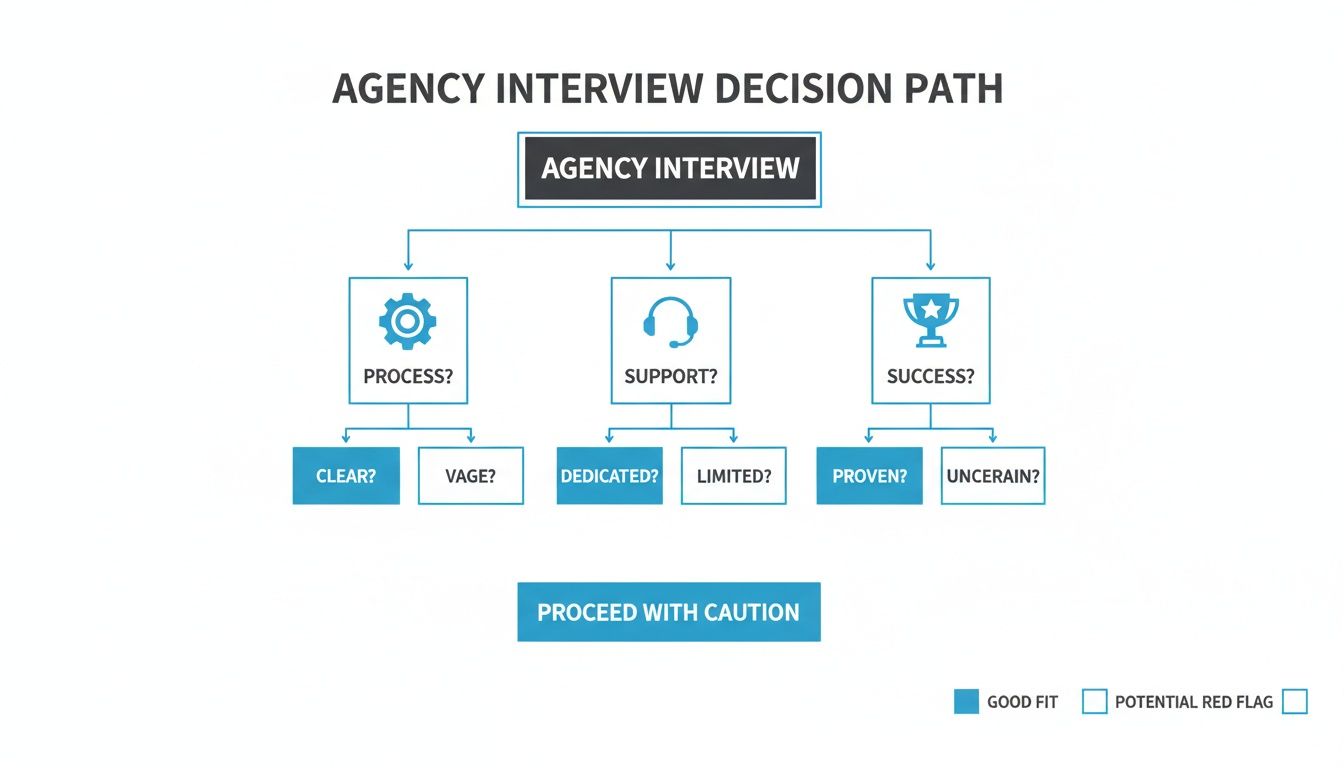
It’s a good reminder to get clear answers on process, support, and success metrics before you ever get to the contract stage.
Decoding Common Pricing Models
Web design agencies generally stick to one of three pricing models. Getting to know the pros and cons of each will help you figure out which one fits your project and budget. There’s no single “best” option; it all comes down to your specific needs.
Here’s how they usually break down:
- Fixed-Price: This is a single, all-in cost for the entire project. It’s fantastic for projects with a crystal-clear scope because you know exactly what you’re spending. The catch? It’s not very flexible. Any changes or additions outside that original scope will almost certainly cost you extra.
- Hourly (Time & Materials): With this model, you’re paying for the actual hours the agency puts in. It offers a ton of flexibility, making it great for projects that might evolve as you go. The risk, however, is that costs can climb if the project takes longer than you planned.
- Retainer: A retainer means you’re paying a set monthly fee for ongoing work, like site maintenance, SEO, or content updates. This is the way to go for long-term partnerships, as it guarantees you a dedicated block of the agency’s time each month.
Critical Contract Red Flags To Watch For
The contract is the legally binding document that defines everything. Rushing through it is a mistake you don’t want to make. A good contract is balanced, specific, and leaves zero room for misinterpretation. Be on high alert for any clauses that seem wishy-washy or one-sided.
A contract isn’t just a formality; it’s a communication tool. If an agency can’t explain their contract in simple terms or seems hesitant to clarify clauses, that’s a huge red flag about how they’ll communicate once the project is underway.
Keep a close eye on these potential problem spots:
- Vague Scope of Work: The contract has to list exactly what the agency will deliver. Phrases like “website design” are way too broad. It should specify the number of pages, unique templates, and key features like e-commerce functionality or a booking system. A solid scope is everything, and our website redesign checklist can help you nail down every deliverable you might need.
- Unclear Ownership of Intellectual Property: When the project is done and paid for, you must own your website. Period. The contract needs to state explicitly that upon final payment, all intellectual property—including design files, code, and content—is transferred to you. Some shady agencies try to retain ownership or license the site to you, trapping you into working with them forever.
- Hidden or Ambiguous Fees: Watch out for surprise costs. A trustworthy agency will be transparent about what’s included and what’s not. Look for mentions of third-party license fees (for things like premium plugins or stock photos), hosting costs, and post-launch support rates. It should all be itemized.
Got Questions? Let’s Get Them Answered
As you get closer to picking a web design partner, a few last-minute questions always pop up. Getting straight answers is the final piece of the puzzle, helping you sign that contract with total confidence.
Think of this as your final gut check. You’re not just hiring a vendor; you’re bringing on a partner who needs to get your vision and have the chops to make it happen.
What Should I Really Prioritize When Choosing a Web Design Company?
Honestly? It all comes down to finding an agency that actually understands your business goals. A beautiful website is useless if it doesn’t generate leads, drive sales, or build your brand.
Once you’ve confirmed they get the big picture, zoom in on these areas:
- A Strong, Relevant Portfolio: Look for case studies with real, measurable results, not just a gallery of pretty designs.
- Clear Communication: Are they responsive? Do they explain their process in a way that makes sense, or do they hide behind jargon?
- Proven Technical Skills: Make sure they have a solid grasp of SEO, mobile-first design, and conversion rate optimization.
- Happy Clients: Check their testimonials and reviews. They should paint a clear picture of a reliable, effective partner.
Everything else is secondary. An agency that nails these fundamentals is almost guaranteed to deliver a site that gives you a genuine return on your investment.
How Much Should a New Website Cost, Really?
This is the big one, and the only honest answer is: it completely depends on the scope. A simple five-page brochure site for a local plumber might be a few thousand dollars. A complex e-commerce store with custom integrations can easily run into the tens or even hundreds of thousands.
Be very wary of agencies promising the world for a rock-bottom price. A $2,000 website might sound like a great deal, but it often means you’re getting a recycled template, poor performance, and a host of hidden costs down the line.
A better question to ask is, “What is the value of a new website to my business?” When you frame the cost against the potential ROI—more leads, higher conversion rates, and better efficiency—it shifts from an expense to an investment in your company’s growth.
What Are the Killer Questions I Should Ask a Potential Agency?
You’ve got to go deeper than the basics about their process. The best questions reveal how they really work—how they collaborate, solve unexpected problems, and support you after the site goes live.
Try these on for size:
- Can you walk me through a project you did for a business with goals similar to mine?
- How do you handle scope creep when we need to add a feature mid-project?
- What does your post-launch support look like, and what are the ongoing costs?
- If our traffic or conversions dip after launch, what’s your game plan to fix it?
- Who is my day-to-day contact, and what can I expect for response times?
Their answers will tell you everything you need to know about their project management style and their commitment to your long-term success. It’s these details that separate a good vendor from a great partner.
Ready to build a website that does more than just look good? At Netco Design LLC, we create high-performance websites focused on driving real business results, from attracting qualified leads to boosting your sales. Let’s talk about how we can build a growth engine for your brand. Learn more at Netco Design LLC.

