

table of contents
In today’s competitive marketplace, a strong social media presence is no longer a luxury for small businesses; it’s a fundamental engine for growth. Yet, navigating the complex world of different platforms, shifting algorithms, and evolving content trends can be a significant challenge, especially with limited resources. Many business owners know they should be active online, but knowing where to start and what to prioritize is the real hurdle.
This guide cuts through the noise. We’ve compiled a comprehensive list of actionable and budget-friendly social media marketing tips for small business owners. Forget generic advice that doesn’t apply to your unique situation. These are practical, results-focused strategies you can implement immediately to attract the right customers, build a genuinely loyal community, and, most importantly, achieve a tangible return on your investment of time and energy.
Inside, you will find a clear roadmap covering everything from defining your ideal customer and selecting the most effective platforms to creating engaging content and measuring what truly works. We will explore how to develop a consistent posting schedule, leverage user-generated content, and even dip your toes into paid advertising without breaking the bank. Let’s transform your social media from a daily chore into a powerful, predictable asset for your business.
1. Define Your Target Audience & Create Buyer Personas
Before you post a single update, you must know exactly who you’re talking to. Attempting social media marketing without a defined audience is like shouting into a void; your message gets lost. This foundational step involves creating detailed buyer personas, which are semi-fictional representations of your ideal customers based on real data and educated speculation.
These profiles go beyond basic demographics to include psychographics, such as their goals, motivations, and pain points. Understanding these details allows you to craft content that resonates deeply, making your brand feel relevant and helpful. This is one of the most crucial social media marketing tips for small business owners because it ensures every effort is targeted and efficient.
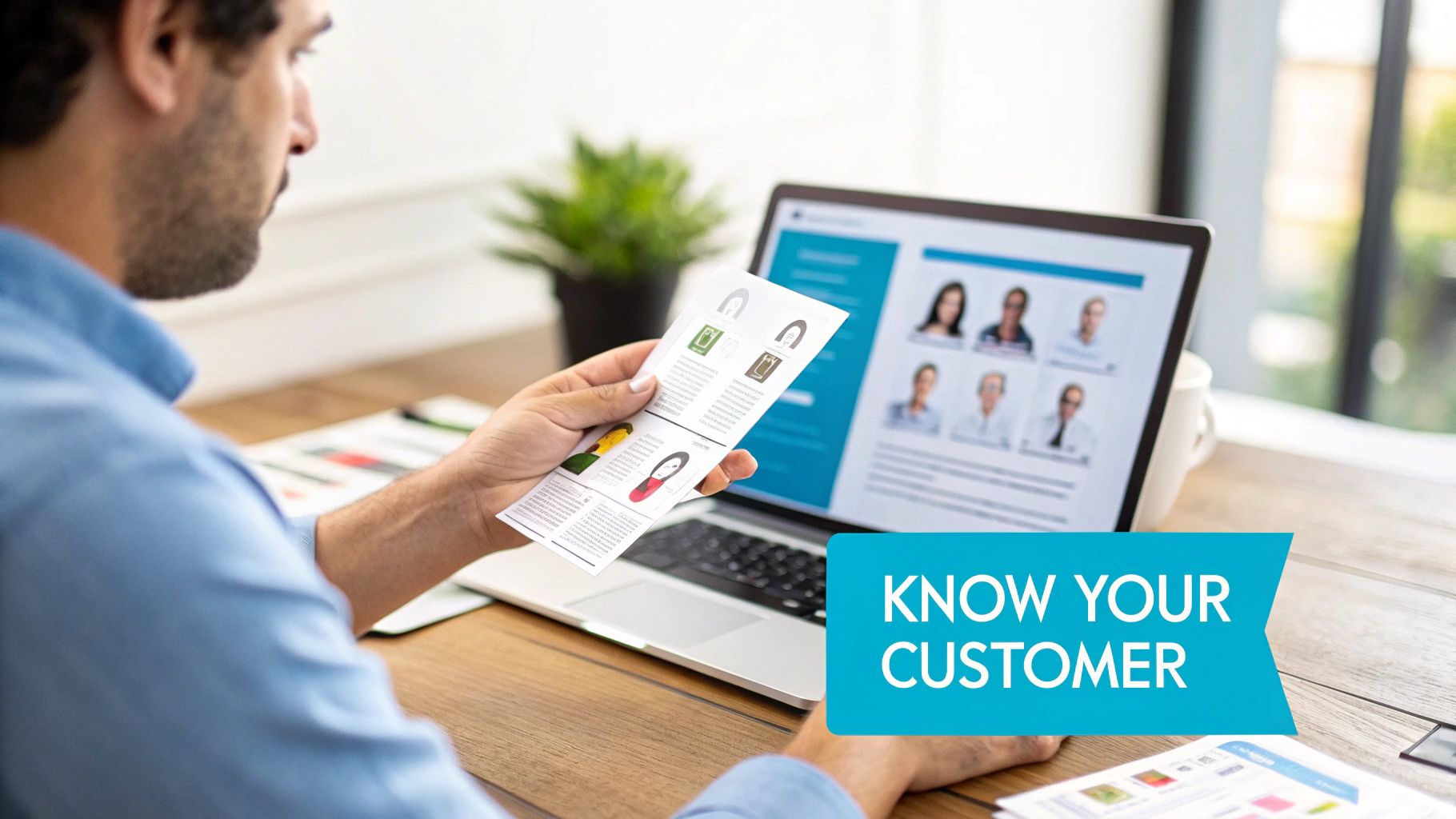
For instance, a local fitness studio might create personas for “Busy Brenda,” a 40-year-old professional who needs quick, high-intensity workouts, and “Retiree Robert,” a 65-year-old looking for low-impact classes and community. The studio would then promote HIIT classes on LinkedIn for Brenda and community-focused yoga classes on Facebook for Robert, ensuring the right message reaches the right person on the right platform. Creating detailed profiles is a powerful first step in building a system to generate more leads online.
Actionable Tips for Implementation:
- Analyze Existing Data: Look at your current customer base. Use tools like Google Analytics and your social media platform insights to identify common characteristics.
- Conduct Surveys: Ask your audience directly about their challenges, goals, and social media habits using simple tools like Google Forms.
- Limit Your Focus: Start with 2-3 primary personas to avoid getting overwhelmed. You can always expand later.
- Revisit and Refine: Customer behaviors change. Review and update your personas every quarter to keep them accurate and relevant.
2. Choose the Right Social Media Platforms
Not all social media platforms are created equal, and your small business doesn’t need to be on every single one. Spreading your resources too thin is a common mistake that leads to burnout and mediocre results. The key is to strategically select 1-3 platforms where your ideal customers are most active and engaged.
This focused approach allows you to dedicate your time and budget to creating high-quality, platform-specific content that truly connects with your audience. Mastering a few key channels is one of the most effective social media marketing tips for small business success, as it prevents wasted effort and maximizes your return on investment. Don’t chase trends; instead, follow your customers.
For example, a B2B consulting firm will likely find more qualified leads by sharing industry insights on LinkedIn than by posting on TikTok. Conversely, a local restaurant can build a massive following by showcasing viral food creations on TikTok and Instagram Reels. Home service businesses like plumbers or electricians often dominate their local markets by leveraging Facebook’s powerful community groups and localized ad targeting to reach homeowners directly.
Actionable Tips for Implementation:
- Audit Your Audience: Survey your existing customers to find out which social media platforms they use most often for both personal and professional purposes.
- Analyze Competitors: See where your direct competitors are most active and successful. Look for gaps you can fill or channels they are neglecting.
- Start Small and Test: Begin with just one or two platforms. Master them, understand what content works, and then strategically expand if necessary.
- Align with Your Strengths: If you excel at creating beautiful visuals, prioritize Instagram and Pinterest. If you are a strong writer, focus on LinkedIn or a blog connected to Facebook.
3. Post Consistently & Develop a Content Calendar
Sporadic posting is a surefire way to lose momentum and audience engagement on social media. Consistency signals to both your followers and platform algorithms that your brand is active, reliable, and worth paying attention to. Developing a content calendar is the key to maintaining this steady presence, allowing you to plan posts in advance and avoid the last-minute scramble for content ideas.
This strategic approach transforms your social media from a reactive chore into a proactive marketing channel. By mapping out your content, you can align your posts with business goals, seasonal events, and product launches. This is one of the most effective social media marketing tips for small business owners because it ensures a constant, relevant stream of content that builds audience trust and keeps your brand top-of-mind.

For example, a local bakery can use a calendar to schedule daily specials on Instagram Stories, weekly “behind-the-scenes” videos on Facebook, and plan their holiday-themed promotions months ahead. This not only saves time but also ensures their messaging is cohesive and timely. A well-organized calendar is a fundamental part of a larger plan; you can build a content strategy that works to integrate these efforts across all your digital platforms.
Actionable Tips for Implementation:
- Batch Your Content: Dedicate one day a month to create and schedule all your social media posts. This saves immense time and mental energy.
- Use Scheduling Tools: Platforms like Buffer, Hootsuite, or Later allow you to schedule posts across multiple platforms in advance.
- Establish a Cadence: Aim for a realistic frequency, such as 3-5 posts per week on Facebook and 1-2 daily on Instagram, and stick to it.
- Leave Room for Flexibility: Plan about 70% of your content and leave 30% open to engage with trending topics or real-time events.
- Plan Ahead for Big Events: Map out content for major holidays, sales, and industry events at least 2-3 months in advance.
4. Create Engaging, Value-Driven Content
Constant self-promotion is one of the fastest ways to lose followers on social media. Instead of treating your feed like a billboard, focus on providing genuine value. This means creating content that educates, entertains, or inspires your audience, building a relationship based on trust and authority rather than just sales pitches. Adhering to this principle is one of the most effective social media marketing tips for small business owners looking to cultivate a loyal community.
A great guideline is the 80/20 rule: 80% of your content should offer value, while only 20% is directly promotional. This approach ensures your audience feels served, not sold to, making them far more receptive when you do present an offer. By prioritizing valuable human-written content, you can establish stronger brand authority and thought leadership. For insights on balancing authentic messaging with modern tools, you can learn more about AI vs. human content on netcodesign.com.
For example, a small bakery could post quick baking tips or ingredient spotlights, while a consultant shares brief industry analyses. A local gym could share client transformation stories that inspire others. These posts build credibility and engagement, making followers more likely to purchase when the gym eventually promotes a new membership deal. This strategy shifts your social media from a sales channel to a community hub.
Actionable Tips for Implementation:
- Answer Customer Questions: Use common customer inquiries as a starting point for “how-to” posts, Q&A sessions, or short video tutorials.
- Mix Content Formats: Prevent feed monotony by rotating between images, videos, carousels, stories, and text-based posts.
- Showcase Transformations: Highlight “before and after” scenarios, whether it’s a customer success story or a behind-the-scenes look at a project.
- Create Content Series: Establish a consistent schedule with themed content, such as ‘Tip Tuesday’ or ‘Feature Friday,’ to keep your audience coming back.
- Repurpose Smartly: Adapt a single piece of high-value content, like a blog post, into multiple social media updates like a carousel, a short video, and a quote graphic.
5. Leverage User-Generated Content & Community Building
Turn your customers into your best marketers by encouraging them to create and share content featuring your products or services. This strategy, known as User-Generated Content (UGC), is powerful because it provides authentic social proof. Consumers trust recommendations from real people far more than they trust branded advertisements, making UGC a cornerstone of modern digital marketing.
This approach not only amplifies your reach but also significantly reduces your content creation workload. By building a community around shared experiences, you foster loyalty and create a self-sustaining marketing engine. This is one of the most cost-effective social media marketing tips for small business owners, as it turns happy customers into a volunteer marketing team that genuinely advocates for your brand.

For example, a local coffee shop can encourage customers to post photos of their latte art using a unique hashtag like #MainStreetMornings. The shop can then repost the best photos on its Instagram Stories, giving the customer a shout-out. Similarly, a small fashion boutique could run a monthly contest where followers who tag them in an outfit post are entered to win a gift card, generating a steady stream of authentic style inspiration.
Actionable Tips for Implementation:
- Create a Branded Hashtag: Develop a short, memorable, and easy-to-spell hashtag for your campaigns and encourage customers to use it.
- Run Contests & Giveaways: Incentivize participation by offering prizes for the best photo, video, or testimonial each month.
- Launch a “Customer Spotlight” Series: Regularly feature customers and their stories on your main feed or blog, making them feel valued.
- Always Ask for Permission & Give Credit: Before reposting any content, ask the original creator for permission and always tag them in your post.
6. Engage Authentically & Respond to Comments/Messages
Treating social media as a broadcast channel is a recipe for failure. Instead, view it as a dynamic, two-way conversation. Authentic engagement involves responding promptly and personally to comments, messages, and mentions to build stronger customer relationships. This active participation not only demonstrates excellent customer service but also signals to social media algorithms that your content is valuable, boosting its visibility.
This is one of the most impactful social media marketing tips for small business owners because it humanizes your brand. When followers see you actively listening and responding, they feel valued, which builds trust and loyalty far more effectively than any ad campaign. It transforms your social media profiles from static advertisements into vibrant community hubs where customers feel heard and appreciated.
For example, a local cafe that replies to every Instagram comment, asks followers about their favorite new pastry, and promptly answers DMs about its hours creates a loyal following. Likewise, a brand that takes a negative review, responds publicly with empathy, and resolves the issue privately via direct message turns a potential PR crisis into a display of stellar customer care. Even for basic inquiries, timely responses are critical; learn how chatbots can support your engagement strategy to ensure no customer is left waiting.
Actionable Tips for Implementation:
- Set Response Time Goals: Aim to respond to all comments and direct messages within a few hours, with a maximum of 24 hours.
- Personalize Your Replies: Use the person’s name and reference their specific comment. Avoid generic, copy-pasted answers.
- Encourage More Conversation: Ask follow-up questions in your replies to keep the discussion going and increase engagement metrics.
- Handle Negativity Gracefully: Respond publicly to negative comments to show you’re attentive, then offer to move the conversation to a private channel like DMs to resolve the specific issue.
- Use Saved Replies Smartly: Create templates for frequently asked questions but always customize them slightly to maintain a personal touch.
7. Use Hashtags Strategically & Research Trending Topics
Hashtags are not just decorative additions to a post; they are powerful discovery tools that categorize your content and make it visible to users actively seeking your products or services. Using them strategically is like putting up signposts that guide your ideal audience directly to your digital doorstep. By combining broad, niche, and branded hashtags, you expand your reach far beyond your existing followers.
This tactic is one of the most effective social media marketing tips for small business owners because it amplifies visibility without increasing ad spend. Monitoring and participating in trending topics allows you to insert your brand into larger, ongoing conversations, capturing a wave of real-time interest and engagement. This approach keeps your content relevant, timely, and positioned for potential viral reach.
For example, a Tampa Bay coffee shop could use popular hashtags like #CoffeeLover, niche ones like #TampaCoffee, and a branded tag like #MyBrewStory. This layered strategy attracts general coffee enthusiasts, targets local customers, and builds a unique community around their brand. Diving into the art of using hashtags correctly can significantly improve your content’s performance and searchability.
Actionable Tips for Implementation:
- Create a Hashtag Mix: For each post, use a combination of popular (over 100k posts), medium (10k-100k), and niche (under 10k) hashtags to balance broad reach with targeted visibility.
- Develop Branded Hashtags: Create 1-3 unique hashtags for your business (e.g.,
#YourBrandName,#YourSlogan). Encourage customers to use them in their posts to generate user-content. - Utilize Location Tags: If you have a physical location, always include city- and neighborhood-specific hashtags (e.g.,
#StPeteEats,#DowntownTampa) to attract local foot traffic. - Monitor Performance: Use platform analytics to see which hashtags are driving the most impressions and engagement. Refine your list quarterly based on this data.
8. Collaborate with Micro-Influencers & Strategic Partnerships
Tapping into established communities is a powerful way to expand your reach without a massive budget. Collaborating with micro-influencers (those with 10k–100k followers) and complementary local businesses allows you to borrow trust and access highly engaged, niche audiences. Unlike celebrity influencers, micro-influencers often have stronger, more authentic connections with their followers, leading to higher engagement rates and more genuine endorsements.
This strategy is one of the most cost-effective social media marketing tips for small business owners looking for authentic growth. For example, a local skincare brand could partner with a Tampa-based beauty micro-influencer for an honest product review, or a St. Pete gym could team up with a nutrition coach for a joint “New Year, New You” challenge. These partnerships feel natural and provide immediate value to both audiences, making the promotion feel less like an ad and more like a trusted recommendation.
Actionable Tips for Implementation:
- Identify Aligned Partners: Search relevant hashtags and locations to find 10-20 potential micro-influencers or local businesses whose values and audience demographics align with yours.
- Vet Engagement, Not Just Followers: Look for an engagement rate of 3% or higher (likes + comments ÷ followers). Authentic interaction is more valuable than a large, passive following.
- Build a Relationship First: Engage with their content genuinely for a few weeks before reaching out with a partnership proposal. A personalized, thoughtful approach works best.
- Provide Creative Freedom: Give influencers clear guidelines and goals but allow them the creative freedom to speak to their audience in their own voice. This ensures authenticity.
- Track Your ROI: Use unique discount codes, affiliate links, or custom landing pages for each collaborator to accurately measure the traffic and sales generated from the partnership.
9. Analyze Metrics, Optimize Based on Data & Use Paid Advertising Strategically
Posting content is only half the battle; understanding its performance is where real growth happens. Regularly analyzing your social media metrics allows you to stop guessing and start making data-driven decisions. This process involves reviewing what content resonates, which audiences engage most, and when they are active, then using those insights to refine your organic strategy and strategically apply a paid advertising budget.
This data-first approach transforms your social media from a content machine into a predictable lead generator. It’s one of the most impactful social media marketing tips for small business owners because it maximizes your return on investment, ensuring your time and money are spent on what actually works. By tracking key performance indicators (KPIs), you can identify high-performing posts and turn them into targeted ad campaigns to reach a wider, more qualified audience.
For example, a local restaurant might notice that Instagram Stories showcasing a specific menu item consistently get the most replies. They can then run a small, targeted ad campaign featuring that dish to users within a 5-mile radius, directly tying social media activity to foot traffic. Similarly, an e-commerce store could use a $50 conversion ad on a proven video post and achieve a 5:1 return on ad spend by reaching high-intent shoppers.
Actionable Tips for Implementation:
- Review Analytics Weekly: Dedicate a specific time each week to look at your platform insights. At a minimum, do a deep dive monthly.
- Start Small with Paid Ads: Test campaigns with a small daily budget, like $5-$10, to gather data on what headlines, images, and audiences convert best before scaling.
- Focus on Key Metrics: Track 3-5 metrics that align directly with your business goals (e.g., website clicks, lead form submissions, sales) instead of getting lost in vanity metrics.
- Leverage Retargeting: Install tracking pixels on your website to create custom audiences of past visitors, allowing you to serve highly relevant ads to people already familiar with your brand.
10. Build an Email List & Integrate with Social Media
While social media is excellent for reach, you don’t own your audience; the platform does. Relying solely on it is risky, as algorithm changes can slash your visibility overnight. The solution is to use social media as a tool to build an asset you control: your email list. This strategy converts followers into direct contacts, creating a reliable communication channel for nurturing leads and driving sales.
Integrating email with your social channels creates a powerful flywheel. You can attract followers with engaging content, then offer a compelling reason for them to subscribe, such as a discount or a valuable free resource. This is one of the most effective social media marketing tips for small business because it builds a long-term, high-value marketing asset that isn’t subject to platform whims.
For example, an e-commerce store can run an Instagram Story ad offering a 10% discount code in exchange for an email signup. A local service business could promote a free downloadable guide (a lead magnet) on their Facebook page to capture emails from interested prospects. Once subscribed, you can nurture these relationships through targeted email campaigns, moving them closer to a purchase.
Actionable Tips for Implementation:
- Create a Compelling Lead Magnet: Offer something genuinely valuable for free, like a checklist, template, or exclusive guide, in exchange for an email address.
- Promote Your Sign-Up: Add a clear call-to-action link in your social media bios and create regular posts promoting your lead magnet or newsletter.
- Run Targeted Ads: Use social media ads to push your email sign-up offer to a highly targeted audience, maximizing new subscriber growth.
- Nurture New Subscribers: Set up an automated welcome email sequence to introduce your brand and provide immediate value to new subscribers.
- Cross-Promote Channels: Include social media share buttons in your emails and occasionally encourage your email list to follow you on social platforms.
Putting It All Together: Your Path to Social Media Mastery
Navigating the world of social media can feel like an overwhelming task, but it doesn’t have to be. The journey from social media novice to a savvy business marketer is built on a foundation of consistent, strategic action, not on mastering every platform overnight. This guide has provided a comprehensive roadmap, covering ten essential social media marketing tips for small business owners designed to generate real-world results without an enterprise-level budget.
From the foundational work of defining your buyer personas and selecting the right platforms, to the daily discipline of creating value-driven content and engaging authentically with your audience, each tip is a building block. We’ve explored how a simple content calendar can transform your workflow, how strategic hashtags can amplify your reach, and how analyzing your performance metrics is the key to unlocking sustainable growth. The power lies not in doing everything at once, but in choosing a few key areas to focus on and executing them with excellence.
Your Actionable Next Steps
The most significant barrier to social media success is often inertia. To break through it, commit to taking small, manageable steps today. Don’t try to implement all ten tips this week. Instead, choose two or three that resonate most with your current business needs and resources.
- If you’re just starting: Focus on Tip #1 (Define Your Audience) and Tip #2 (Choose the Right Platforms). Getting these right will save you countless hours and dollars down the line.
- If you struggle with consistency: Make Tip #3 (Develop a Content Calendar) your top priority. Even mapping out one week of posts in advance can create powerful momentum.
- If your engagement is low: Concentrate on Tip #6 (Engage Authentically) and Tip #4 (Create Value-Driven Content). Dedicate 15-20 minutes each day to responding to comments, asking questions, and sharing content that genuinely helps your followers.
The True Value of a Cohesive Strategy
Remember, social media is a marathon, not a sprint. The goal isn’t just to gain followers; it’s to build a loyal community that trusts your brand, engages with your content, and ultimately, becomes your customer. Each post, comment, and campaign is an opportunity to reinforce your brand’s identity and build meaningful relationships. By consistently applying these principles, you will transform your social channels from simple broadcasting tools into dynamic, revenue-generating assets for your business. The small efforts you make today will compound into significant brand loyalty and business growth tomorrow.
Feeling overwhelmed or short on time? You don’t have to do it alone. The team at Netco Design LLC specializes in crafting and executing data-driven social media strategies that help small businesses save time, attract qualified leads, and achieve measurable growth. Contact us today to learn how we can build a tailored plan for your business.

