

table of contents
TL;DR:
- Meta tags guide search engines, influence rankings, and shape how pages appear in search results and social shares. Properly optimized tags like title, robots, and meta description improve visibility, click-through rates, and prevent deindexing errors. Regular audits and content alignment are key to maintaining effective meta tag strategies in 2026.
Meta tags are HTML elements placed in a web page’s <head> section that communicate critical information to search engines, browsers, and social platforms. The role of meta tags in SEO spans from direct ranking influence to shaping how your pages appear in search results and social feeds. Get them right, and you control how Google indexes your content, how users decide to click, and whether your pages render correctly on mobile. Get them wrong, and you risk deindexing, low click-through rates, and wasted crawl budget. This guide covers which tags matter most in 2026, which ones you can safely ignore, and the exact practices that produce results.
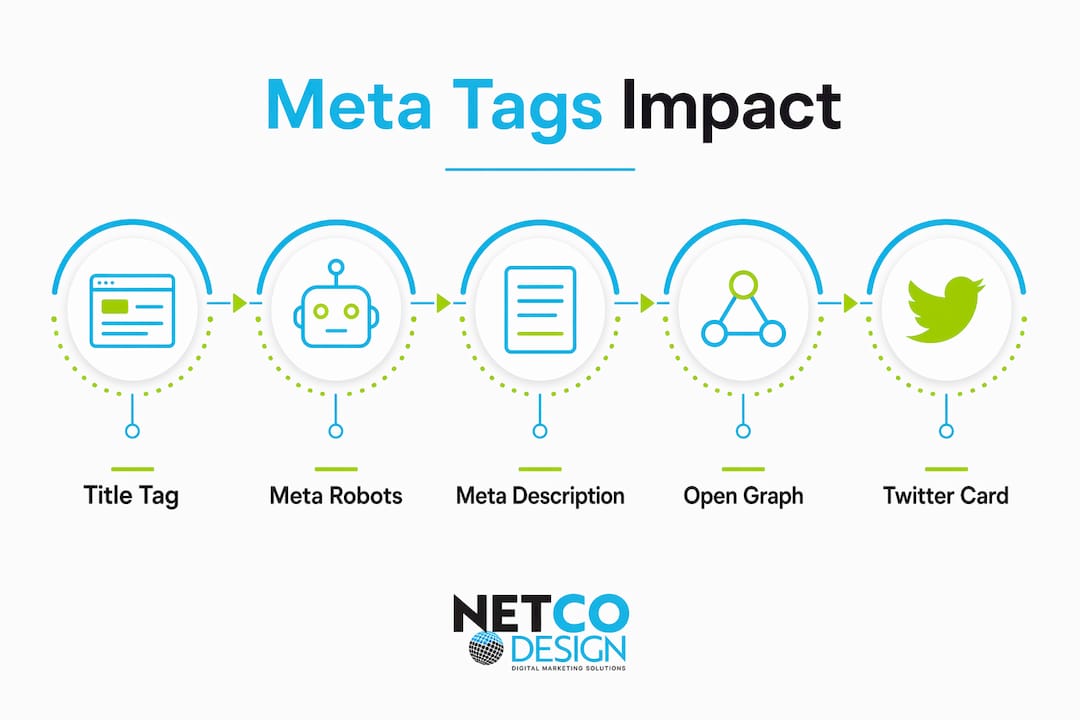
Which meta tags directly affect SEO rankings?
Not all meta tags carry equal weight. In 2026, three meta tags drive the most SEO value: the title tag for ranking and click-through rate, the robots tag for index control, and the meta description for user engagement.

The title tag is the most powerful of the three. Title tags rank as one of Google’s heaviest weighted on-page ranking factors. Placing your primary keyword near the beginning of the title tag signals relevance clearly to Google’s crawlers.
The meta robots tag controls whether Google indexes a page at all. A single misconfigured noindex directive can remove every page on your site from search results. That is not a hypothetical risk. Misconfigured robots tags are the leading cause of complete site deindexing incidents reported by SEO professionals.
One tag you can stop worrying about entirely is the meta keywords tag. Meta keywords have had zero impact on SEO since Google and Bing deprecated them in 2009. Keeping this tag in your code adds page weight and maintenance overhead with no benefit.
Pro Tip: Before launching any page, check the robots meta tag manually. A staging environment set to noindex that carries over to production is one of the most common and costly SEO mistakes in web development.
How do meta tags influence click-through rate and engagement?
Some meta tags do not affect your ranking position directly. They shape whether a user clicks your result at all, and that behavior feeds back into your overall search performance.
The meta description is the clearest example. Google rewrites 60–70% of meta descriptions when they do not align with page content or user intent. That statistic tells you something important: most descriptions are written for search engines, not for people. When your description matches what the searcher actually wants, Google keeps it, and users click.
Open Graph and Twitter Card tags fall into a similar category. Open Graph tags do not influence Google’s ranking algorithm directly. They do improve social sharing previews, which increases share rates and backlinks over time. More backlinks improve domain authority, which feeds back into rankings indirectly.
The viewport meta tag is non-negotiable for mobile performance. Without a viewport tag, Google flags your page as not mobile-friendly. Mobile usability is a confirmed ranking factor, so skipping this tag has real ranking consequences.
Key tags that influence engagement and visibility:
- Meta description: Drives click-through rate from search results; write for human intent, not keyword density
- Open Graph tags: Control how your page looks when shared on Facebook, LinkedIn, and other platforms
- Twitter Card tags: Define the image, title, and description shown in Twitter/X previews
- Viewport meta tag: Tells browsers how to scale your page on mobile devices
Pro Tip: Write your meta description as if it were a two-sentence pitch to a potential customer. Answer the searcher’s question and give them a reason to click. Descriptions written this way are far less likely to be rewritten by Google.
What meta tag mistakes hurt SEO performance?
Most meta tag problems are not complex. They are simple configuration errors that compound over time and quietly drain search visibility.
Duplicate or missing title tags are the most common structural problem. Duplicate title tags confuse search engines, dilute page relevance, and weaken rankings across your site. Every page needs a unique title that reflects its specific content.
Misconfigured robots tags cause the most severe damage. A noindex tag accidentally applied site-wide during a site migration or CMS update can wipe your entire search presence within days. This is not a recoverable situation without immediate action.
Overstuffed or irrelevant meta descriptions trigger Google’s rewriting behavior. When your description does not match the page’s actual content, Google replaces it with text pulled from the page body. You lose control of your snippet, and the replacement is often less compelling than what you would have written intentionally.
Common meta tag mistakes to watch for:
- Robots tag misconfiguration: A
noindexon the wrong page or site-wide removes pages from Google’s index entirely - Duplicate title tags: Multiple pages sharing the same title confuse crawlers and split ranking signals
- Keyword-stuffed descriptions: Descriptions packed with keywords read poorly to users and get rewritten by Google
- Missing Open Graph images: Broken or absent OG images produce ugly social previews that reduce shares and referral traffic
- Keeping meta keywords: This deprecated tag adds no value and signals outdated SEO practices to anyone auditing your site
Pro Tip: Run a technical SEO audit on your site at least once per quarter. Tools that crawl your site will surface duplicate titles, missing descriptions, and robots tag errors before they cause ranking drops.
Best practices for meta tag optimization in 2026
Effective meta tag optimization is not a one-time task. It is a repeatable process that keeps your pages aligned with both search engine requirements and user expectations.
-
Write unique title tags under 60 characters. Google truncates titles beyond this length in search results. Place your primary keyword within the first 40 characters. A title like “Local SEO Services in St. Petersburg, FL” is specific, keyword-focused, and fits within the limit.
-
Match meta descriptions to user intent. Keep descriptions between 120 and 155 characters. Focus on what the user wants to know or do, not on repeating keywords. A description that answers the searcher’s question directly earns the click. You can find detailed guidance on writing meta descriptions that improve click-through rates.
-
Audit your robots tags before every deployment. Confirm that
noindexis only applied to pages you genuinely want excluded from search, such as thank-you pages, admin areas, or duplicate content. Never deploy a site update without checking this tag. -
Set up Open Graph and Twitter Card tags on every page. Define the OG title, description, and image explicitly. Do not rely on social platforms to pull this data automatically. A well-configured OG image increases the visual appeal of shared links and drives more referral traffic.
-
Include the viewport meta tag on every page. The standard tag
<meta name="viewport" content="width=device-width, initial-scale=1">is the baseline for mobile rendering. Netco Design builds all sites mobile-first, so this tag is always present from the start. -
Monitor for Google rewrites. If Google frequently rewrites your titles or descriptions, your metadata does not align with your page content or H1 headers. Frequent rewrites are a signal to revisit your content structure, not just your tags.
Pro Tip: Meta tag optimization is a quick setup that supports larger SEO factors like content depth, backlinks, and Core Web Vitals. Treat it as the foundation, not the finish line. Review your on-page SEO criteria regularly to keep all elements working together.
Key Takeaways
Meta tag optimization works because the right tags control indexing, shape click-through rates, and protect your site from costly configuration errors that erase search visibility.
| Point | Details |
|---|---|
| Title tag is the top ranking signal | Place your primary keyword near the start and keep titles under 60 characters. |
| Robots tag errors cause deindexing | A single misconfigured noindex can remove your entire site from Google’s index. |
| Meta descriptions drive clicks, not rankings | Write for human intent; Google rewrites 60–70% of descriptions that miss the mark. |
| Open Graph tags build indirect SEO value | Better social previews increase shares and backlinks, which improve authority over time. |
| Meta keywords are obsolete | Remove this deprecated tag to reduce page weight with zero SEO cost. |
Why meta tags deserve more respect than they get
Most site owners treat meta tags as a checkbox. Fill in the title, paste a description, and move on. I have seen this approach on hundreds of sites, and it consistently leaves real performance on the table.
The shift I have watched over the past several years is significant. Early SEO culture treated meta tags as keyword containers. Stuff the description with your target phrases, repeat the title keyword three times, and call it done. That approach now actively hurts you. Google rewrites stuffed descriptions, and the replacement is rarely better than what a thoughtful writer would produce.
What actually works is treating each meta tag as a communication decision. The title tag tells Google what the page is about. The description tells the searcher why they should care. The robots tag tells crawlers what to do. When you think about it that way, meta tag management becomes part of your content strategy, not a technical afterthought.
The piece most marketers miss is the connection between metadata and content alignment. If Google keeps rewriting your titles and descriptions, your page content and your metadata are telling different stories. Fix the content first, then align the metadata. The tags are a reflection of the page, not a substitute for it.
Regular auditing is the discipline that separates sites that maintain rankings from those that drift. A quarterly crawl takes less than an hour and catches the errors that compound silently: a duplicate title from a template glitch, a missing description on a new product page, an OG image that no longer exists. These are small fixes with outsized impact when caught early.
— Lori Piencykoski
How Netco Design approaches meta tag and SEO strategy
Netco Design works with website owners and digital marketers who want their SEO fundamentals done correctly from the start. Meta tag audits are part of every site review, covering title tags, robots directives, Open Graph setup, and mobile viewport configuration.

The team at Netco Design connects meta tag work to broader performance goals, including content alignment, 2026 SEO trends, and technical site health. Every recommendation ties back to measurable outcomes: rankings, click-through rates, and qualified traffic. If your site’s metadata is inconsistent, outdated, or misconfigured, that is a fixable problem with a clear process behind it.
FAQ
What is the role of meta tags in SEO?
Meta tags communicate page information to search engines, browsers, and social platforms. They influence indexing, search snippet appearance, click-through rates, and mobile rendering.
Which meta tags have the most impact on rankings?
The title tag and meta robots tag have the most direct impact. The title tag is one of Google’s top on-page ranking signals, while the robots tag controls whether a page gets indexed at all.
Does the meta description affect Google rankings?
The meta description does not directly affect rankings, but it influences click-through rate. Google rewrites descriptions that do not match page content or user intent 60–70% of the time.
Are meta keywords still useful for SEO?
No. Google and Bing have ignored the meta keywords tag since 2009. Keeping it in your code adds no SEO value and increases page maintenance overhead.
How often should I audit my meta tags?
A quarterly audit is the standard practice for most sites. Larger sites with frequent content updates benefit from monthly crawls to catch duplicate titles, missing descriptions, and robots tag errors before they affect rankings.

